This post was originally published on here
BROOKLINE — Nuno F.G. Loureiro blended in seamlessly on quiet Gibbs Street near Coolidge Corner. Unobtrusive and often smiling, Loureiro was the friendly, middle-age father of three daughters who waved to neighbors as he left his first-floor condo, sometimes headed to a pickup soccer game.
Few of those neighbors apparently knew that Loureiro also was an MIT nuclear scientist and physicist, a renowned researcher who had been working toward a revolutionary breakthrough for clean, cheaper, plentiful energy.
On Monday evening, Loureiro was fatally shot in the entrance to the condo building where he lives. And on Thursday, in a startling development, authorities said they were examining whether Loureiro’s death was connected to the mass shooting Saturday at Brown University in Providence, where two students were killed and nine injured.
No details were released about what might connect the two shootings.
Authorities had not announced any arrests in either case by Thursday evening, although officials had identified a new person of interest in the Brown shootings. The FBI previously had said they did not believe the Brown and Brookline shootings were connected.
Loureiro, 47, was shot about 8:30 p.m. Monday, apparently in his building’s foyer. Louise Cohen, an upstairs neighbor, told the Globe she saw Loureiro lying on his back after she heard gunfire.
“This family is so amazing. I can’t imagine anyone wanting to kill him,” Cohen said.
Loureiro died Tuesday at a local hospital.
“It is impossible to comprehend how something like this could happen. Nuno was a unique and inspirational scientist, always full of brilliant ideas and enthusiasm for his research,” said Stanislav Boldyrev, a friend and plasma physicist at the University of Wisconsin at Madison.
Loureiro, he continued, was “very kind and approachable, with an excellent sense of humor, and seemingly inexhaustible energy.”
Loureiro was born in Portugal and educated at some of the world’s top universities, including Imperial College in London and Princeton University in New Jersey.
Away from the MIT labs, his friends and neighbors recalled an avid and talented soccer player, a magician with his feet who always seemed to be laughing and enjoying himself. Instead of a star researcher, he was known by friends as a funny, down-to-earth, soccer parent.
Loureiro cherished his work at MIT, where he directed the Plasma Science and Fusion Center, with its 250 full-time researchers, staff, and students dispersed among seven buildings with 250,000 square feet of lab space.
“Professionally, I’m completely overwhelmed with what MIT is,” Loureiro told the American Nuclear Society in 2022. “You read about it, and you talk to people about it, but before you’ve experienced it, I don’t think you quite understand the type of place it is.
“It’s fascinating to be here, surrounded by so many amazing people. It’s inspirational.”
Loureiro established a global reputation in the arcane field of plasma science, which is focused on what the American Nuclear Society described as “gas-like collections of ions and electrons [that] make up an estimated 99 percent of the visible matter in the universe, including the Sun, the stars, and the gaseous medium that permeates the space in between.”
By designing devices to harness the energy of plasma fusion, the society said, Loureiro hoped to bring “the dream of clean, near-limitless fusion power that much closer.”
“It’s an area that’s on the verge of having transformative results,” Loureiro told Domingo magazine in 2024. “I think that in two years we will be in a position to announce to the world results that I believe will be revolutionary in this area.”
Such results, Loureiro said then, could come from experimental work being done by former MIT colleagues who left the lab to create a startup.
Amitava Bhattacharjee, an astrophysical sciences professor at Princeton, said he built upon Loureiro’s research to help explain sudden releases of magnetic energy.
Initially, he said, he reacted to Loureiro’s research with disbelief.
“Two days later, I realized that he was right, and it inspired me to carry his work to the next level,” Bhattacharjee said.
He and other scientists were stunned by Loureiro’s death.
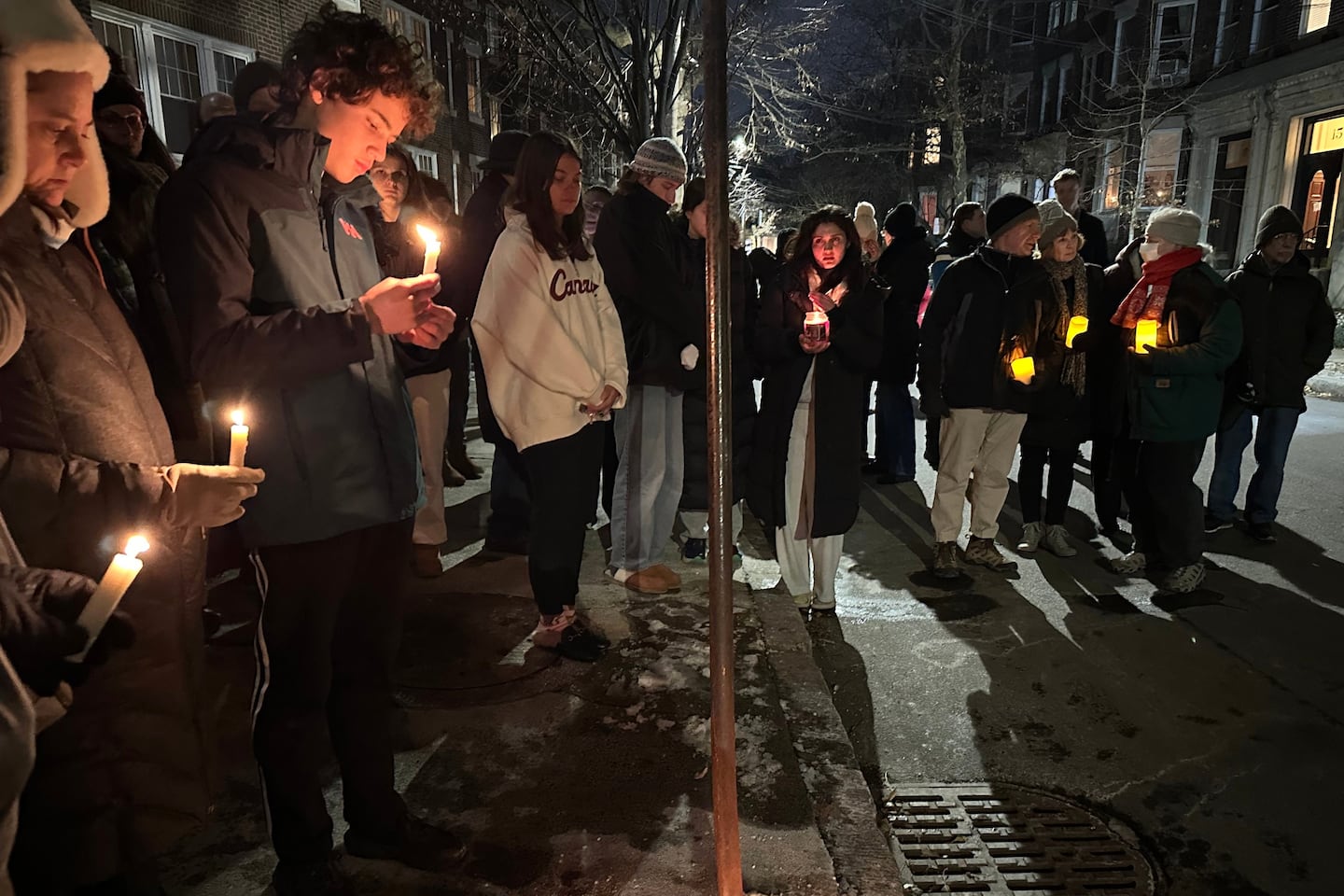
“The news has been uniformly one of shock, disbelief, and sadness at having lost someone who was an excellent scientist and a very nice human being,” Bhattacharjee said.
Loureiro impressed state lawmakers with his expertise.
In September, he testified at the State House to voice his support for a bill that would create a compact among the New England states to advance research into nuclear fusion energy production, which he described as a cleaner alternative to fossil fuels.
The bill, filed by Senator Bruce Tarr, a Republican from Gloucester, would empower the states participating in the agreement to establish a nuclear fusion reactor for research purposes.
In a statement Thursday, Tarr said Loureiro was a “talented, personable, innovative, and collaborative leader in the scientific community who was working with us to advance fusion energy as a means to build a renewable and carbon-free energy future for Massachusetts.”
“His death is a tragedy and represents a major loss for our state’s efforts to develop new, clean, and affordable energy sources,” he said.
Colleagues at MIT agreed.
“Nuno was a champion for plasma physics within the Physics Department, a wonderful and engaging colleague, and an inspiring and caring mentor for graduate students working in plasma science,” Deepto Chakrabarty, an astrophysics professor and head of MIT’s Department of Physics, told MIT News.
In January, President Joe Biden announced that Loureiro had received a Presidential Early Career Award for Scientists and Engineers, which the White House described as “the highest honor bestowed by the US government on outstanding scientists and engineers early in their careers.”
Loureiro was nominated for his work on the generation and amplification of magnetic fields in the universe.
As a boy growing up in the small city of Viseu in central Portugal, Loureiro said, he knew he wanted to be a scientist at a very young age, when “everyone else wanted to be a policeman or a fireman,” the States News Service reported in 2018.
Loureiro said that he was 17 the first time he met a scientist, and that his interest in science took root by the time he finished high school. “I realized that physics was what I liked best,” he said.
Loureiro received an undergraduate degree in physics at Instituto Superior Técnico in Lisbon, and then a doctorate from Imperial College. He pursued postdoctoral work at the Princeton Plasma Physics Laboratory, and later at the Culham Centre for Fusion Energy, the United Kingdom’s national laboratory for fusion research.
In 2009, he returned to Portugal to become a principal investigator at IST Lisbon’s Institute for Plasmas and Nuclear Fusion. Loureiro joined MIT in 2016.
“MIT wanted a professor in this area, I applied, and went to the United States,” Loureiro once said. “It’s like being a high-level soccer player. You keep changing teams.”
Loureiro said he had found a team at MIT that challenged and satisfied him.
“Sometimes it’s hard to find an institution where there is a perfect resonance between what you want, the rhythm you want for your own research, and the institution itself,” he told MIT News. “And MIT does this. MIT will basically respond to whatever you throw at it.”
Brian MacQuarrie can be reached at [email protected]. Laura Crimaldi can be reached at [email protected]. Follow her @lauracrimaldi.