This post was originally published on here
Louisiana’s coast supports a wide variety of uses, including conservation, recreation, commercial fishing, energy, and shipping. The debate over menhaden harvest and the Louisiana Wildlife and Fisheries Commission (LWFC)’s proposed Notice of Intent reflects how difficult it is to balance those interests using science-based decision making.
Recent commentary has raised concerns about the sustainability of Gulf menhaden and the impact of modifying buffer zones. Some of this misleading pressure has come from out-of-state advocacy groups unfamiliar with Louisiana’s working waters. It has led people to ask how the fishery is managed and what the proposed changes would mean on the water.
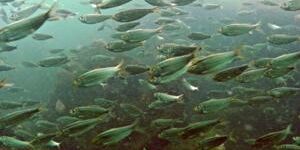
Louisiana’s menhaden fishery produces over $419 million in annual economic output and provides livelihoods for more than 2,000 people in the industry and its supply chain. Menhaden also serve its ecosystem role as forage for gamefish and recreational fisheries.
In a debate full of online noise, facts still matter most.
How the Menhaden Fishery Is Managed
Menhaden fishing in Louisiana is overseen by multiple layers of management, including the Louisiana Department of Wildlife and Fisheries, Louisiana Wildlife and Fisheries Commission, NOAA Fisheries, and the Gulf States Marine Fisheries Commission. Season timing and duration, gear requirements, catch reporting, and bycatch limits are governed through state law and regional management plans.
These overlapping systems exist to ensure that the fishery operates within limits established by long-term scientific monitoring and stock assessments. While external groups sometimes weigh in on management decisions, the Louisiana Department of Wildlife and Fisheries relies on local ecological expertise and decades of in-state data to guide regulations.
This is not a free-for-all. Louisiana’s menhaden fishery is the most closely monitored fishery in Louisiana.
What the Bycatch Study Found
One of the main concerns raised in the current discussion is bycatch, or the unintended capture of non-target species. In 2024, Louisiana funded a $1 million, independent, on-water study to gather precise data on this issue.
Some out-of-state special interest groups have suggested that bycatch levels may be higher than reported; however, Louisiana’s data indicates that overall bycatch remained below the 5 percent legal limit. Red drum bycatch accounted for only 3.4 percent of total red drum landings in Louisiana. In areas identified for possible limited reopening under the Notice of Intent, available data did not show a measurable impact on red drum recruitment or overall population health.
The study also helped the state identify when and where bycatch risks are highest, information now used to refine fishing practices, timing, and location of harvest.
In short: the data does not support the alarm.
What the Proposed Buffer Changes Actually Do
The Notice of Intent does not simply remove nearshore protections. Instead, it refines and reorganizes buffer zones based on scientific evidence. The total protected area would slightly increase from roughly 264 square miles to approximately 276 square miles.
Additional protections are focused on environmentally sensitive areas such as the Chandeleur Islands and the Isles Dernieres. Technical upgrades, including GPS coordinates and clarified zone boundaries, make enforcement clearer. Some historically fished areas where ecological risk is minimal could see limited access restored.
This represents a shift from uniform, broad stroked boundaries to more precise, location-specific management that balances conservation and responsible fishing.
It’s not reckless expansion – it’s smarter, science-driven precision.
Changes the Industry Has Already Made
In recent years, the Louisiana menhaden fleet has invested heavily in updated equipment and technologies. These include Spectra and Plateena nets, which are more durable and reduce accidental release events, and hose-end cage systems, which have lowered red drum mortality by 24 percent.
The fleet has also adopted new protocols for rapid response, spill containment, crew training, and reporting. These investments total more than $6.5 million and reflect ongoing adaptation to scientific findings and environmental standards.
This is an industry adapting, not one standing still.
Why the Outcome Matters for Communities Far from the Coast
The menhaden fishery directly supports multiple coastal parishes. Jobs tied to the fishery include vessel crews, processors, mechanics, welders, truck drivers, and other support services. For communities where other industries have declined, these positions provide stable, year-round employment with benefits.
Beyond employment, the industry purchases roughly $62 million in goods and services across 32 coastal parishes, supporting local businesses and suppliers that depend on the fleet’s operations. Menhaden products – including fishmeal and fish oil – are also essential to U.S. aquaculture, pet food, and animal feed supply chains, demonstrating the fishery’s broader economic significance.
What happens offshore is felt onshore, sustaining families and local economies across Louisiana.
A Broader Conversation About Stewardship
At its core, the menhaden debate is about managing a shared resource in a way that protects ecosystems while supporting the people who depend on the coast. The Notice of Intent is a science-guided compromise, reflecting Louisiana’s commitment to shared stewardship, transparency, and data-driven decision-making.
Although advocacy from outside the state can inform discussions, the ultimate decisions rely on input from Louisiana scientists, regulators, industry, and coastal communities.
The conversation is far from over, but ongoing collaboration among regulators, scientists, industry, and the public will shape the final approach.
The real question isn’t who’s loudest – it’s who’s right.