This post was originally published on here
From fleeting shower thoughts to questions that just won’t leave one’s mind, dive into the scientific curiosities that captivate readers. Researchers investigate why certain human traits exist—such as what determines earwax types, what drives variations in sweat and body odor, and why humans have long scalp hair. They also dig into age-old mysteries like how dinosaurs grew to such massive sizes, as well as modern questions about the benefits and risks of trends like cold-water plunges. Using genetics, molecular techniques, computer simulations, and more, researchers are uncovering new insights into evolution, physiology, and human activity. By unraveling the science behind the ordinary, these studies open windows into extraordinary questions that remain unanswered.
When a person starts sweating, the circumstances—whether from exercise, stress, or anxiety—can influence the type of sweat produced. This comes down to a combination of factors, including the types of sweat glands, the chemical signals in sweat, and the microbes that contribute to body odor. These findings have prompted researchers such as Monique Smeets, a social cognitive psychologist at Utrecht University, to investigate the social role of sweat and body odor as a subtle form of communication. Sweat contains a cocktail of volatile molecules that can change its smell and, in some cases, may even reveal emotions, such as fear, to others. Body odor also isn’t fixed; diet, skin bacteria, and even deodorants or fragrances can all shape how someone smells. By unraveling these chemical and microbial cues, scientists are uncovering how sweat silently conveys information, turning a simple bodily function into a surprising channel of social communication.
Nature’s bounty is a rich buffet from nectar to fruit-laden trees. But could these naturally occurring foods, which often contain ethanol, actually get animals drunk? One of the documented cases of wild animals consuming alcohol includes tree shrews and alcoholic palm nectar. Surprisingly, rather than becoming intoxicated, these animals seemed to metabolize the alcohol efficiently. Matthew Carrigan, a biologist at the College of Central Florida, who studies the evolution of alcohol metabolism, compared enzymes that metabolize alcohol between modern animals and their ancestors. In addition, increasing the competition for food where fermented fruit is available may have pushed for an evolved alcohol metabolism. This work sheds light on the evolutionary adaptations that help wildlife handle naturally occurring alcohol in their diets and may provide insight into how humans evolved a taste for alcohol.
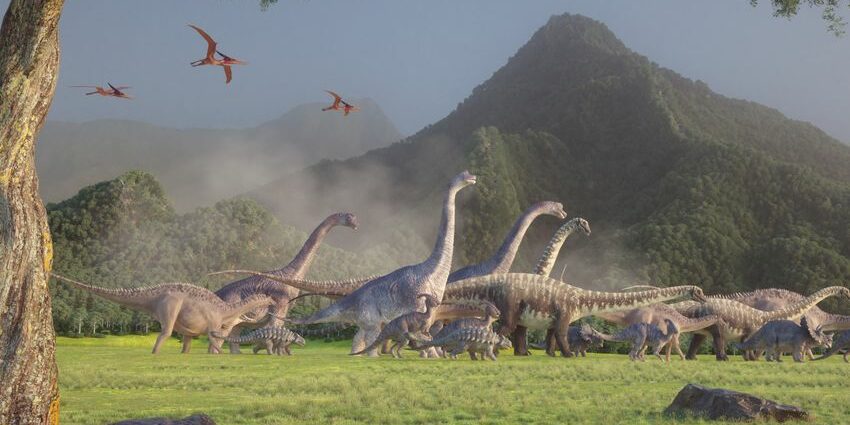
Scientists have found several physiological reasons for why dinosaurs were so big. The co-evolution of herbivorous and carnivorous dinosaurs also likely contributed to these animals’ gigantism.
©iStock.com, Orla
Wandering through a natural history museum, it’s hard not to be awestruck by the sheer scale of dinosaur fossils, with some of them rising as high as a two- or three-story building. But how did these animals become so enormous in the first place? “That’s a very interesting and difficult question to answer. We’ve been tackling it in various ways,” said David Hone, a paleontologist at Queen Mary University of London. Hone, along with other scientists, investigates how anatomical features, such as bones filled with air sacs, may make larger body sizes feasible. However, dinosaur skeletons are often incomplete, so researchers may never know the exact size of the largest dinosaur. But this work can provide more insight into what they ate and how they evolved.
The end of a used Q-tip holds much more than just earwax. Not all earwax is the same; it varies in color and consistency, which led scientists to dig deeper. They found a genetic component that dictates the type of earwax someone has but also realized that it’s linked to body odor and the microbes that live on the skin. Chris Callewaert, a microbiologist at Ghent University, homed in on the armpit microbiome and identified Staphylococcus and Corynebacterium as the two most abundant groups. These microbes influence scent profiles, ranging from relatively neutral to distinctly pungent or sour. By uncovering how these tiny inhabitants shape body odor, scientists hope to better understand why some people have stronger smells and, potentially, develop microbial-based strategies to manage them.
Compared to lions and their impressive manes or even fluffy rabbits, humans are remarkably hairless for mammals; however, human scalp hair tells a different story. Nina Jablonski, an anthropologist at The Pennsylvania State University, explored the evolutionary benefits of this trait. Long scalp hair may have served multiple purposes, such as protecting the head from harmful UV rays and helping regulate body temperature. Researchers have also pinpointed genetic factors that influence hair length, shedding light on why some people grow longer locks than others. While scientists are still piecing the full story together, a better understanding of hair may aid the development of new hair growth treatments.

François Haman, a biologist at the University of Ottawa, provides cold training to military and emergency services personnel around the world.
François Haman
In recent years, cold-water plunging has gained traction for its supposed benefits, such as enhancing health and mood. But is the hype surrounding this frigid activity worth it? According to researchers like François Haman, a biologist at the University of Ottawa, who studies how humans respond to extreme challenges, including cold exposure, aside from anecdotal reports, there is not much scientific evidence. Cold plunges may soothe exercise-induced inflammation and muscle soreness, but the risks may outweigh the proposed benefits. A sudden plunge can cause gasping and uncontrollable hyperventilation—a possible recipe for drowning. While research is ongoing, Haman emphasized prioritizing safety for those interested in cold plunges.