This post was originally published on here
On Ecuador’s Santiago River, an Indigenous village mapped fish life science ignored. With cameras, nets, and a phone app, Kaputna’s Shuar fishers helped document 144 species—proof that conservation begins where remoteness, danger, and memory once kept outsiders away almost entirely.
Kaputna and the Fast Water That Swallows Canoes
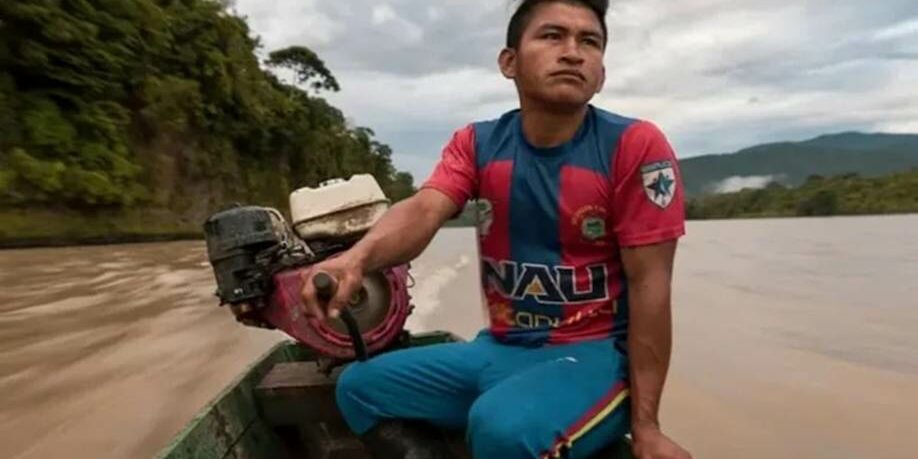
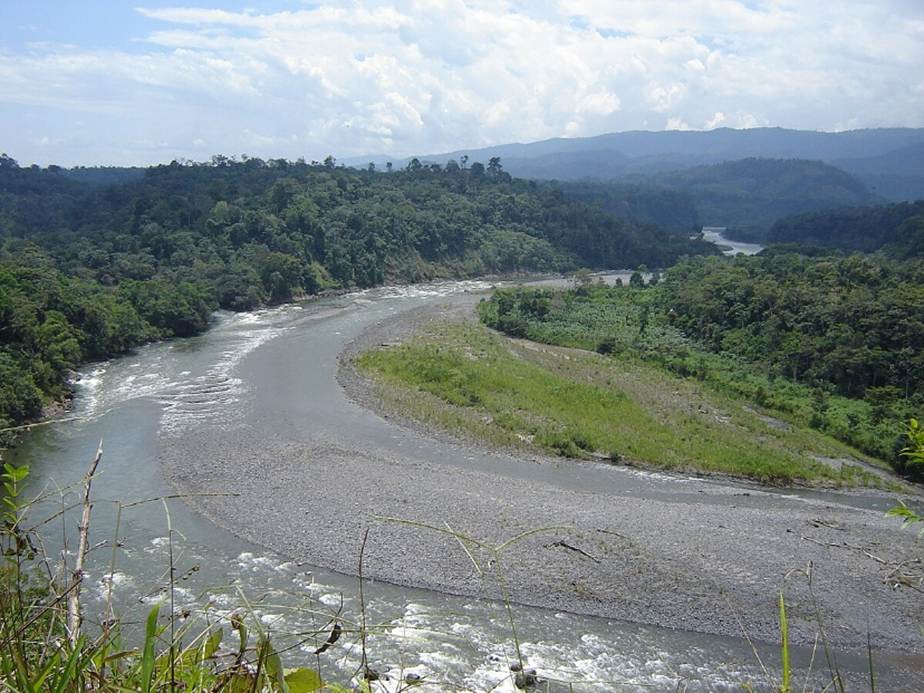
The canoe rocks in the brown light of the Santiago River, the kind of water that looks opaque until you notice how much it hides—silver flickers, shadowed fins, mouths built to scrape rock as if the river itself is food. Getting here from Quito, Ecuador, is not romantic in the way city people imagine the Amazon. It is a grind of buses and trucks, a long drive to Tiwintza near the Peru border, then another jolt to Peñas, where the river becomes the only road. In Kaputna, a community of 145 people from the Shuar nation, the forest still holds jaguars, peccaries, and pumas with a kind of quiet authority. The place name carries an older warning: elders speak of a stretch downstream where travelers once vanished before outboard motors arrived, as if a hole in the current swallowed canoes. Kaputna, residents say, means an area where the river runs fast—an everyday description that also reads like a boundary sign.
For years, that boundary shaped science too. Even in Ecuador, celebrated as a global hub for freshwater fish diversity, a group of scientists warned in 2021 that basic information about many species was “astonishingly” scarce, and that more field research was urgently needed. The gap was not just geographic; it was cultural. Fish rarely enjoy the attention given to “charismatic” animals. As Fernando Anaguano, a biologist with the Wildlife Conservation Society (WCS), told the BBC, freshwater fish have often been left behind as research budgets shift toward mammals, birds, and marine life. Yet for communities like Kaputna, fish are not a sidebar—they are protein, income, and a thread in daily life.
A Net, a Phone App, and a Quiet Revolution in Credit
The turning point was not a single expedition but a way of working. Between 2021 and 2022, Kaputna residents joined a monitoring effort that combined scientific methods with traditional knowledge. Fishers collected specimens, photographed them, and uploaded records through an app called Ictio, adding details that laboratories can’t easily invent later: exact locations, gear used, water conditions, the lived geography of a river that outsiders experience only as coordinates. The outcome startled even specialists: the community helped identify close to 144 fish species in the Santiago River. Of those, five were known in other countries but had never been recorded in Ecuador, and one was still under study and might be entirely new, according to the biologists involved.
What made the project politically charged—quietly, but unmistakably—was recognition. Some fishers, including Germán Narankas, appeared as co-authors on the scientific paper reporting the findings. “Their knowledge of the territory is essential to discovering new species,” biologist Jonathan Valdiviezo told the BBC. And Anaguano emphasized what that co-authorship implies in a region shaped by extraction: “It’s not usual for local people’s work to be recognized in scientific publications,” he said, according to the BBC. In Latin America, where outsiders have historically taken minerals, rubber, timber, and even stories, the question of who gets credit is never just academic—it is part of sovereignty.
Narankas embodies that shift in human terms. When we meet him, he is carrying his net over his back like a tool and a calling. He warns that the heat will be brutal: by 09:00, the temperature is already 35°C (95°F), and it has not rained in three days. He talks about the river with the intimacy of someone who has read it since childhood. And he talks about science with the cautious pride of someone who learned to name differences he always knew existed. When monitoring began in 2021, he began using scientific names alongside Shuar knowledge, practicing the vocabulary of a world that rarely listens back.
Discoveries That Expose What’s at Stake
On the Yaupi River, a tributary of the Santiago, the water clears as the forest thickens. Narankas calls it a favorite fishing place because it stays free of the mining residues that have contaminated other Amazonian rivers. In the foliage, flags of Ecuador and Peru serve as reminders that borders are drawn above water, not beneath it. Narankas, his sister Mireya, and his son Josué slip into the river and cast the net. Up comes a fish locals call “carachama,” about 10 centimeters long, part of the Loricariidae family—armored, adapted, a small engineer of currents. Narankas identifies it as Chaetostoma trimaculineum, noting its round suction-cup mouth, which allows it to cling to rocks. Nearby, he says, they found a similar fish that researchers believed had never been studied.
That fish became Peckoltia relictum—not new to science, but new to Ecuador, confirmed through tissue analysis and DNA work. Valdiviezo, who has 17 years of experience working with fish, explained to the BBC how the team extracted DNA from a small muscle sample when they realized the specimen was rare, then compared it with related species in their database, a process he likened to paternity testing. When uncertainty persisted, they sent a sample to Canada, where the identification was confirmed. The moment is a reminder that discovery is often less a dramatic unveiling than a careful refusal to guess.
The numbers, though, are dramatic. Previous research had recorded about 143 species across a broad region below 600 meters in altitude—an area known as the Morona Santiago ichthyographic zone, covering 6,691 square kilometers. Kaputna’s study identified 144 species across only 21 square kilometers within that same zone, including 77 species not reported in earlier surveys. Anaguano told the BBC that this small area represents roughly 17% of all freshwater fish species recorded in Ecuador (836) and about 20% of those registered in the Ecuadorian Amazon (725). In conservation terms, it suggests not only richness but also vulnerability: when so much diversity is concentrated in a small, pressured place, damage can be swift and hard to reverse.
This is where the broader Amazon enters the story. Across basins spanning Ecuador, Peru, Colombia, Bolivia, Brazil, Venezuela, Guyana, and Suriname, the Amazon system holds the greatest variety of freshwater fish on Earth—about 2,500 recorded species, with thousands more believed undiscovered. It also hosts the planet’s longest freshwater migration: the golden catfish, traveling roughly 11,000 kilometers from Andean foothills to the Amazon estuary on the Atlantic. Yet the same waters are under siege. The report on migratory freshwater fish in the Living Planet Index describes an 81% decline in populations over the last 50 years, and a sharper 91% decline in Latin America—figures that turn Kaputna’s discovery into something like a countdown.
Academic debates captured in journals such as Nature, Sustainability, and Conservation Biology increasingly argue that biodiversity protection cannot be separated from local stewardship and cultural survival. Kaputna makes that argument legible. Liseth Chuim, a fisher who joined the monitoring, told the BBC that learning and collecting data made her feel “a little like a scientist.” Another resident, Johnson Kajekau, described the meticulous work of labeling samples with names and numbers—small acts of order that keep knowledge from dissolving into rumor. At sunset under a star-filled sky, Narankas is asked what it means to see his name on the published paper. He tears up, then smiles: he feels proud, he says. And then he does something that lands like the real headline. In August 2025, at 34, he returned to high school. In about a year and a half, he hopes to graduate and then study biology—so the river that once swallowed outsiders can finally be read, named, and defended by the people who live inside its current.
Also Read:
Dominican Republic Grows Baby Corals to Save Reefs and Fishing