
This post was originally published on here
December 19, 2025
By Michael Mahoney, Central Region Manager of gthe National Business Development Group at Euclid Chemical
Cold-weather concreting demands science-driven techniques, advanced admixtures and strict temperature control to maintain strength, durability and productivity throughout Canada’s increasingly harsh winter conditions.
Understanding the science behind cold-weather concreting can serve to help contractors balance productivity with performance when temperatures fall below freezing. Image courtesy of Euclid Chemical.
As Canada’s construction season stretches deeper into the winter months, concrete contractors face one of the industry’s oldest challenges: balancing productivity with performance when temperatures fall below freezing. From Ontario’s lake-effect snow to the subarctic conditions of Alberta and the Maritimes, working through the cold requires an understanding of material science.
Cold-weather concreting is often viewed as risky, expensive or simply impractical. But the reality is that low-temperature work, when approached scientifically, can actually yield concrete with equal, or even superior, durability to summer placements. The real obstacles are not the conditions themselves, but misconceptions about how concrete behaves when the mercury drops.
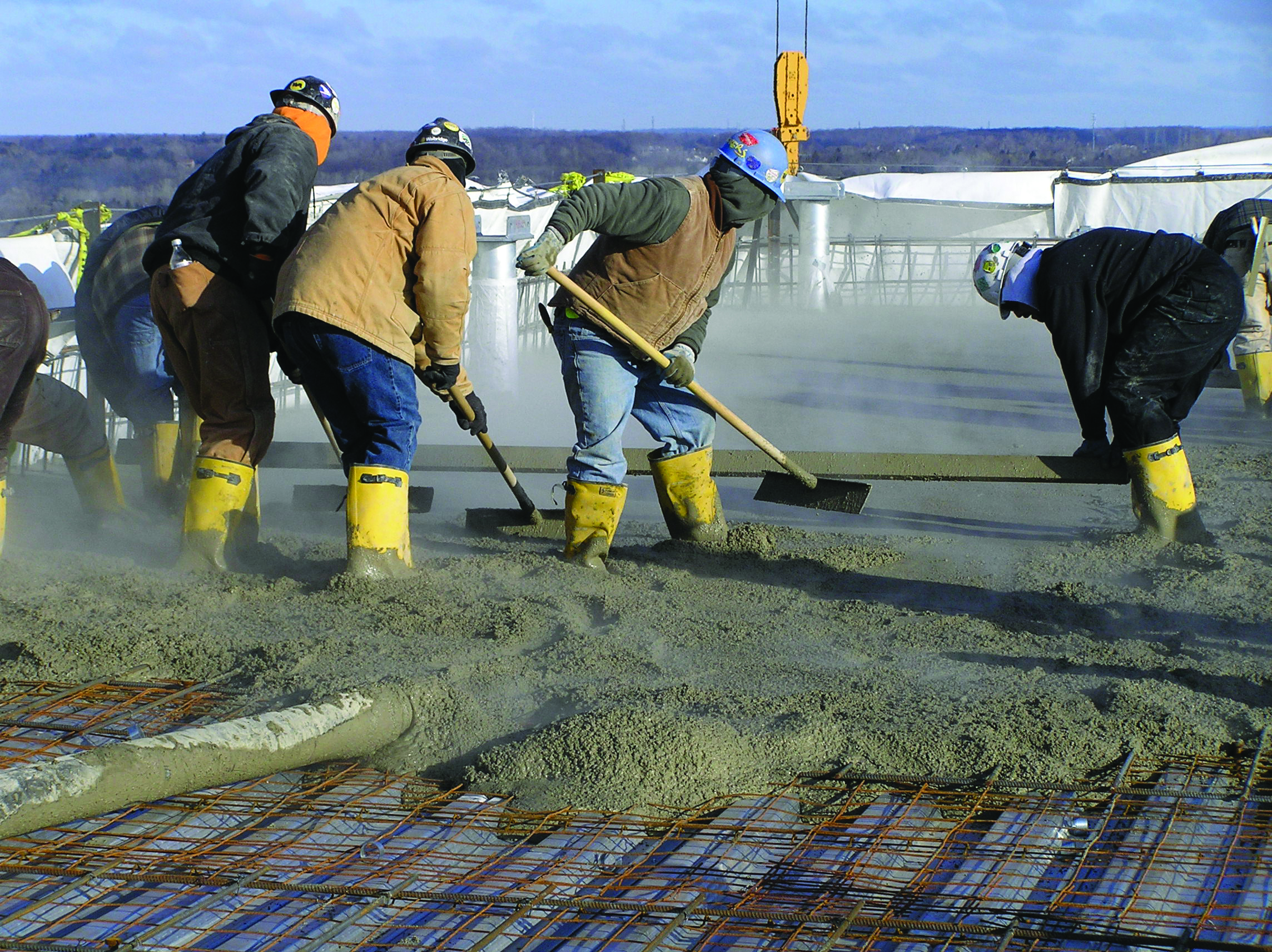
Several myths exist around cold-weather concreting that can be debunked using science. Image courtesy of Euclid Chemical.
Understanding the chemistry of cold
The performance of concrete during the winter months is governed by hydration – the exothermic reaction between cement and water that produces calcium- silicate-hydrate (C-S-H), which is the microscopic glue that gives concrete its strength. As ambient temperatures fall, the rate of this reaction slows dramatically. Below about 10°C, hydration proceeds sluggishly. And below 5°C, it can nearly stop. If the pore water inside the concrete freezes before sufficient C-S-H forms, ice crystals expand and rupture the paste matrix, permanently compromising the material’s integrity.
Advertisement
This is why cold-weather concreting is less about avoiding freezing and more about controlling temperature and time. Maintaining the internal temperature above critical thresholds – typically 10°C for the first 48 hours – allows early-age strength to develop before freezing becomes a threat.
MYTH #1: “Just add more cement”
It’s tempting to think that increasing cement content will compensate for slower hydration. While cement does release heat during hydration, it is short-lived and insufficient to offset environmental losses. Moreover, adding excess cement without adjusting water content or admixture dosage can disrupt the water-to-cementitious ratio, leading to excessive shrinkage, cracking and permeability.
Canadian producers are increasingly turning to non-chloride accelerating admixtures, such as those based on calcium nitrate or triethanolamine chemistry, to promote early hydration without compromising durability or corroding embedded reinforcement. These accelerators stimulate the tricalcium silicate and dicalcium silicate phases that drive early strength development, helping contractors meet schedule demands even when temperatures hover near freezing.
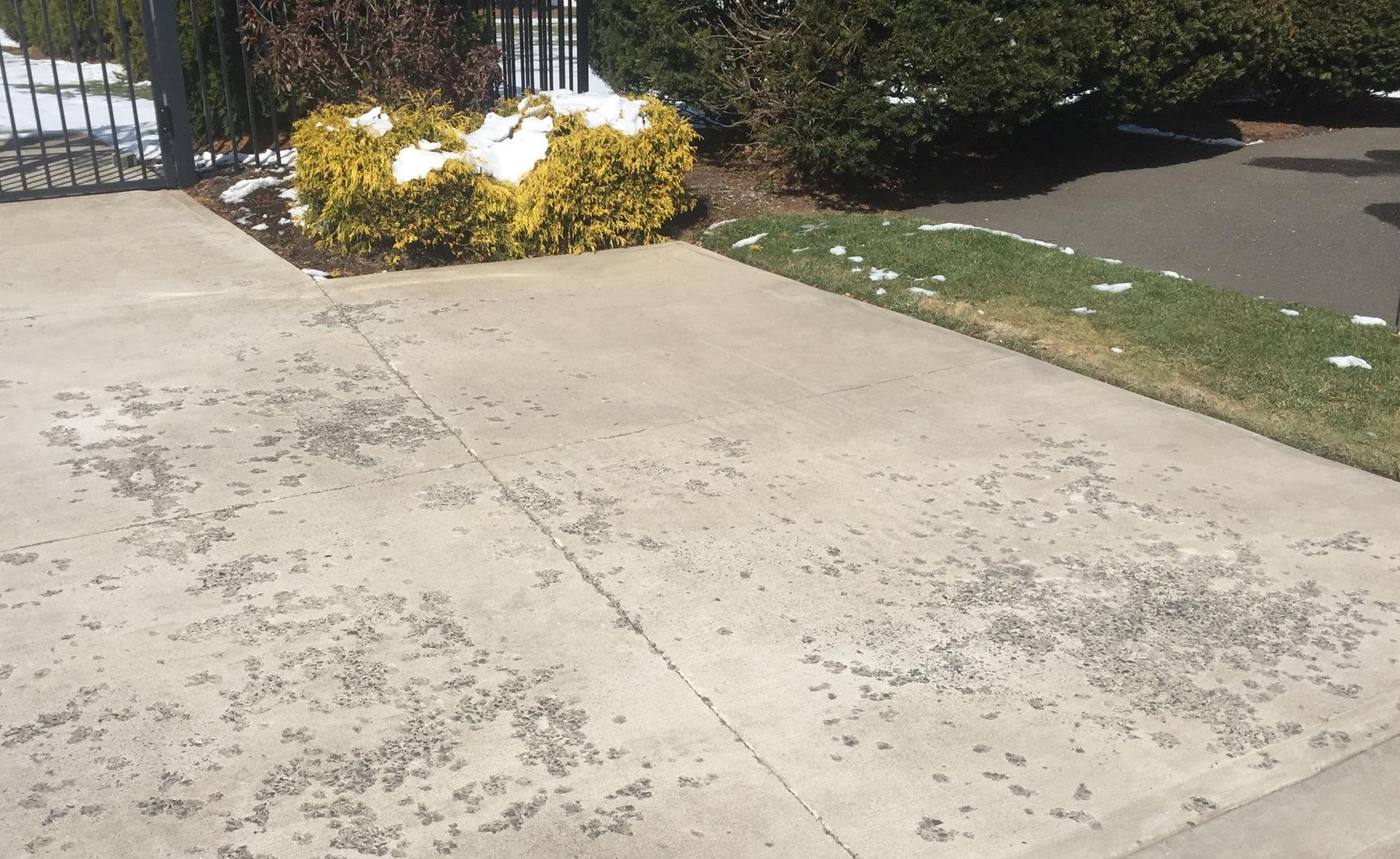
Damage due to freezing can occur long before the point when temperatures reach zero. Image courtesy of Euclid Chemical.
MYTH #2: “Concrete only freezes below 0°C”
In practice, freezing damage begins long before the point when temperatures reach zero. In fact, when temperatures dip below 5°C, hydration has already started to slow so much that set times can double or triple. If concrete cools below freezing before reaching 3.5 MPa (500 psi), internal water can freeze, expand and generate microcracking that may remain invisible until weeks later, when the surface scales or delaminates under traffic or deicing salts.
Advertisement
In provinces like Quebec and Manitoba, where freeze-thaw cycles are extremely common, early-age protection must be treated as a non-negotiable. Using insulated curing blankets or heated enclosures ensures consistent curing and prevents the stop-start reaction cycles that can weaken long-term performance.
MYTH #3: “Daylight is enough to keep concrete warm”
Even under direct sunlight, concrete placed on a frozen subgrade can lose heat faster than it can even generate it. The subgrade acts as a heat sink, drawing thermal energy away from the mix and slowing strength gain. Once temperatures fall overnight, the concrete slab can then develop thermal gradients that cause curling, surface cracking or differential strength.
Advertisement
As such, subgrades should be fully thawed and dry prior to placement. Heating the mix water to around 60°C (140°F) and aggregates to 38°C (100°F) produces a discharge temperature between 13°C and 18°C – ideal for maintaining hydration momentum. Hydronic heating systems, insulated formwork and maturity sensors can further ensure uniform temperature profiles through the curing period.
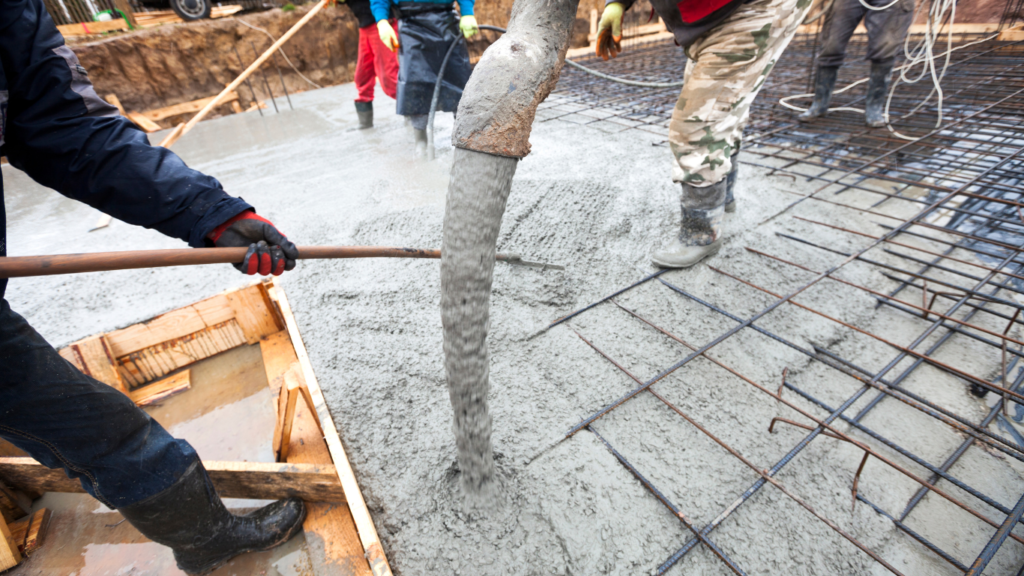
Optimized admixture chemistries not only accelerate early hydration but also improve long-term microstructure density. Image courtesy of Euclid Chemical.
MYTH #4: “Calcium chloride is the best accelerator”
Calcium chloride is still widely used for unreinforced concrete, but its use introduces serious risks in structural or exposed applications.
Chloride ions can corrode reinforcing steel, compromise bond strength and cause surface discoloration – problems that are only magnified by Canada’s frequent freezethaw and deicing salt exposure.
Non-chloride accelerators now offer comparable set acceleration and early strength gains without the corrosion hazard. Many Canadian ready-mix producers have adopted calcium nitrate or formate-based admixtures, which are compatible with air-entraining agents and water reducers that are essential for freeze-thaw durability. These chemistries not only accelerate early hydration but also improve long-term microstructure density, resulting in significantly reduced permeability and enhanced resistance to scaling.
MYTH #5: “Cold-weather measures are too expensive”
While heating, insulation and protection systems add cost and logistical complexity, their value is undeniable.
In fact, rework that’s required as a result of early-age freezing or surface scaling can be exponentially more expensive than proper temperature control. In fact, maintaining adequate curing conditions during the first 72 hours of a job can increase ultimate compressive strength by up to 30 per cent.
Many Canadian contractors have found that by extending their working season through proper winter procedures, they’ve been able to offset seasonal shutdown costs. Steady productivity, better resource utilization and fewer springtime backlogs all contribute to a stronger bottom line and a reputation for reliability.
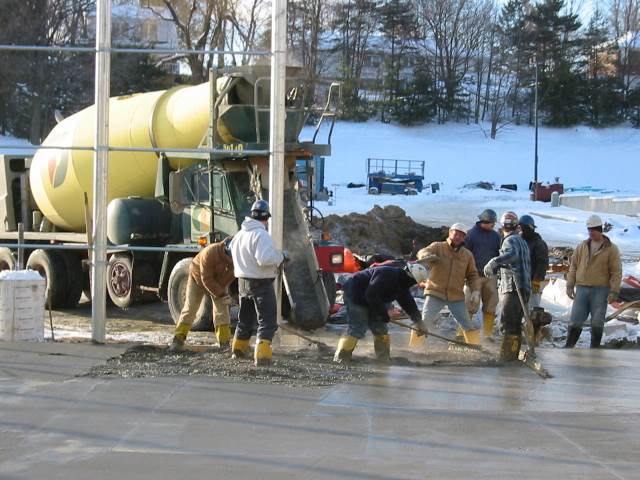
New admixture chemistries are helping to redefine what’s possible concerning col-weather concreting. Image courtesy of Euclid Chemical.
Admixture technology
Current advances in admixture chemistry have redefined what’s possible in cold-weather concreting.
Non-chloride accelerators allow faster setting without corrosion risk. Shrinkage-reducing admixtures minimize thermal stress during temperature swings. And air-entraining agents, which are crucial for freeze-thaw resistance, create microscopic air voids that relieve internal pressure as ice forms.
In addition, supplementary cementitious materials (SCMs) such as slag cement, fly ash and silica fume play an important role in cold-weather concreting. While SCMs can slow early hydration, adjusting their dosage in winter helps balance strength gain and durability. Optimizing the ratio of SCMs to cement allows mixes to achieve both sustainability goals and performance targets in harsh climates.
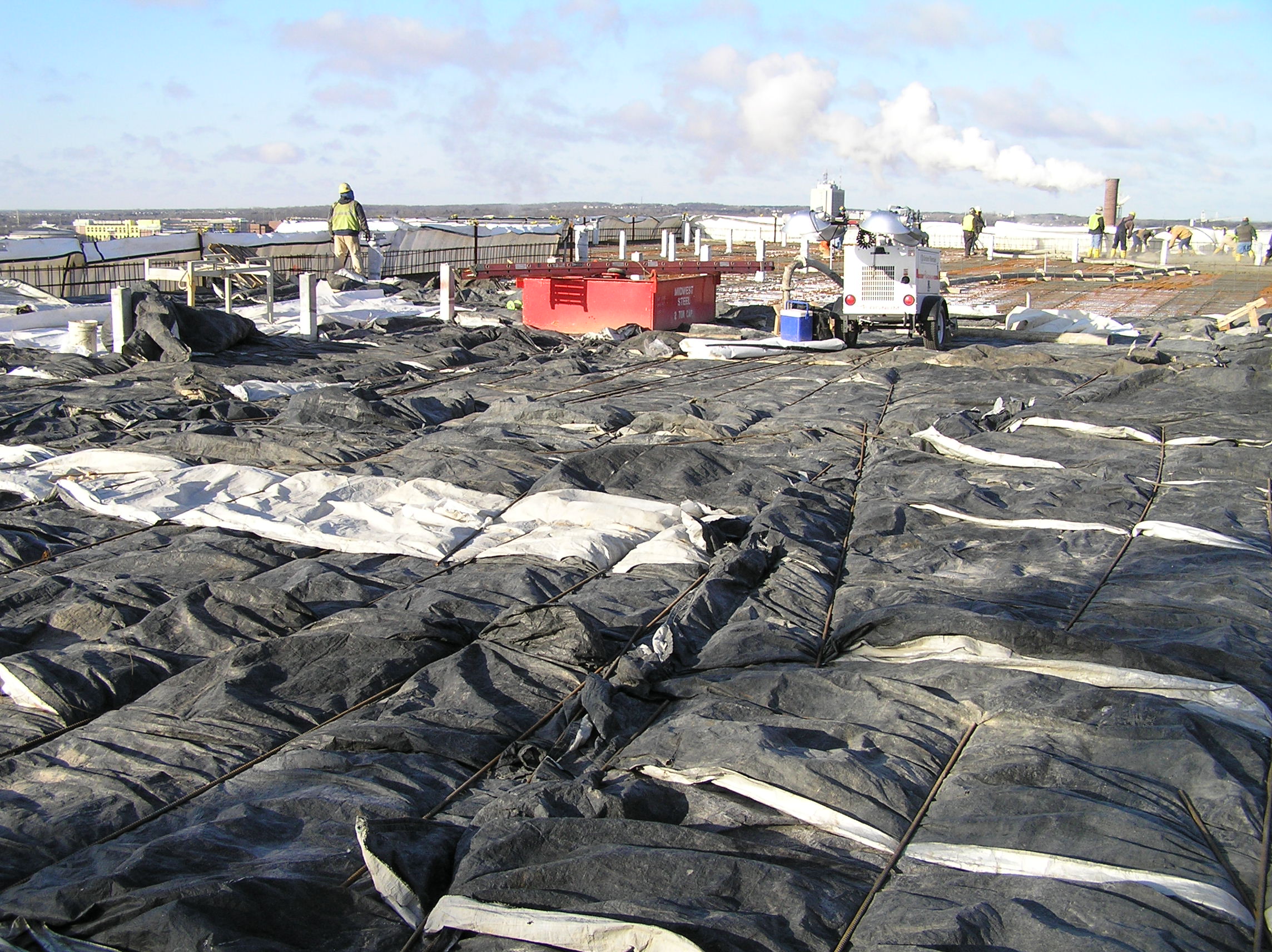
Integrating field monitoring with proper mix design and protection planning helps contractors ensure that winter placements meet both structural and durability specifications. Image courtesy of Euclid Chemical.
The importance of quality control and field monitoring
Modern cold-weather concreting in Canada increasingly relies on digital tools. Maturity meters, infrared thermography and embedded sensors enable real-time tracking of in-place temperature and strength development.
This data-driven approach allows crews to make more informed decisions about when to remove blankets, apply loads or proceed with form stripping. These technologies are particularly valuable when used on public infrastructure projects where compliance with CSA A23.1 and A23.2 standards requires documentation of curing conditions and early strength attainment. By integrating field monitoring with proper mix design and protection planning, contractors can ensure that winter placements meet both structural and durability specifications.
Adapting cold-weather concreting to Canada’s regions
Canada’s geography presents a broad spectrum of winter concreting challenges. In coastal British Columbia, mild but wet conditions demand strict control of moisture and surface protection. Across the Prairies, low humidity and high winds increase the risk of plastic shrinkage cracking. In the North, permafrost and temperature swings impose unique logistical demands for heating, staging and curing.
Despite these variables, the principles remain consistent: maintain temperature, manage moisture and monitor performance. And collaboration among ready-mix producers, admixture suppliers and contractors is vital. The most successful projects are those where material design, delivery and placement are synchronized under a shared understanding of the science driving hydration and durability.