This post was originally published on here
UNITED STATES — A surge in global seismic activity over the past 24 to 48 hours is drawing widespread attention from geologists and hazard-monitoring groups, as earthquakes are appearing in regions that rarely experience significant tectonic movement. Experts say this pattern does not indicate one major quake but rather a broader redistribution of pressure across multiple fault systems worldwide.
Seismic Clusters Emerging in Rarely Active Zones
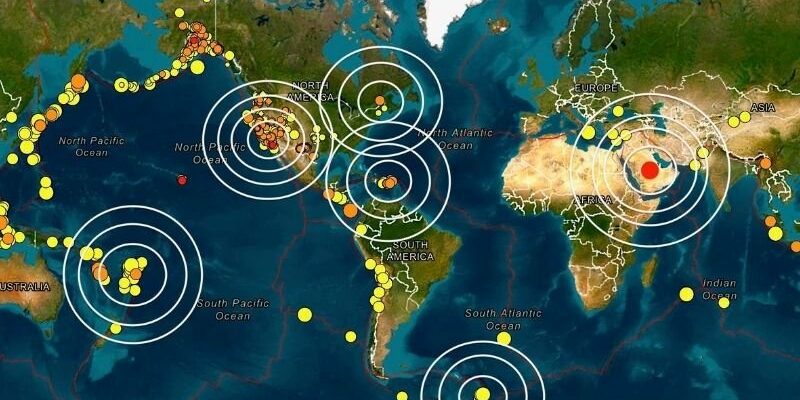
Recent monitoring shows a noticeable uptick in earthquake activity across parts of the Arabian Plate, regions that do not typically release energy this frequently. At the same time, shallow earthquake clusters continue to appear along the California coast, despite there being no clear mainshock event that would normally trigger such activity. Analysts warn that this combination of unusual locations and shallow depth quakes may signal a deeper structural shift.
Not a Single Fault Event — Pressure Is Spreading Globally
Geologists explain that the current pattern does not resemble a single large fault rupture. Instead, it reflects tectonic pressure redistributing across multiple plates, a phenomenon that can occur when the Earth’s crust adjusts to imbalances over time. When seismic movement spreads out rather than concentrating in one zone, experts say it often indicates that the system is not finished releasing energy.
This type of widespread pressure shift has historically preceded periods of heightened global seismic activity, though the exact outcomes remain difficult to predict.
Global Map Shows Expanding Zones of Concern
Newly analyzed seismic maps display clusters across the Pacific Ring of Fire, South America, Central Asia, the Western United States, and unusually active pockets near the Arabian Peninsula. The clustering pattern suggests that multiple tectonic boundaries are responding simultaneously to deeper energy redistribution.
While none of the individual quakes suggest a major imminent event, their collective behavior is what has specialists taking notice. A system-wide adjustment can last days, weeks, or longer depending on how pressure continues to migrate.
Residents in Low-Seismic Areas Encouraged to Stay Alert
Monitoring agencies emphasize that people living in regions that normally experience little seismic activity should remain observant. Residents who have recently felt shaking in historically quiet zones are encouraged to report activity to local geological networks to help track emerging patterns.
As scientists continue to analyze the evolving situation, updated seismic assessments are expected in the coming days.
Have you noticed unusual shaking or seismic activity in your area? Share your experience and follow ongoing updates at SaludaStandard-Sentinel.com.