This post was originally published on here
The World Health Organisation (WHO) notes that Avian flu has a variant of the virus that has led to an unprecedented number of deaths in wild birds and poultry in many countries, but particularly in South and South East Asia.
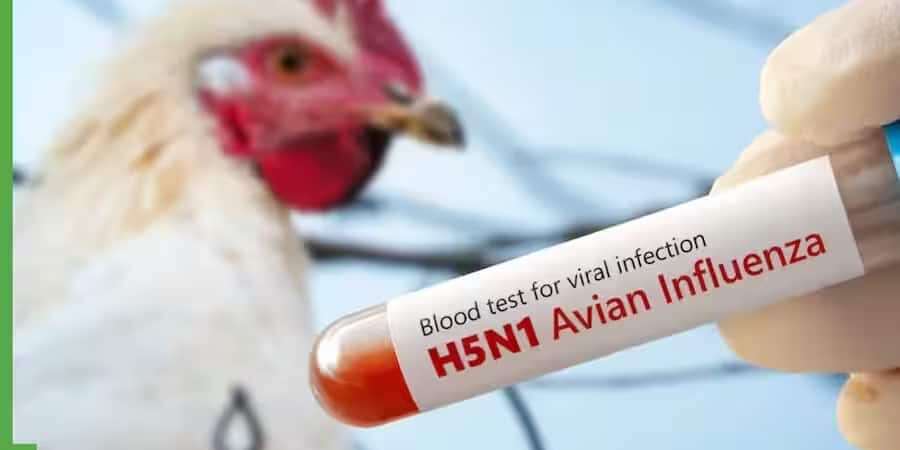
H5N1 Virus Spillover: H5N1 virus also known as bird flu, is a highly infectious respiratory disease that can infect mammals and humans. A recent study, led by a team of Indian researchers using an artificial intelligence (AI) based model have decoded how the daily H5N1 virus can actually spillover to humans.
Researchers Used BaharatSim
The study, which is now published in the BMC Public Health journal, revealed that the scientists used BharatSim, an ultra large scale agent based simulation framework for infectious diseases that was originally built for COVID-19 modelling to identify the sequential stages of a zoonotic spillover.
Philip Cherian and Gautam I. Menon from the Department of Physics at the Haryana-based Ashoka University said, “We modelled the possibility of initial spillover events of H5N1 from birds to humans, followed by sustained human-to-human transmission. Our model describes the two-step nature of outbreak initiation, showing how crucial epidemiological parameters governing transmission can be calibrated given data for the distribution of the number of primary and secondary cases at early times.”
Also Read
What Is H5N1?
H5N1 is a bird flu that emerged in China in the late 1980s and ever since humans have been occasionally infected by the virus. The World Health Organisation (WHO) notes that Avian flu has a variant of the virus that has led to an unprecedented number of deaths in wild birds and poultry in many countries, but particularly in South and South East Asia. Apart from poultry and humans, both land and sea mammals have been affected, including fur animals, sea lions, seals, foxes, otters, bears, raccoons, dogs, cows, cats, goats, and others.
“In our study of the tertiary attack risk, we found that even if an infection of a primary case occurs, onward infections are limited if cases are isolated and their household contacts quarantined. However, once tertiary contacts are infected, establishing control becomes impossible unless far more stringent measures are applied, including a total lockdown,” the experts noted. “Once community transmission takes over, cruder public-health measures such as lockdowns, compulsory masking, and large-scale vaccination drives are the only options left.”
Signs And Symptoms Of H5N1
The global health organisation notes that many people infected by the dangerous virus of H5N1 have initially reported respiratory issues, including conjunctivitis, and other respiratory symptoms. The WHO states, “There have also been a few detections of A(H5N1) virus in persons who were exposed to infected animals or their environment but did not show any symptoms.”
According to the Centres for Disease Control and Prevention (CDC), people infected with bird flu may show mild symptoms such as eye redness, cough, sore throat, runny or stuffy nose, headache, fatigue, muscle or body aches and mild fever. If the bird flu disease gets severe, it can lead to seizures, pneumonia and respiratory failure, among many others.
The CDC states, “The time from when a person is exposed and infected with avian influenza A(H5) viruses to when respiratory symptoms begin is about three days but can range from about 2 to 7 days. However, eye symptoms such as redness and irritation can occur one to two days after exposure and infection with an avian influenza A(H5) virus.”
TRENDING NOW
Follow TheHealthSite.com for all the latest health news and developments from around the world.

Don’t Miss Out on the Latest Updates.
Subscribe to Our Newsletter Today!