This post was originally published on here
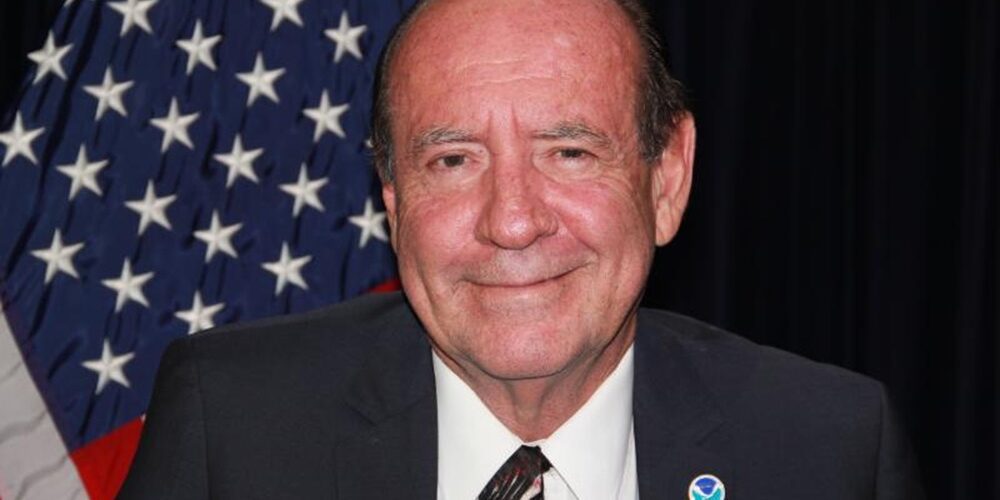
NOAA Fisheries Assistant Administrator Eugenio Pineiro Soler said his top priority at the U.S. agency is improving science.
“My priorities when I took this job was number one science,” Soler said. “We have to have better science. We have to improve the science. We have to improve not our effort but our products, our results. And that’s number one priority of this administration.”
Soler’s remarks were delivered at the Mid-Atlantic Fishery Management Council’s December meeting, where he laid out his three priorities at NOAA Fisheries: science, the fishery management councils, and cooperative research projects. Soler was joined by Evan Howell, who was named NOAA Fisheries deputy assistant administrator for scientific programs earlier this month.
“I think that the administration has come in – there’s a lot of positive energy on science. There’s a lot of push, and I think that you’ll see a lot of investment in applying technology quickly,” Howell said. “I think that we know technology that we feel has the greatest probability of success for operations, and a large part of this coming year – probably this year and the next – is ensuring that we bring the right tech on in the right way to … get the information flowing that we need and really partner to understand how to package this and get the best decisions and recommendations possible.”
Howell has been with NOAA since 1997 and previously served as the director of the Office of Science Technology at NOAA Fisheries. In taking on the new role, Howell said he wants to work closely with the fishery management councils.
“A focal area that I have is to come in and really understand not just how we can produce the science or improve the technology to get faster science for decision-making but also learn about how we can deliver the information or put our science projects together in a way that gives better efficiency and harmony between the science, the council process, and the management that happens for the fisheries,” he said.
In May, U.S. President Donald Trump issued an executive order titled “Restoring Gold Standard Science,” directing agencies to “practice data transparency, acknowledge relevant scientific uncertainties, [be] transparent about the assumptions and likelihood of scenarios used, approach scientific findings objectively, and communicate scientific data accurately.”
“Over the last five years, confidence that scientists act in the best interests of the public has fallen significantly,” Trump said in his order. “Unfortunately, the Federal Government has contributed to this loss of trust. In several notable cases, executive departments and agencies have used or promoted scientific information in a highly misleading manner.”
Trump used a 2021 NOAA Fisheries biological opinion that nearly shuttered the lucrative New England lobster fishery to protect North Atlantic right whales as an example. The opinion – which was later vacated by a federal court – utilized worst-case scenarios in evaluating the impact commercial lobstering would have on the whales and was widely criticized by the industry and lawmakers. During a June 2025 hearing, U.S. Secretary of Commerce Howard Lutnick was asked how the executive order would prevent a situation like that from occurring again.
“We think this capricious lack of rigor in our science has got to end, so the gold standard executive order saying only real science, not opinion-based science, has to be the rule,” Lutnick said. “We protect our fishermen; we protect our ranchers. These are key things that this administration is going to drive for.”
However, Democratic lawmakers and former NOAA officials have questioned whether the Trump administration’s talk on science has aligned with its actions, particularly its decision to lay off hundreds of scientists as part of the White House’s efforts to shrink the federal workforce.
A FOIA request filed by the Center for Biological Diversity (CBD) revealed that 545 NOAA Fisheries employees were laid off or bought out in February 2025 by a newly created government group led by billionaire Elon Musk. An analysis by the group found that more than half of those fired worked directly in support of marine ecosystems and wildlife, including many marine biologists.
“The Trump administration’s disdain for whales, dolphins, and our entire natural world is hitting the oceans hard,” CBD Oceans Director Miyoko Sakashita told SeafoodSource in October. “Targeting the people who work to keep sea creatures like salmon and sea otters healthy will backfire in disastrous ways, as we get less and less prepared for climate chaos. The loss of this marine wildlife expertise is incalculable.”
There have also been several anecdotal reports on how lower staffing levels have impacted the work being done by NOAA Fisheries’ science centers, which each saw dozens of employees laid off. The Southeast Fisheries Science Center, for example, saw 56 employees let go by the Trump administration.
On 18 December, the New York Times published an interview with Ana Vaz, a fish biologist at NOAA’s Southeast Fisheries Science Center who was fired by the Trump administration in April as part of its ongoing workforce reduction.
“A lot of the work we were doing incorporates environmental variability and stock assessment. If you don’t have someone really doing it with dedicated time and knowledge of both oceanography and biology, it’s very difficult,” Vaz told the paper. “We have qualified colleagues who can do some of the work I was doing, but they’re picking up the pieces of what we were trying to do. Between probationary firings and early retirement, we lost about 60 out of 200 people. The knowledge that is being lost, how can we recover from that?”