This post was originally published on here
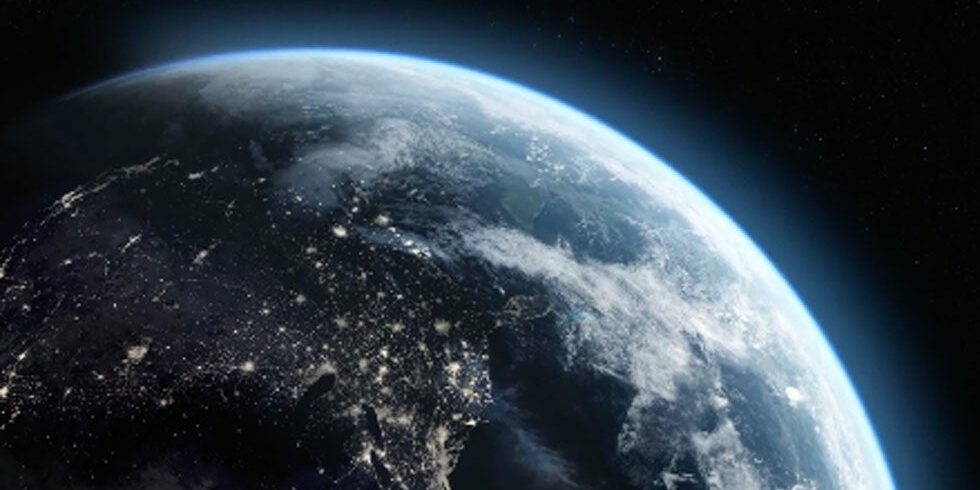
You may have seen headlines or social media posts talking about a weakening of Earth’s magnetic field, specifically over the South Atlantic.
It sounds dramatic, and a little scary. Is Earth losing its protective shield? Are we in danger? What exactly does this mean for people on the ground?
To get the facts straight, we spoke with Manoj Nair, a senior research scientist at CIRES at the University of Colorado and an affiliate at NOAA, who studies Earth’s magnetic field for a living.
Advertisement
Advertisement
His takeaway is reassuring: this is fascinating science and important for satellites, but not something the average person needs to lose sleep over. Let’s break it down.
First Things First
Earth’s magnetic field is invisible, but it plays a huge role in making life possible. It deflects harmful charged particles from the Sun and from deep space, acting like a protective bubble around the planet.
This field isn’t static. It shifts, wiggles, strengthens in some places and weakens in others over time.
(MORE: Astronomers Are Eyeing Comet 3i/Atlas)
One of the most interesting features of Earth’s magnetic field is a weak region stretching over parts of South America and the South Atlantic Ocean. It’s called the South Atlantic Anomaly (SAA).
Advertisement
Advertisement
“The South Atlantic Anomaly is a kind of a dent in that spot, where Earth’s magnetic field is a little bit weak compared to other parts in the world. And it’s about 60% strength of the regular normal field,” explained Nair.
Using 11 years of data from the European Space Agency’s Swarm satellite constellation, researchers have now found that since 2014, this weak region has expanded by an area nearly half the size of continental Europe.
That sounds big (because it is) but context matters.
Does This Affect People On Earth?
This is where a lot of confusion comes in, especially online.
“On the surface of the Earth, there is no danger right now,” said Nair. “The Earth’s magnetic field and the atmosphere above us really protects us from high-energy particles. There’s no change in the situation.”
Advertisement
Advertisement
Nair also notes that the current trajectory is nothing new. “We know that looking at the geological history… these types of fluctuations happen, so we are well within that range of fluctuations.”
(MORE: Expert Hunts For Black Holes Near Earth)
Another common mix-up is between the weakening magnetic field and geomagnetic storms caused by solar activity.
They’re related to magnetism, but they’re not the same thing.
Solar storms (which lead to auroras) happen when eruptions from the Sun slam into Earth’s magnetic field, causing rapid changes that can disrupt power grids and communications. The South Atlantic Anomaly, on the other hand, comes from processes inside Earth’s core, beneath our feet.
Who Should Be Worried? Satellites.
Satellites in low-Earth orbit pass directly through this weak spot, where more high-energy particles can reach them. That radiation can interfere with electronics, cause glitches or even damage hardware.
Advertisement
Advertisement
“They are vulnerable to high energy particles and especially vulnerable when they are flying through the South Atlantic anomaly region,” Nair said.
(MORE: Climate Change Is Shrinking Space For Satellites)
Some satellites already take precautions. “Hubble telescope, for example, it turns off its recording when it crosses the South Atlantic anomaly so as to protect its electronics.”
Scientists at NOAA, the University of Colorado, and agencies around the world continuously monitor Earth’s magnetic field using satellites and models like the World Magnetic Model, which helps keep navigation systems accurate and tracks changes like pole movement and the South Atlantic Anomaly.
Advertisement
Advertisement
In short:
This is a real, measurable change in Earth’s magnetic field.
It matters a lot for satellites and space technology.
And for everyday life on Earth? It’s science to watch, not a crisis to fear.
Weather.com lead editor Jenn Jordan explores how weather and climate weave through our daily lives, shape our routines and leave lasting impacts on our communities.