This post was originally published on here
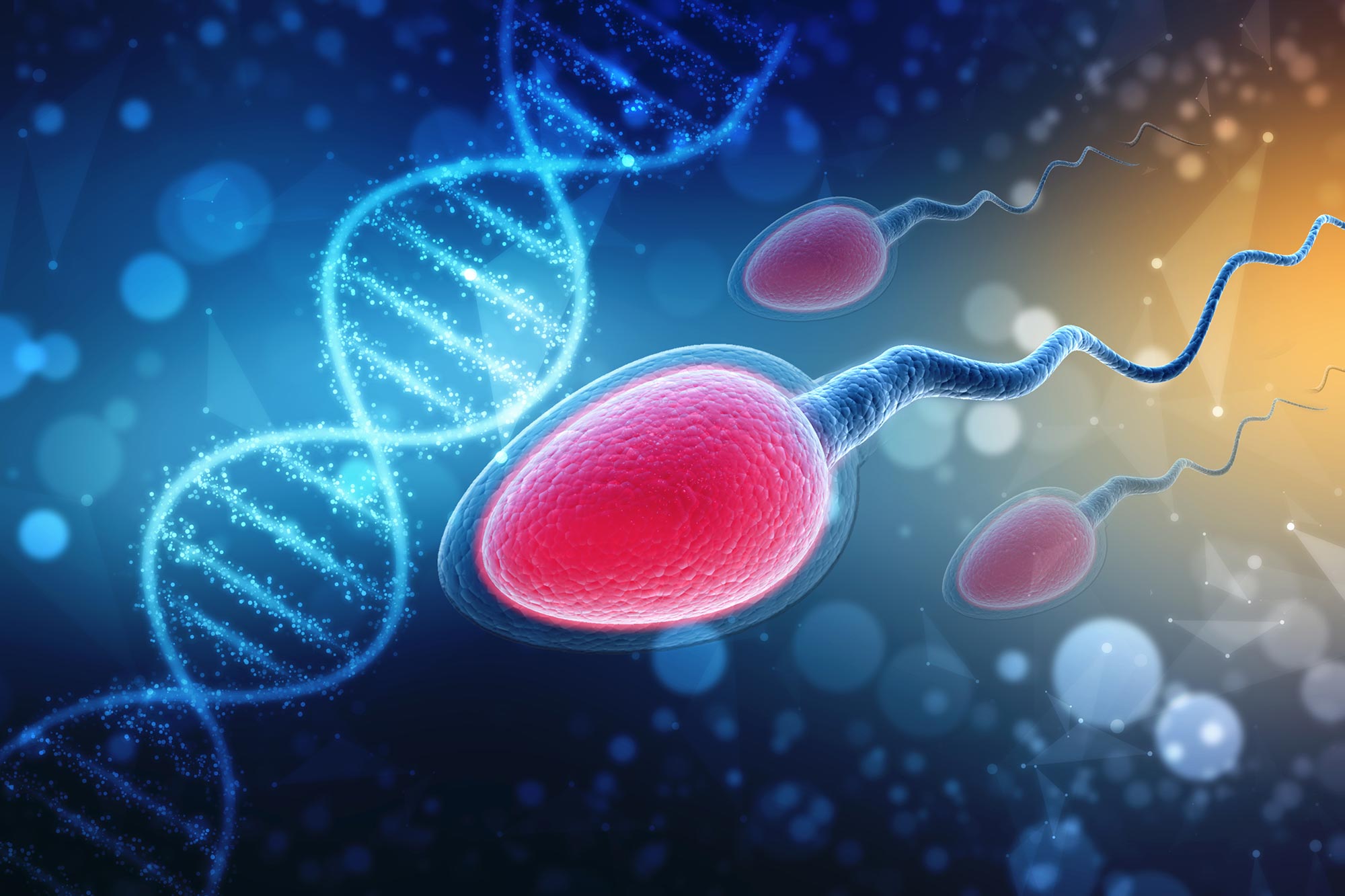
Harmful genetic mutations in sperm become much more common as men grow older, and new research shows this is not simply due to random DNA damage over time. Instead, some of these mutations appear to be actively favored during sperm production.
Mapping Age-Related Genetic Changes in Sperm
In a major study published recently in Nature, scientists from the Wellcome Sanger Institute worked with the TwinsUK study at King’s College London to map how damaging DNA changes in sperm increase across the genome as men age. The research provides the most detailed picture to date of how paternal age influences genetic risk.
These findings also open the door to new research on how lifestyle choices and environmental exposures could shape the genetic information passed to future generations.
Why Some Mutations Gain an Advantage
In tissues that constantly renew themselves, mutations (changes in DNA) can sometimes give certain cells a growth advantage. When this happens, those cells multiply more rapidly, forming groups of genetically identical cells known as clones. Over time, these clones can expand and outcompete surrounding cells.
Most mutations that occur in ordinary, or somatic cells, which form organs, bones, and connective tissue, are not inherited. However, mutations in sperm and egg cells can be passed directly to offspring. Until recently, scientists could not accurately measure how strongly specific mutations were favored in sperm because available DNA sequencing techniques lacked the necessary precision.
Using Ultra-Accurate DNA Sequencing
To overcome this limitation, researchers used NanoSeq1, an ultra-accurate DNA sequencing method, to examine sperm from 81 healthy men aged between 24 and 75 years.2,3 These samples came from the TwinsUK cohort, the UK’s largest adult twin registry, offering a well-documented and diverse population for analysis.
This approach allowed the team to detect rare genetic changes with unprecedented accuracy and track how their frequency shifts with age.
How Mutation Rates Increase With Age
The analysis revealed that about 2 per cent of sperm from men in their early 30s contained disease-causing mutations. That figure rose to between 3 and 5 per cent in middle-aged men (43 to 58 years) and older men (59 to 74 years). Among participants aged 70, researchers found that 4.5 per cent of sperm carried harmful mutations.
Although men are more likely to have children at younger ages, the steady increase in mutation rates highlights how genetic risks to offspring rise as fathers get older.
Natural Selection Inside the Testes
The growing risk is not explained solely by the gradual accumulation of random DNA errors. The researchers found evidence of a subtle form of natural selection occurring within the testes. In this process, some mutations give sperm-producing cells a competitive advantage, allowing those genetic changes to spread more effectively during sperm formation.
Dozens of Genes Affected
The team identified 40 genes in which certain DNA changes are favored during sperm production. Many of these genes are linked to severe neurodevelopmental disorders in children and inherited cancer risk. While 13 of these genes were already known to be involved, the new findings show that the phenomenon affects a much broader set of genes tied to cell growth and development than previously recognized.
Not All Mutations Lead to Birth
Even though the proportion of sperm carrying harmful mutations increases with age, not every mutation results in fertilization or a live birth. Some may interfere with fertilization, disrupt embryo development, or lead to pregnancy loss. More research is needed to understand how the rising number of sperm mutations translates into specific health outcomes for children.
The researchers believe that better understanding how DNA variations arise and are shaped by selection in sperm could improve reproductive risk assessments and help scientists explore how environmental and lifestyle factors influence genetic risk across generations.
Evidence From Children’s DNA
In a complementary study, also published in Nature today,4 researchers from Harvard Medical School and the Sanger Institute examined the same process by analyzing mutations already passed on to children rather than those measured directly in sperm. By studying DNA from more than 54,000 parent–child trios and 800,000 healthy individuals, the team identified over 30 genes in which mutations give sperm cells a competitive advantage.
Many of these genes overlapped with those found in the sperm-focused study and were again linked to rare developmental disorders and cancer. The researchers found that these mutations can raise sperm mutation rates by roughly 500-fold. This helps explain why some rare genetic disorders appear in children even when parents do not carry the mutations in their own DNA.
The study also noted that because these mutations are common in sperm, they can make it appear that certain genes are linked to disease when the association is actually driven by unusually high mutation rates rather than a direct disease-causing effect. Overall, the findings show how natural selection within sperm can be detected directly in children’s DNA and influence inherited disease risk.
What the Scientists Say
Dr. Matthew Neville, first author from the Wellcome Sanger Institute, said: “We expected to find some evidence of selection shaping mutations in sperm. What surprised us was just how much it drives up the number of sperm carrying mutations linked to serious diseases.”
Professor Matt Hurles, Director of the Wellcome Sanger Institute and co-author, said: “Our findings reveal a hidden genetic risk that increases with paternal age. Some changes in DNA not only survive but thrive within the testes, meaning that fathers who conceive later in life may unknowingly have a higher risk of passing on a harmful mutation to their children.”
Professor Kerrin Small, co-author and Scientific Director of the TwinsUK study at King’s College London, said: “We are incredibly grateful to the twins who took part in this study. By working with the TwinsUK cohort, we could include valuable longitudinal samples linked to rich health and genetic information, allowing us to explore how mutations accumulate and evolve with age in healthy individuals. This collaboration highlights the power of large, population-based cohorts for advancing our understanding of human development and inheritance.”
Dr. Raheleh Rahbari, senior author and Group Leader at the Wellcome Sanger Institute, said: “There’s a common assumption that because the germline has a low mutation rate, it is well protected. But in reality, the male germline is a dynamic environment where natural selection can favour harmful mutations, sometimes with consequences for the next generation.”
Reference: “Sperm sequencing reveals extensive positive selection in the male germline” by Matthew D. C. Neville, Andrew R. J. Lawson, Rashesh Sanghvi, Federico Abascal, My H. Pham, Alex Cagan, Pantelis A. Nicola, Tetyana Bayzetinova, Adrian Baez-Ortega, Kirsty Roberts, Stefanie V. Lensing, Sara Widaa, Raul E. Alcantara, María Paz García, Sam Wadge, Michael R. Stratton, Peter J. Campbell, Kerrin Small, Iñigo Martincorena, Matthew E. Hurles and Raheleh Rahbari, 8 October 2025, Nature.
DOI: 10.1038/s41586-025-09448-3
This research is part-funded by Wellcome. A full list of funders can be found in the acknowledgements in the publication.
Never miss a breakthrough: Join the SciTechDaily newsletter.
Follow us on Google and Google News.