This post was originally published on here
SRINAGAR: In a significant step towards strengthening global cooperation in high-value agriculture, a high-level delegation of scientists and policy experts from Iran on Sunday began a five-day study tour at the Sher-e-Kashmir University of Agricultural Sciences and Technology of Kashmir (SKUAST-K), aimed at advancing collaborative research on saffron cultivation, production and market authenticity.
The visit, facilitated through a collaboration between SKUAST-K and the International Crop Research Institute for Semi-Arid Tropics (ICRISAT), is being seen as a major exercise in science diplomacy between two of the world’s most prominent saffron-producing regions, Kashmir and Iran.
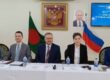
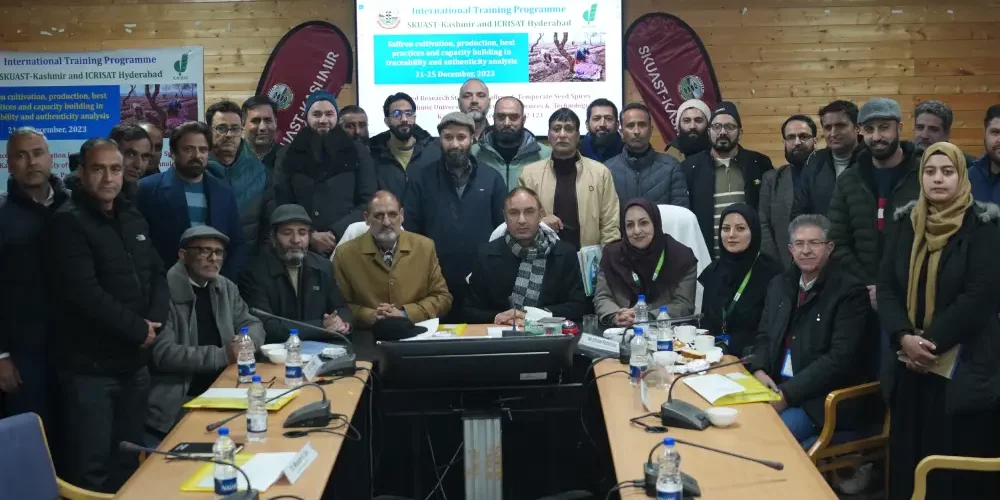
The inaugural ceremony of the programme, titled Saffron Cultivation, Production, Best Practices and Capacity Building in Traceability and Authenticity Analysis, was held at SKUAST-K’s Shalimar campus. The session was chaired by Vice-Chancellor Prof Nazir Ahmed Ganai and co-chaired by Dr Stanford Blade, Deputy Director General of ICRISAT. The Iranian delegation includes Elham Fattahifar, Director General for Greenhouses and Medicinal Plants, along with Parisa Pourali and senior saffron specialist Ramin Esmi, representing Iran’s Ministry of Agriculture Jahad.
Addressing the gathering, Prof Ganai highlighted SKUAST-K’s growing national standing and its focus on research-driven solutions for contemporary agricultural challenges. He said the interaction with Iranian experts would enable a meaningful exchange between traditional saffron-growing knowledge systems and modern scientific and technological interventions, benefiting both regions.
Dr Stanford Blade said the collaboration had the potential to evolve into a long-term partnership encompassing joint research initiatives, academic exchanges and student and scholar mobility, adding that saffron offered a unique opportunity for global cooperation in crop science, traceability and value addition.
The opening session was attended by Director Research Prof Haroon Naik, Registrar Prof Azmat Alam Khan, heads of divisions and research stations, scientists associated with saffron research, and research scholars.
A key highlight of the inaugural day was the keynote address by noted saffron expert Dr FA Nehvi, former head of SKUAST-K’s Saffron Research Station and a central figure in the National Mission on Saffron. Dr Nehvi drew attention to the increasing vulnerability of saffron cultivation to climate change, stressing the need for advanced crop modelling and scientific forecasting to safeguard the long-term sustainability of what is often referred to as Kashmir’s “Red Gold”.
Over the next five days, the Iranian delegation will visit several advanced facilities at SKUAST-K, including the Incubation Centre, the Centre for Artificial Intelligence and Machine Learning, and the Research Centre for Residue and Quality Analysis. A crucial component of the tour will be a visit to the Advanced Research Station for Saffron and Seed Spices and the India International Kashmir Saffron Trading Centre at Dusu, Pampore, where the delegation will study Kashmir’s GI-tagging mechanisms and e-auction systems for saffron trade.
The programme is being coordinated by a joint team led by Dr Manzoor Husain Dar of ICRISAT and Prof Sher A Dar of SKUAST-K and is expected to conclude with a shared roadmap for improving saffron traceability, authenticity testing and global market value through coordinated research and policy alignment.