
This post was originally published on here
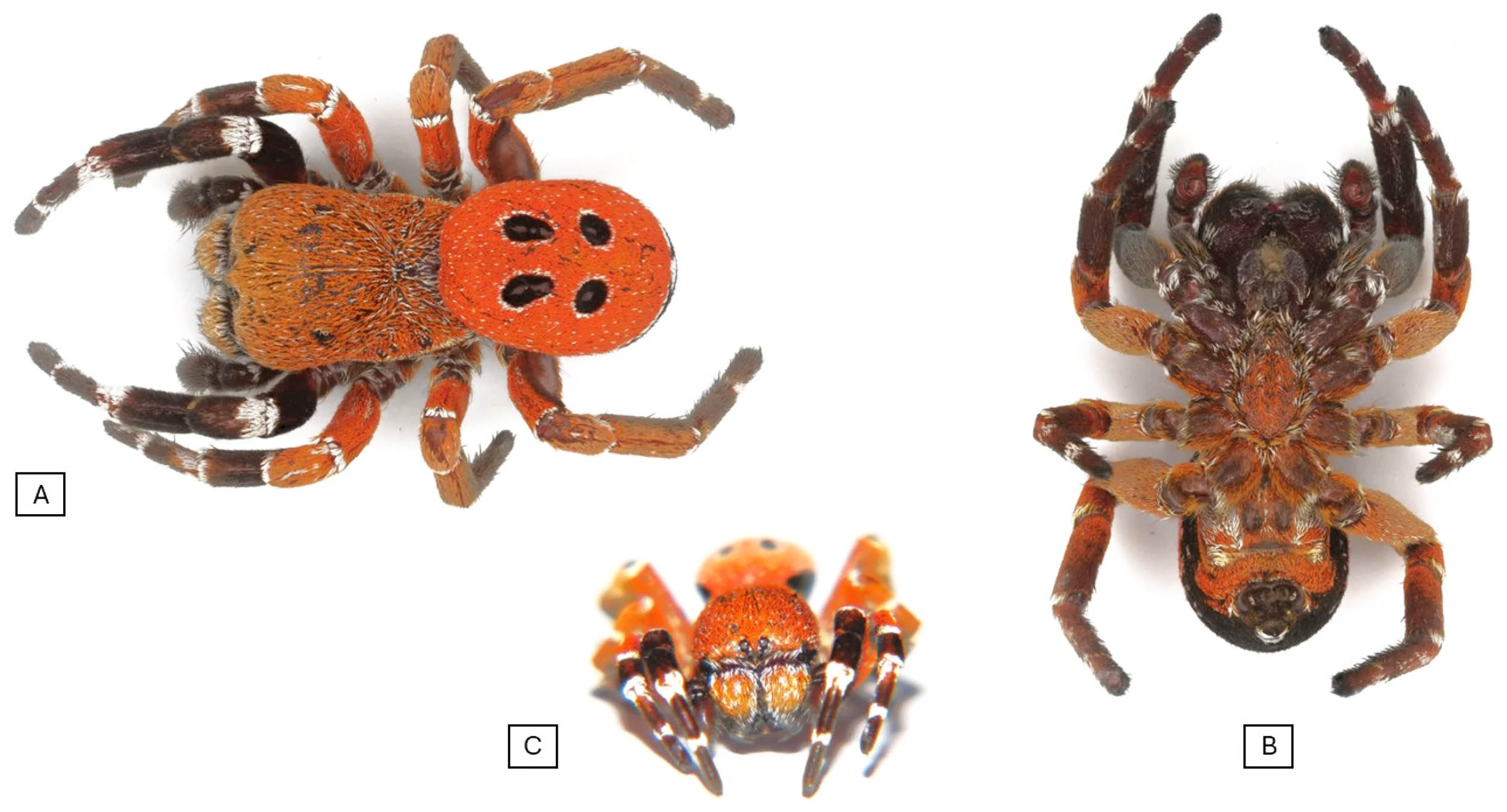
Researchers have described a new ladybird spider species from northern Morocco after examining two male specimens collected during fieldwork outside Rabat. They named it Eresus rubrocephalus, and the report adds a new record to the map of North-African wildlife.
The males carry carmine-red hairs across their head and abdomen, a look that does not fit the usual pattern for this group.
Researchers tested fine body structures under microscopes, because color alone can mislead when animals vary across seasons, ages, and local habitats.
Where the discovery began
The work was led by János Gál, an associate professor at the University of Veterinary Medicine Budapest, where he teaches and researches wildlife and exotic animal health.
His career includes time in Morocco, and he also studies regional spider diversity alongside his veterinary work.
Collectors found the spider in a cork oak grove near Sidi Allal El Bahraoui, and the males mature in June, so sightings depend on a seasonal window.
Identifying Eresus rubrocephalus
Spider taxonomy, the science of naming and sorting living things, often starts with body parts that stay steady even when color changes.
In ladybird spiders, males and females can look so different that researchers lean on shapes and textures rather than patterns alone.
The key trait here sits on the male palp, a small mating appendage near the mouth, which spiders use to transfer sperm.
Their images captured several shapes that did not match close relatives already cataloged, even after careful comparison with published drawings and photographs.
A holotype, the single specimen that anchors a species name, carries the legal weight of the description in zoology.
Rules spelled out by the International Code of Zoological Nomenclature tie that role to the original publication.
The authors also set aside a paratype, an extra specimen that supports the main type, and they placed it at their Budapest department.
They stored the holotype in the Hungarian Natural History Museum, and the spider’s front body section averaged about 0.29 inches long.
What the lab work uncovered
For the smallest features, the team used a scanning electron microscope, which is a device that maps surfaces with electrons, to photograph the male palp in detail.
That approach can reveal ridges and grooves that a light microscope blurs, especially when hairs and shadows hide the true edges.
In Eresus rubrocephalus, the conductor plate, a hard part of the male palp, holds a U-shaped groove that wraps almost three-quarters of a circle.
That deeper groove and a sharply curved terminal tooth helped distinguish the spider from close look-alike species in the same genus.
The paper pairs photos with drawings so other experts can check the same landmarks, even if they never visit the original museum specimens.
Clear records reduce confusion later, because spider names can turn messy when several groups describe similar animals from different countries.
When DNA enters the picture
DNA barcoding, matching short gene sequences to known species, gives taxonomists another check when a specimen looks unusual in the field.
Early research showed that a single mitochondrial gene often separates closely related animal species, which is why many groups rely on it.
The team extracted DNA and sequenced COI, a common barcode gene in animal mitochondria, from the Moroccan spider and compared it with public Eresidae records.
Their COI DNA sequence differed by at least 8% from reference sequences, and the analysis placed the specimen on a clearly separate branch.
They also ran species delimitation, tests that sort sequences into likely species groups, and every method kept the COI sample on its own.
The authors cautioned that a single gene can miss hidden relationships, so they leaned on anatomy and genetics together before naming the spider.
Lessons from Eresus rubrocephalus
Spider colors often come from pigments or from the way tiny hairs reflect light back toward an observer.
Because researchers still lack the female for this species, they cannot yet test how color, behavior, and habitat interact across its life cycle.
The paper argues that Morocco may act as a local center for Eresus diversity, since researchers have described several related species there in recent years.
That pattern hints at populations that separated over time, especially where mountains, coastlines, and dry inland plains create sharp habitat borders.
Formal names matter because conservation plans, trade rules, and land surveys often ignore organisms that lack a clear scientific identity.
Museum backed records, combined with careful genetics, give future biologists a baseline for tracking losses, range changes, and new arrivals as climates and land use change.
The study is published in Animals.
—–
Like what you read? Subscribe to our newsletter for engaging articles, exclusive content, and the latest updates.
Check us out on EarthSnap, a free app brought to you by Eric Ralls and Earth.com.
—–