This post was originally published on here
Eckerd College’s annual program to send student scientists on a research cruise lost its main source of funding from the National Science Foundation.
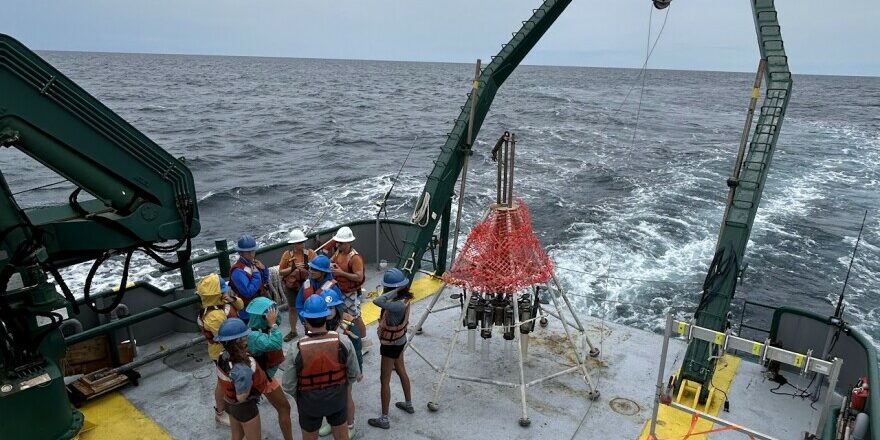
The Scientist at Sea (SAS) course just completed four years of these excursions into the Gulf.
Rebekka Larson is a researcher and professor at Eckerd, overseeing the program. She said this is a unique experience for undergrads still deciding which career path to take.
Sam Taylor
/
Courtesy
“We’ve had 40 students graduate from Eckerd that were in the SAS program, and about 70% of them have gotten jobs, either going to graduate schools or in industry or government agencies or nonprofits,” she said.
In fact, six or seven SAS graduates who are currently in the workforce came to support the 2025 SAS Symposium at Tampa Bay Watch in Tierra Verde on Wednesday, Dec. 3.
This yearly event is where the latest class of students talk judges through their research using posterboards.
Hurricanes shifting sediment
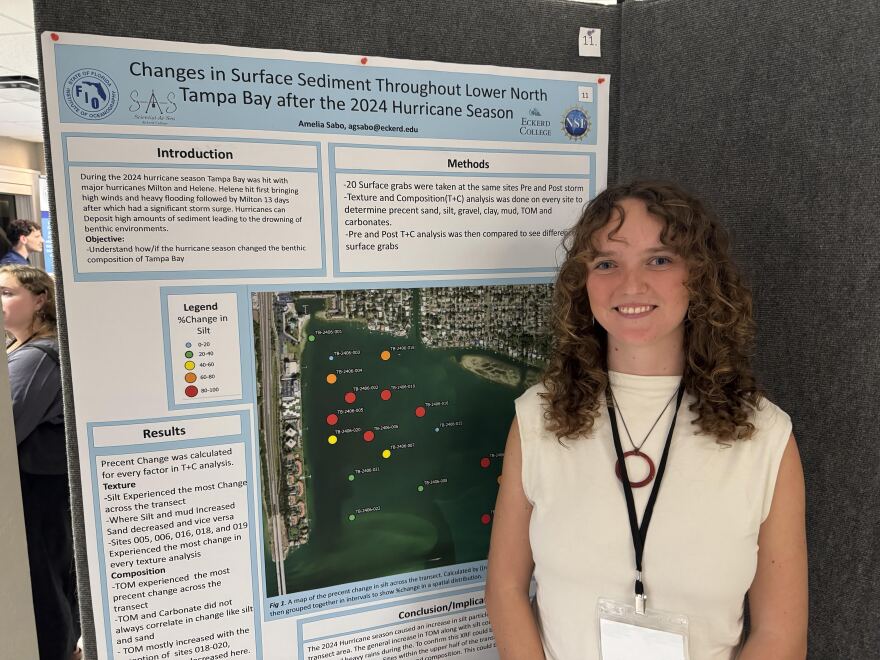
Amelia Sabo, 21, was recognized with the Presidential Outstanding Poster Award at the symposium for her focus on how the 2024 hurricanes impacted sand and silt distribution in Tampa Bay.
Jessica Meszaros
/
WUSF
The junior, studying geoscience at Eckerd College, grew up on Tampa Bay beaches, so the 2024 storm season was emotional for her.
“Seeing the effects of the hurricane really kind of crushed me,” Sabo said.
She decided to do something about it.
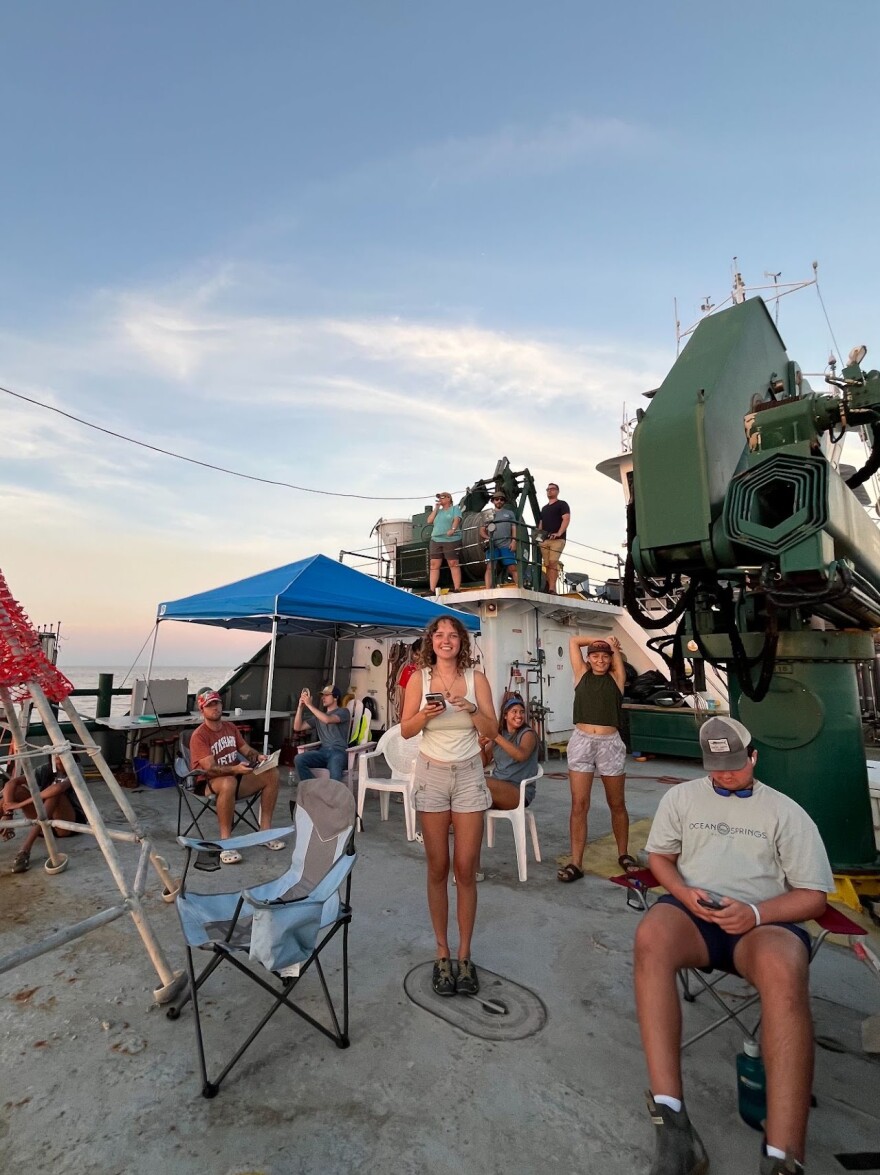
Emma Stoke
/
Courtesy
Sabo hopped on a research vessel with her classmates in May and sampled sediment from the ocean floor of 20 sites around the Sunshine Skyway bridge, looking for storm impacts in the estuary.
“What I found is that there is a big percent change in silt. And wherever silt increased, sand decreased. And wherever sand increased, silt decreased,” Sabo said.
Silt is a lot smaller than sand, so the fact that they swapped places in areas potentially affects the bottom-dwelling marine life, called benthic organisms.
“Things like seagrass are really dependent on sediment, and that change could really affect those benthic environments and kind of change how Tampa Bay is operated,” she said.
Sabo also found an overall increase in organic matter, which could be an indication of stormwater runoff, but she said more testing needs to be done on that.
She hopes her findings serve as a time series for comparing hurricane seasons and how the environment is changed by them.
Health of the West Florida Shelf
Three other students were honored for their work.
Research partners Sam Taylor and Emma Stoke jointly won the CAE / Lynn Paxton Outstanding Poster Award for their study of benthic health off the West Florida Shelf, which is a sloping underwater plain in the eastern Gulf.
Sam Taylor
/
Courtesy
“Pretty much our findings summed up that the West Florida Shelf seems moderately healthy,” Taylor said.
They used data collected by the National Oceanic and Atmospheric Administration to create a baseline for four areas between 2023 and 2025.
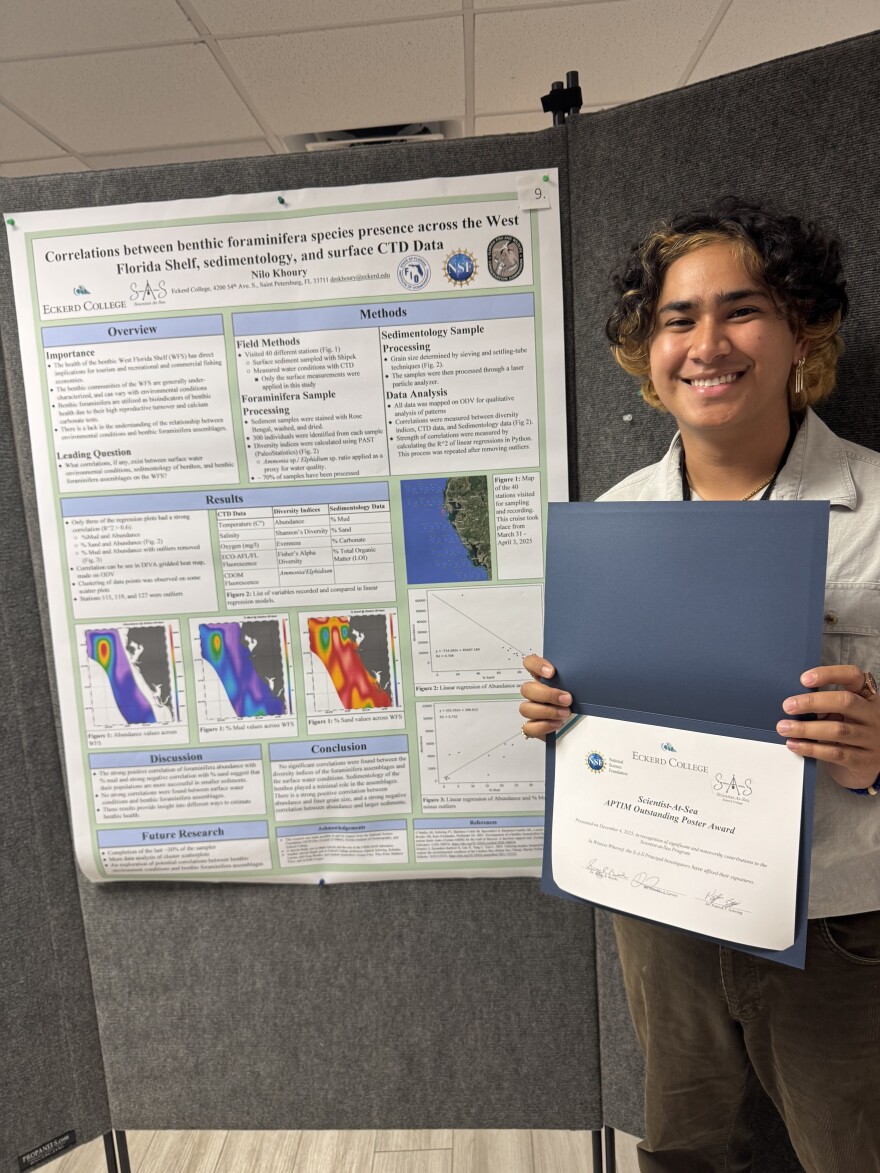
Jessica Meszaros
/
WUSF
“Creating this baseline … is just really important for having a foundation for looking at how future impacts, such as climate change, anthropogenic effects, storms such as hurricanes, will affect these communities,” Stoke said.
Nilo Khuory, a 22-year-old senior, also studied the West Florida Shelf seafloor and was granted the APTIM Outstanding Poster Award.
The focus was on finding correlations between single-celled microorganisms called benthos foraminifera, the tiny seashells they create, and environmental conditions, such as temperature, salinity and oxygen.
“I actually found that there wasn’t a lot of correlation … It would make sense that surface conditions don’t really affect the benthos because they’re so far away, like some places 60 meters or more,” Khuory said.
Student voyages persist
Many student scientists have similar responses when asked about the opportunity to work on a research vessel and conduct a scientific study as undergrads.
“This experience was definitely life-changing. I mean, being able to live on a ship and do scientific research, what I’m passionate about, is really something I’ve never experienced before,” said Sam Taylor.
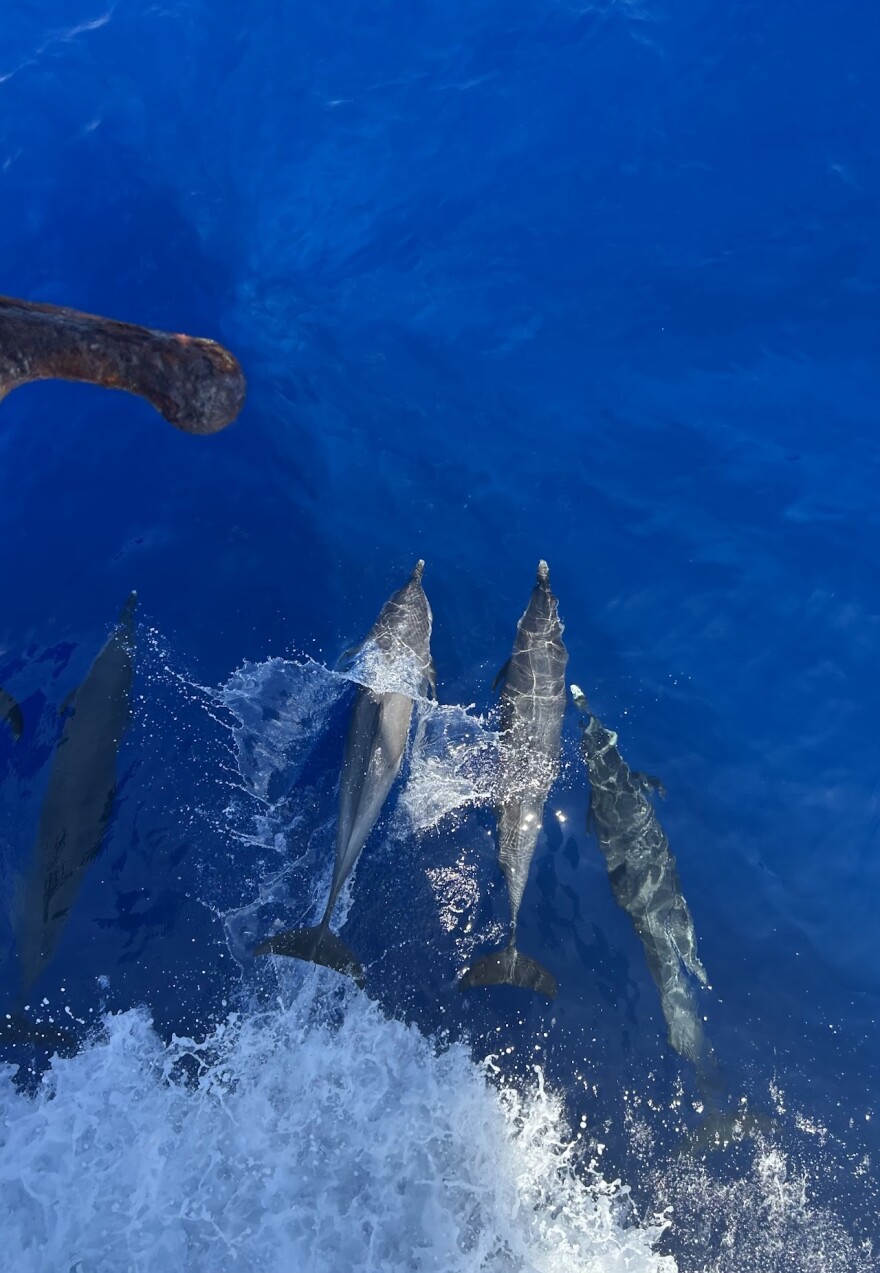
Amelia Sabo
/
Courtesy
The program also helped solidify what Emma Stoke wants to do after she graduates.
“I would like to go to grad school and participate in active research for the rest of my career,” Stoke said.
Working on the boat also brought some clarity to Amelia Sabo, who has “always been on the fence” regarding career focus.
“I started to do this, and I was like, ‘Wow, I really want to work with like coastlines and do coastal restoration and stuff like that,’” she said.
A fond memory of ship life for Sabo was waking up one morning to find dolphins jumping right next to the ship.
“I was like, whoa!” she said, laughing.
Professor Rebekka Larson said Eckerd still plans to take 15 students on a scientific voyage in 2026, despite the lack of NSF dollars, thanks to some supplemental donations.
“We’re working towards getting the little bit of extra funding we need. Primarily, it’s to help fund the research cruise experience,” she said.
The class still needs between $36,000 to $40,000 to back the expedition, but they’re about a third of the way there, so Larson is optimistic.