This post was originally published on here
Life-sustaining groundwater isn’t so far beneath our shoes, but knowledge about it, and the underground world it flows through, can feel far away.
In some cases, “we know more about distant star systems than we know about the interior of our own planet,” said Mike Howley, a senior geoscientist with the New Hampshire Geological Survey, within the New Hampshire Department of Environmental Services.
Howley oversees the dozens of monitoring wells in the New Hampshire Geological Survey’s groundwater monitoring network. Data from the network is used at both the state and federal level, including to inform the National Weather Service’s U.S. Drought Monitor.
Drought data from the monitor is shared widely and used to understand the extent of drought in different regions across the country. Its collection starts at wells like those Howley oversees, where automated instruments and human observers alike access vast and little-understood groundwater networks.
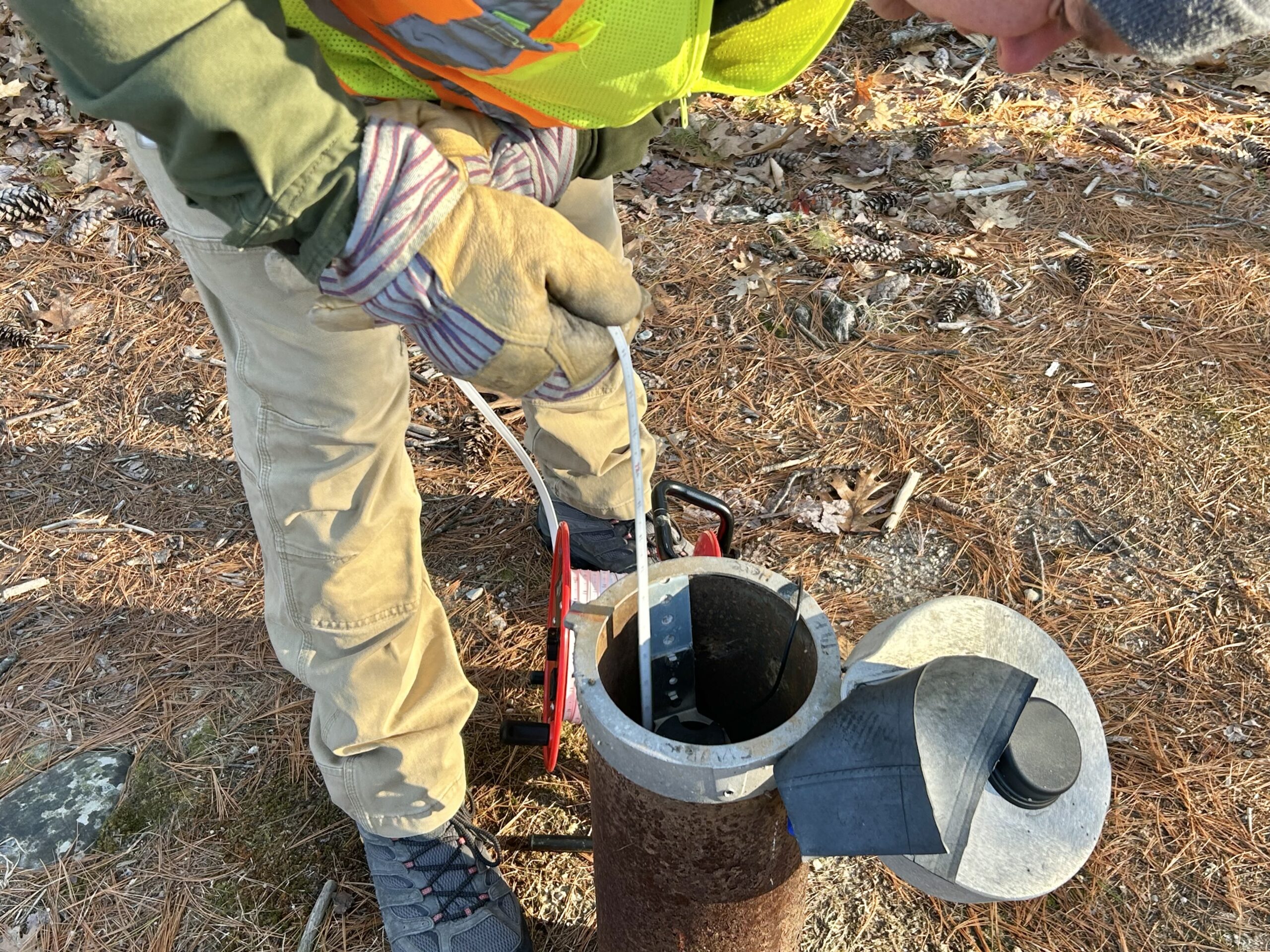
On the chilly morning of Monday, Dec. 22, Howley was in the field, conducting a quarterly checkup on two of those monitoring wells at a state forest trailhead in Concord. This is a regular appointment for Howley: While automated stations can be checked once a quarter, the state also maintains multiple wells that can’t fit automatic instruments and must be checked manually once per month.
A monitoring station visit entails a water-level check to compare and verify the data logged by the computer. To reach water far below the ground, Howley unspools what appears to be a long tape measure capped with a metal probe. Two lengths of wire run down the tape; when the probe touches water, it completes a circuit, igniting a red light on the spool and sounding an alarm to alert the measurer that the tape has reached water.
Howley measures the depth of each well twice, taking notes throughout. Precision and consistency create the kind of data that can be shared and used far and wide, including by federal agencies, he said.
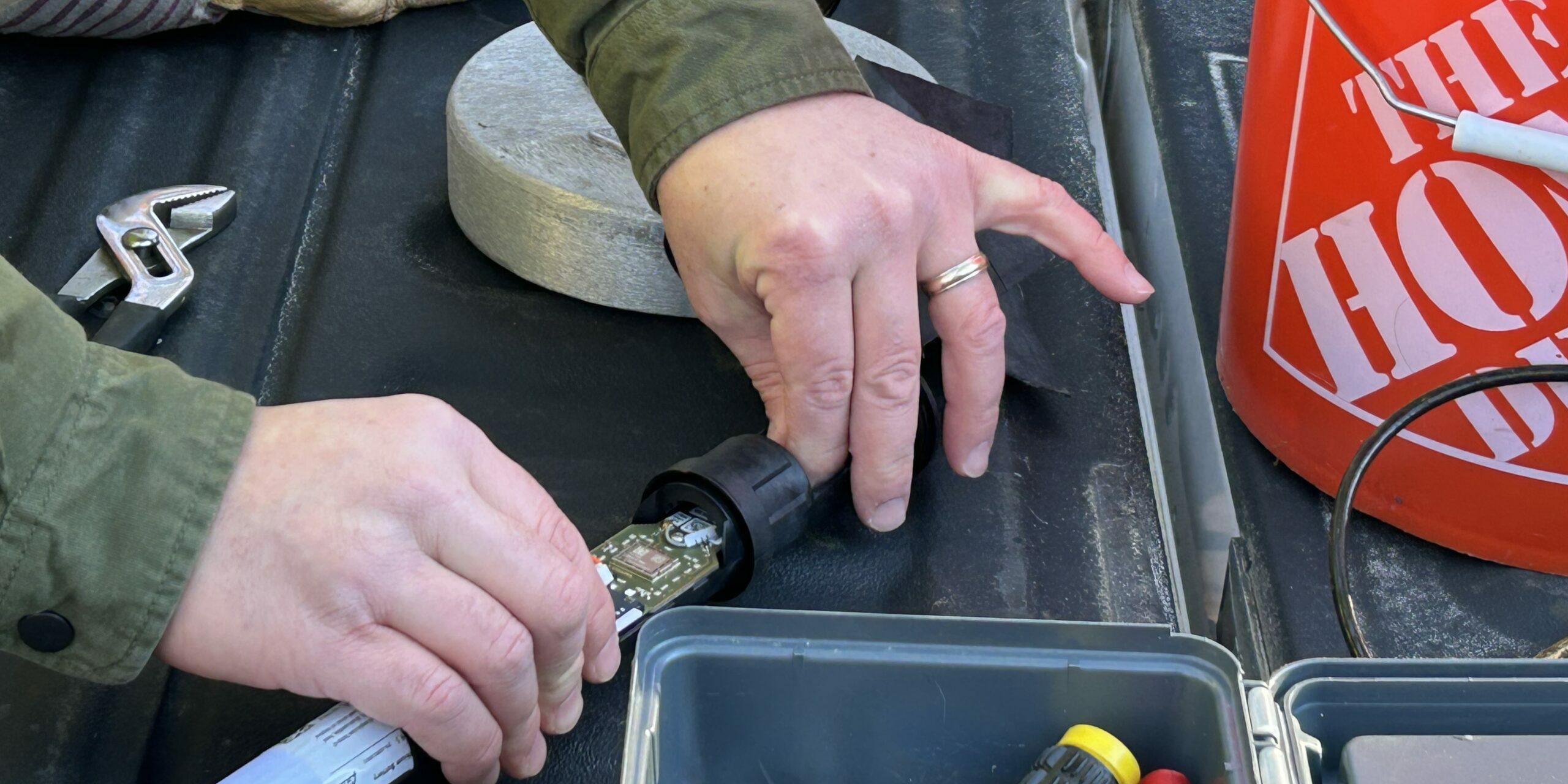
On Dec. 22, Howley also removed one of the automated water level trackers for maintenance. The small computers log the water level every hour, and upload their data every midnight, contributing to a fine-grained dataset that can reveal both short- and long-term trends in groundwater fluctuation.
One of the challenges Howley faces is the need to relocate a well when new development or evolving land use threaten its current location. Doing so requires finding a new location nearby, often on state land, then operating the new and old monitoring wells side-by-side for at least a year. Overlapping data is necessary to put measurements from the new well in context with those from the old well, so that the data — sometimes stretching back decades — isn’t cut off by the move, Howley said. Groundwater can behave differently from location to location, so comparing a year’s worth of measurements can help place measurements from two wells in conversation with one another.
Finding dependable, safe locations to site wells “is kind of a game of whack-a-mole,” Howley said. “We’re trying to preserve these long-term monitoring locations in an ever-changing world.”
Howley likes his work, even on days like Dec. 22, when the instruments’ computers were sending error messages that they were too cold to upload their data while Howley was reeling in wet measuring tapes and taking off his gloves to note measurements despite the 20-degree weather.
“I thoroughly enjoy it,” he said.
To Howley, the work is essential. When droughts like this year’s set in, public attention turns to groundwater with some urgency, he noted. But, Howley said, it’s important to pay attention to the state of the natural resource at all times, not only during a crisis.
He and other scientists are seeking more information about how groundwater responds to weather events and climatic shifts, with effects ranging from droughts and drinking water uncertainty to flooding. Measurements like those taken at the department’s monitoring wells are crucial for building such understanding, said Howley.
“If we, as a society, want to know how much water is available, we have to monitor,” Howley said.