This post was originally published on here
Rabat – Scientists have identified a new species of ladybird spider in Morocco with an unusual and striking red coloration.
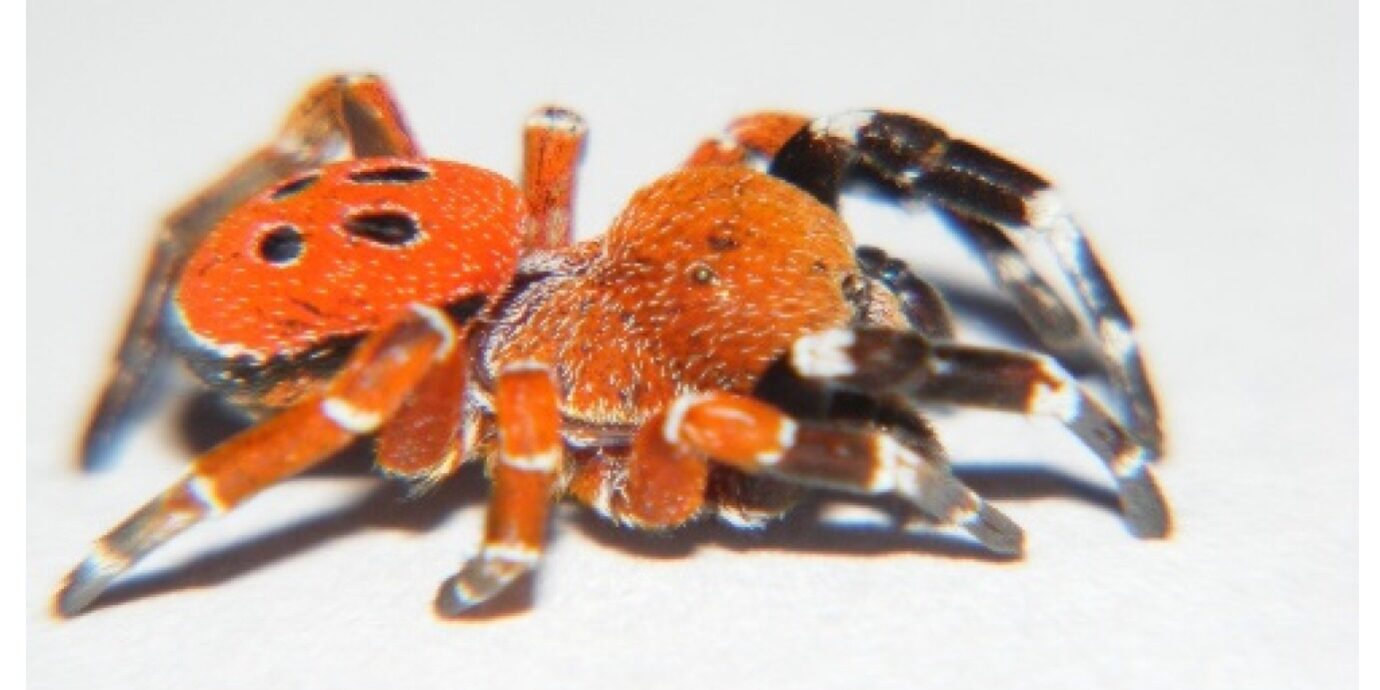
The newly described species, named Eresus rubrocephalus, was found near Sidi Allal El Bahraoui, northeast of Rabat. Unlike other known ladybird spiders, whose heads are typically black, this species stands out because its entire head and body are covered in deep carmine-red hairs. This feature has never been documented before in the genus Eresus.
The discovery was published in the scientific journal Animals by an international research team led by Hungarian scientists, with specimens collected in Morocco by researcher Richárd Bagyó. The spiders were found in a cork oak forest with red, iron-rich sandy soil, an environment that may have played a role in their evolution.
Ladybird spiders are known for their bright colors and strong sexual differences. Females are usually large and dark, while males are smaller and vividly colored. However, until now, no known species had a completely red head, which makes Eresus rubrocephalus a true oddity.
To confirm that the spider was a new species, researchers used a combination of microscopic examination and genetic analysis. They closely studied the male spider’s reproductive organs, which are crucial for distinguishing spider species, and found clear structural differences from all known relatives.
In addition, DNA barcoding using the mitochondrial COI gene showed that the species is genetically distinct and forms its own separate branch on the evolutionary tree.
Only male specimens have been identified so far, and the female remains unknown. According to the researchers, adult males appear in June, when they leave their burrows to search for mates.
The name rubrocephalus comes from Latin and Greek words meaning “red head,” directly referring to the spider’s most distinctive feature.
This discovery adds to growing evidence that Morocco is a hotspot for spider diversity, particularly for ladybird spiders. Several new Eresus species have been described from the country in recent years, suggesting that North Africa plays a key role in the evolution of this group.
Scientists say that further field research and genetic studies could reveal even more undiscovered species in the region.