This post was originally published on here
The end of the year is a time to look back and compare our achievements with our goals. We’re six years past Blade Runner, 10 years beyond Back to the Future Part II, and 25 years into the not-so-new millennium.
While not all of our futuristic predictions have come true (flying cars and hoverboards may never happen, y’all), others are taken for granted or on approach. People are controlling bionic prostheses with their minds, the evolution of large language models and generative AI is underway (for better or worse), and we’ve celebrated 25 non-stop years of humans living in space.
Scientists are constantly pushing the boundaries of knowledge and possibility. Over the last year, research teams around the world have broken ground, experimented, invented, and pushed us a little closer to a mysterious new future. These are some of 2025’s coolest moments in science.
The asteroid 2024 YR4
Asteroid
The years started off with a bang, or at least the threat of one.
Advertisement
Advertisement
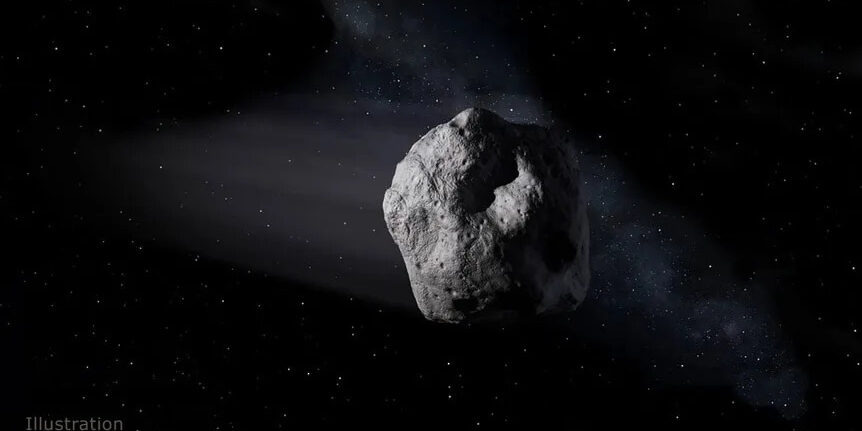
Technically, astronomers detected YR4 at the end of 2024 but it really had its moment just after the new year. The asteroid itself is relatively small, between 130 and 300 feet across, but it initially had a high probability of striking Earth.
When astronomers track an object in space, they attempt to project its orbit into the future. Over time, with more and more observations, you can better constrain the orbit and know where an object’s going with a high degree of certainty. When 2024 YR4 was first observed, astronomers didn’t have much data and plotted many possible trajectories. Based on those initial observations, there was a 1 in 62 chance that the asteroid would strike Earth in 2032. The asteroid quickly topped the list of potentially hazardous asteroids.
Fortunately, follow-up observations better defined the orbit of 2024 YR4 and it became clear it wouldn’t strike the planet. However, there is still a chance it will strike the Moon when it comes back through our neck of the woods.
Discovery of space tornadoes at the center of the galaxy

A diagram analyzing space tornadoes.
Using high-resolution instruments at the Atacama Large Millimeter/submillimeter Array (ALMA), cosmic storm chasers discovered massive space tornadoes around the supermassive black hole at the center of our galaxy. Understanding how these swirling filaments interact with the rest of the galactic center could help astronomers better understand how galaxies evolve over time.
Advertisement
Advertisement
“Our research contributes to the fascinating Galactic Center landscape by uncovering these slim filaments as an important part of material circulation,” said corresponding author Xing Lu, in a March 19 statement. “We can envision these as space tornados: they are violent streams of gas, they dissipate shortly, and they distribute materials into the environment efficiently.”
Colossal Biosciences announces birth of Colossal dire wolves

Dire wolf pups held in someone’s hands.
For the last several years, Colossal Biosciences has promised to recreate a number of extinct species including the mammoth, thylacine, and dodo. In April, the company made headlines with the announcement of the first dire wolves in more than 10,000 years.
The company compared DNA from a 13,000-year-old dire wolf tooth and 73,000-year-old skull with the DNA of modern gray wolves. After identifying the genes specific to dire wolves, Colossal modified gray wolves to express dire wolf traits. Today, there are three Colossal dire wolves living on a secret preserve.
For more science news:
A 6,000-Year Drought Drove Hobbit-Like Humans to Extinction
New Material Stabs and Kills Bacteria With Microscopic Knives (Yes, Really)
Astronomers May Have Caught Their First Glimpse of Dark Matter
Advertisement
Advertisement
While de-extinction is a headline grabber, the real story is what these technologies can do to prevent extinction. Alongside the dire wolves, Colossal also created red wolves, a species of North American wolves on the brink of extinction. The project was a potential test run for technological tools for conservation which could help to restore lost genetic diversity to struggling populations.
Discovery of interstellar asteroid 3I/Atlas
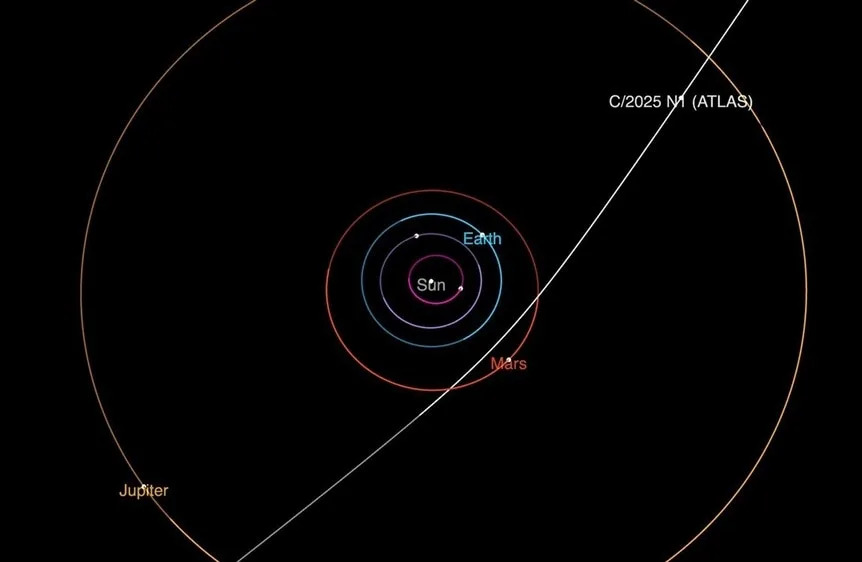
Orbit of Comet 31/ATLAS
This year, astronomers discovered the third confirmed interstellar object, following the cigar-shaped ‘Oumuamua and the comet Borisov. The third object was dubbed 3I/Atlas, with 3I standing for third interstellar and Atlas for the Atlas telescope (Asteroid Terrestrial Impact Last Alert System) which discovered it.
As has been the case with all three interstellar objects, conspiracy theories abounded about the possible alien origin of 3I/Atlas. Some even suggested that 3I/Atlas was an alien space probe sent to study our solar system, our planet, and us.
Over the last six months, continued observations have shown Atlas behaving more or less how we expect an interstellar asteroid to expect. If it’s an alien probe, it’s well-camouflaged!
The Hubble Space Telescope turns 35
Hubble Space Telescope
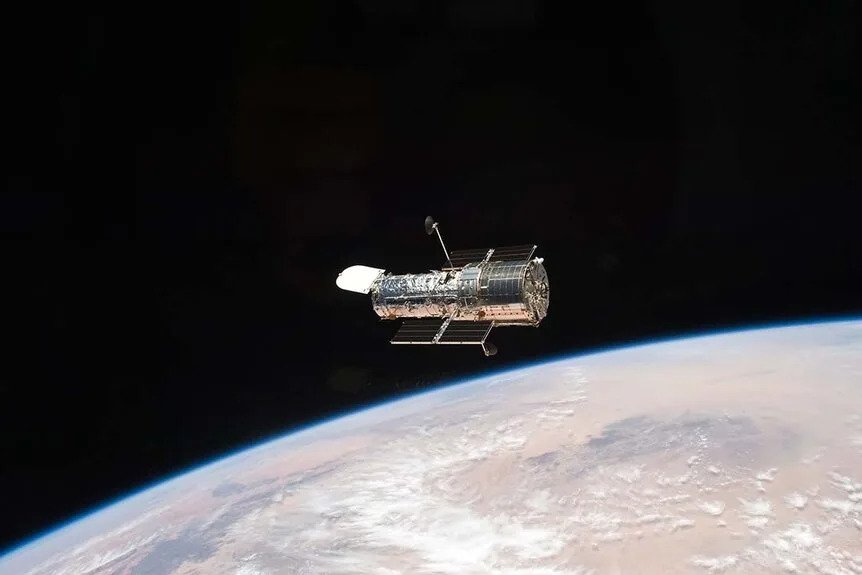
The Hubble Space Telescope has long been our window to the universe. Ground-based telescopes do great work, but they have to contend with the atmosphere. Dust in the air and even fluctuations in temperature can make space images fuzzy. Not to mention the growing constellations of satellites mucking up observations. If you want really clear pictures of the cosmos, you need to get off the planet.
Advertisement
Advertisement
Hubble is a 24,000 pound behemoth launched aboard the Space Shuttle Discovery on April 24, 1990. Over the next couple of decades, Hubble underwent a handful of servicing missions to repair or upgrade instruments and keep the telescope operational.
Hubble was designed to operate for 15 years but it has more than doubled that lifetime. Still, Hubble is showing its age. At present, Hubble is operating on a single gyro instead of the original three, but it’s still sending back incredible images of nearby objects and deep space, more than 35 years after launch.
Possible signs of life on Mars
1 PIA26368 Perseverance Finds A Rock With Leopard Spots
NASA’s Perseverance rover was sent to Mars with the goal of finding evidence of ancient life on the red planet. It’s been tromping around Jezero Crater, collecting samples, analyzing them, and stashing them for a possible return mission to Earth.
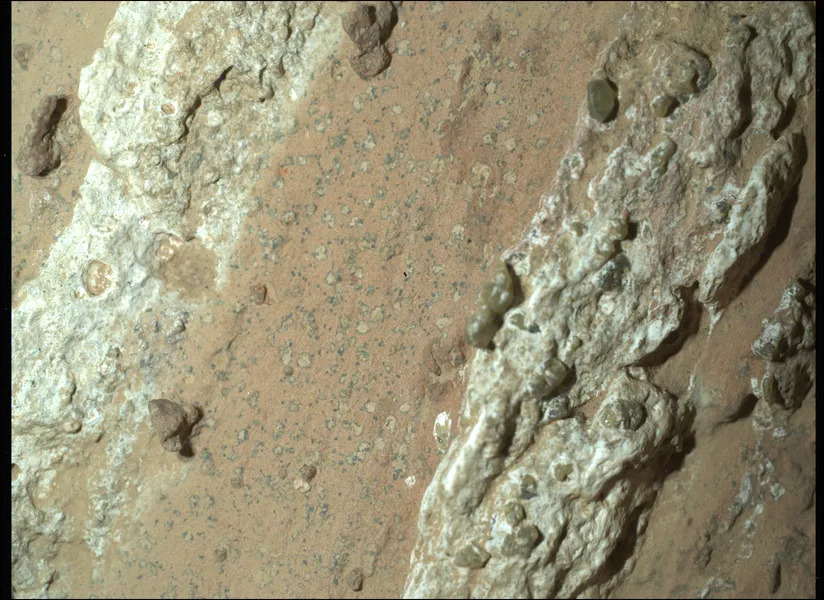
Recently, Perseverance sampled a rock which may hold hints of ancient Martian microbes. The rock, known as Cheyava Falls, has a number of surface features which have scientists interested. White streaks appear to have been left behind by flowing water and leopard spots look like leftovers from microbes.
Advertisement
Advertisement
Using the instruments PIXL (Planetary Instrument for X-ray Lithochemistry) and SHERLOC (Scanning Habitable Environments with Raman & Luminescence for Organics & Chemicals), the rover found evidence of iron-rich minerals vivianite and greigite. On Earth, vivianite is found in peat bogs and around decaying matter while greigite is produced by microbes.
To find out for sure, scientists would need to bring the rock back to Earth for study, but Cheyava Falls has characteristics consistent with past microbial life and there’s no other known explanation that fits the evidence.
Get more science from the Science Guy himself in The End is Nye, streaming now on SYFY.