This post was originally published on here
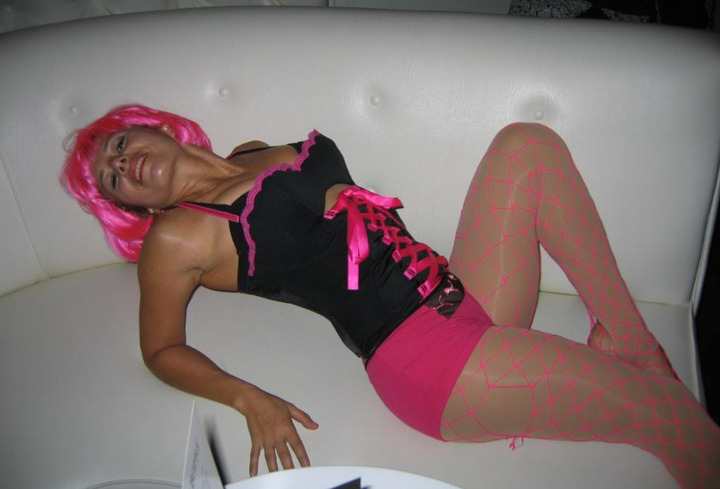
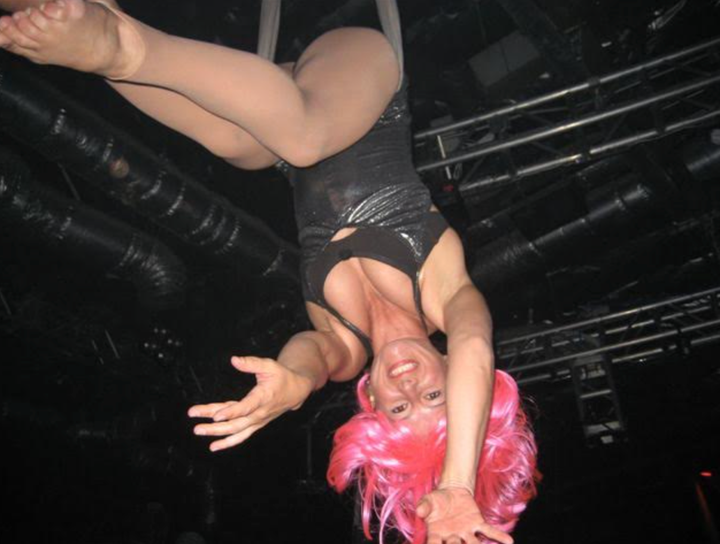
Every Saturday night, I slipped into a sequined bra and booty shorts to hang suspended from a trapeze above the dance floor of a packed-out, 20,000 square ft., iconic nightclub on Hollywood Blvd. in Los Angeles.
Then, every Monday, I went to work and hid my thrilling side hustle from the college students I taught. I wanted them to get excited about science without transferring their passions onto me.
I hated breaking myself in two. I craved sensuality and intellect, playfulness and thoughtfulness, fun and legitimacy — I didn’t want to choose. But like many women, I felt forced to decide.
Advertisement
Brains or beauty. Never both.
I’d felt this same anxiety about my conflicting sides in graduate school and throughout my professional career in the sciences, where prudishness was the norm and sexiness taboo. At university, I wanted to sing about whale migration and party on every fieldwork expedition, but the academic community equated sensuality with a lack of legitimacy, and my parents, teachers, and other authority figures labeled sexy girls as “bimbos.”
Looking back, I wonder if my spirited demeanor was the reason I didn’t thrive as well as students who quietly turned in their assignments. Was the system set up to reject people like me?
Years later, I still struggled to be whole.
Courtesy of Laura Faye Tenenbaum
Advertisement
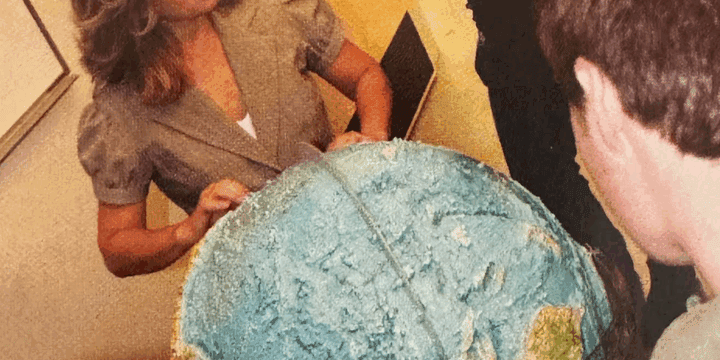
I wanted to connect with students while preserving a healthy distance, to stay accessible and maintain control over the class at the same time. But a lack of respect for teachers and a disregard for teaching as a profession had increased in the United States, so I expounded on plate tectonics and ocean currents in buttoned-up shirts over slacks. I hoped that my matronly professor uniform would buy me some weight, but clothes couldn’t hide my true self. I was the fun teacher, the sassy teacher, the teacher who cussed, and my students ended up liking me for all the wrong reasons anyway.
After decades in the classroom, I’d discovered that students became engaged with the course material if I gave them the chance to express themselves first. Listening to them helped create a bond, and students were more inclined to learn. I asked personal questions: “What are you into? What do you do after class? What do you tell your friends?” These get-real sessions increased attendance, especially with freshmen, who were one step removed from needing a permission slip just to pee.
The students said that they couldn’t see themselves in the rigid stereotype of what scientists were supposed to be: evil bad guys or nerds who never got laid. They believed scientists were “boring people who isolated themselves in their labs, only wore white lab coats, and had no social life.” They said that to them, the experts in science videos “look fake, unrealistic and out of reach.” They hated being talked down to, wanted interaction and to be treated as adults.
Advertisement
Courtesy of Laura Faye Tenenbaum
“I feel like dancing,” I said on the morning of one class’s final, aware that positive mental states could boost test scores. Out across the stadium seating, a hundred students glanced at notes, shuffled blue books, sharpened pencils.
“Here,” two young men rushed toward me, put an iPhone in my hand, and pressed play. “Do the Nae Nae.”
Advertisement
I bent my knees, waved one arm and rocked my hips. The classroom erupted with delight. In that moment, I was free, my authentic self. I almost broke down and told the truth about my trapeze gig, but I was afraid they’d be thinking about me instead of focusing on the plankton, so I kept it inside.
That weekend, I rolled up at the dance club with a suitcase of skimpy outfits and cruised past the ticket window. I nodded to the bouncer who escorted me upstairs, past the still empty club and the VIP area, to the dressing room that four trapeze artists shared with four pole dancers.
The one time I lingered in VIP was the night of my audition, scheduled for 11:30 p.m. I stood in front of a giant glass window overlooking the dance floor and directly in front of the trapeze, with Ray, the booking guy, and another aerialist. We watched a girl perform, and then it was my turn. I knew they’d be judging my performance from that same location.
Advertisement
“Don’t do so many difficult tricks,” Ray said when I came down. “Don’t work that hard. This is just a sexy girl above the crowd. Just sit there and swing if you want.”
I performed every weekend after.
In the dressing room, I did my makeup and changed into my teeny costume, a glorified bra and panties I’d scored from the Target sale rack or a stripper store in North Hollywood, either Day-Glo or rhinestone. Around 11:00 p.m., a couple of bouncers walked me and another trapeze girl downstairs and onto the heaving dance floor.
It was fantastic for me, at five feet and 110 pounds, to have bodyguards who prevented me from being crushed. At the club, my toes never got stomped on, I wasn’t elbowed, and my face never got squashed into anyone’s back.
Advertisement
Courtesy of Laura Faye Tenenbaum
The escorts cleared a spot underneath the trapeze. I slipped off my heels, stepped into one of their hands, we nodded one, two, three, and he lifted me over his head, high enough to grab a looped piece of silk fabric. Sometimes, a partier tripping on molly clawed at me and the bouncers would swat him away. Then I climbed.
Hanging from one knee or balanced upside-down somehow felt less vulnerable than being surrounded by strangers. Still, I always worried about hearing, “Hey, Professor Tenenbaum,” coming from somewhere in the crowd.
Advertisement
Arching into a straddle split left me wide open, able to express the slinky, playful, exuberant parts of myself I kept hidden so much of the time. Still, perched 30 feet above revellers fist-pumping to electronic dance music, I could also remain detached. Those bodyguards served the same purpose as my professor’s podium. They kept me removed.
I maintained my adjunct professor position, even after I scored a job in science communication at NASA’s Jet Propulsion Laboratory, often using student feedback to inform my work there. I believed new media was the perfect vehicle to encourage more people to participate in science. So, I listened when my students told me they hated videos of talking heads in front of green screens and were repelled by the condescending approach common in science content. They wanted scientists to show more personality, to move, interact, and connect to everyday life. They wanted to see action and drama. But other than engineers in matching polo shirts high-fiving for Mars rover landings, the video content remained fixed.
At NASA, I found myself in boring meetings, listening to a voice in my head scream, “Why do we always have to be so uptight? Why can’t we be who we are?” Instead, I settled for a hybrid life, half in the science world and half in the performer world, where my two selves never met. I wanted to be seen as competent and accomplished. I wanted respect, but that didn’t feel possible in fishnets and a pushup bra.
Advertisement
Meanwhile, partiers on the dance floor probably admired me for my courage or my arm strength. Maybe they liked my body, my toe point, my style. But they couldn’t know about my intellect. To them, I was a series of arm gestures and leg extensions.
Maybe everyone sees one another in fragmented form. Maybe no one gets to be whole. But to me, having two selves felt like a lie. I longed for my artist self to meet my science self — to bring the two together.
Courtesy of Laura Faye Tenenbaum
Advertisement
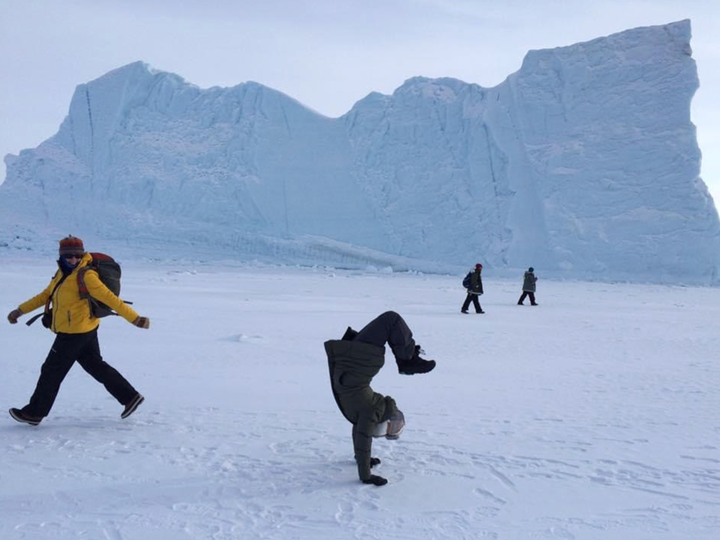
That finally happened a decade after I left teaching when I began making TikTok videos about science — while wearing sequined bustiers and other supposedly inappropriate attire. I wasn’t sure how my unusual approach to scientific material would be received, but I was ready to meld my two sides and I hoped the world would be ready too. It turns out it was more than ready. My videos immediately went viral, and it seemed people couldn’t get enough science content from someone who didn’t look or act the stereotypical way we’d been told a scientist should.
I regret not sharing my truth with my students or colleagues. I spent too many years splitting myself in too many ways as I tried to fulfill all the outdated ideas about what it meant to be a woman, a scientist, a teacher and a performer. I know now that our culture was — and continues to be — too close-minded. I also know that there’s a place for people like me who may, at first glance, appear to be different — out there and too much. Playfulness and sensuality aren’t our enemies, and indulging in them isn’t only justified, it can transform how we teach, how we learn, and how we share our talents and ambitions with the world.
Advertisement
Laura Faye Tenenbaum is a writer, public speaker, and TikTok creator who is currently querying her memoir about NASA, her love of nature, and her fight for empowerment within the science community.
Do you have a compelling personal story you’d like to see published on HuffPost? Find out what we’re looking for here and send us a pitch at [email protected].