This post was originally published on here
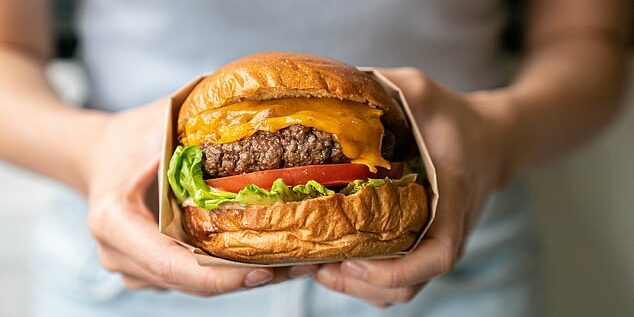
Scientists have found eating one burger a week – rather than cutting meat out of people’s diets altogether – could be ‘environmentally good’ for the planet.
Academics at the University of Edinburgh found that cutting meat consumption down by a whopping 90 per cent in the UK would dramatically reduce harmful greenhouse gases produced by raising cattle.
But giving meat up altogether could have a negative impact on the UK’s biodiversity – because insect and butterfly populations, needed to feed birds and bats, are greatly sustained by cow dung.
Researchers found for example that the manure produced by a single 700kg cow can nurture enough insects to feed 30 swallows.
Alfy Gathorne-Hardy at the University of Edinburgh told The Times: ‘The normal way we look at meat production is saying, “how much can we afford within our environmental limits?”
‘And what we’ve been realising is some meat has a really clear positive role to play.
‘That’s why we’re trying to change the narrative from “how much can we afford” to “how much do we need”.
Mr Gathorne-Hardy admitted the finding that ‘some meat is environmentally good’ would be ‘annoying’ to vegans.
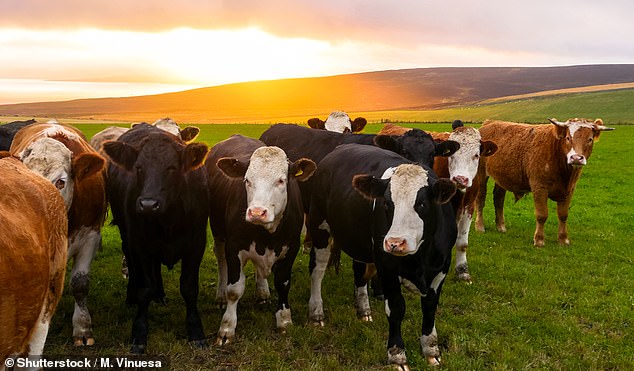
He also risked the ire of farmers by suggesting 4million of the current 13million hectares used for beef production could be used to grow beans instead, in a bid to reduce levels of methane, a greenhouse gas emitted by cows and sheep.
His research aimed to discover the optimum number of cow pats needed to sustain biodiversity.
The research also found that bats – which were recorded on infra-red cameras during night hours – were four times more likely to feed in fields with cow dung than in cow-free fields.
They were 12 times more likely to visit the field if cows were also present.
The University of Edinburgh’s findings add to a body of research that supports the argument consuming smaller quantities of meat could have environmental benefits.