This post was originally published on here
“Many people will get “surprise” SARS-CoV-2 infections over the next 4 weeks.”
by Nick Landekic, contributing writer
Flu infections have been increasing rapidly due to the more transmissible and virulent H3N2 subclade K viral mutation and are Very High in Rhode Island.
Now, COVID infections are now also rising fast, and are predicted to peak over the coming weeks.
From Dr. Michael Hoerger, of the Pandemic Mitigation Collaborative at Tulane University:
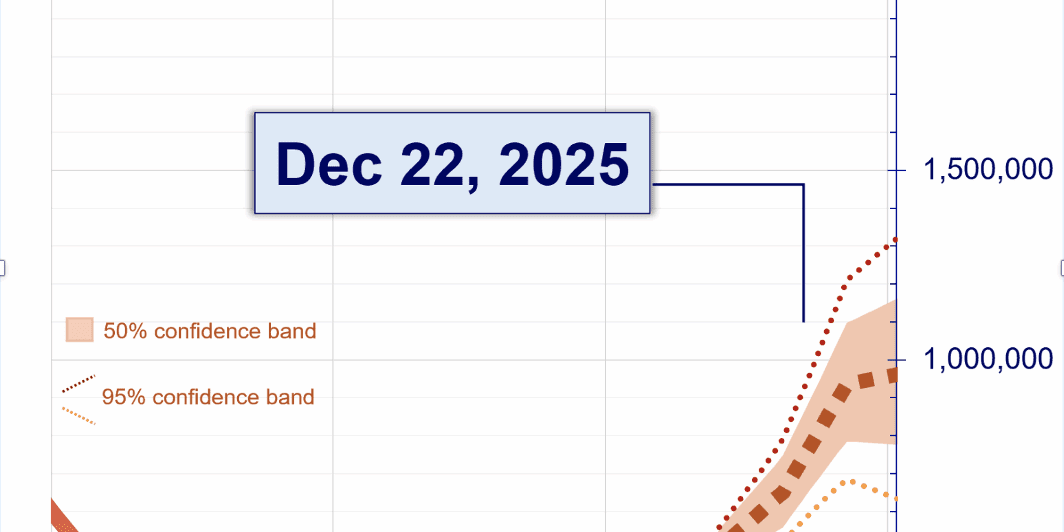
“Transmission is increasing rapidly, nationally, amid the 12th COVID-19 wave in the U.S. PMC forecasts suggest rapid increases in transmission from December 13 to 31. This suggests that many people will get “surprise” SARS-CoV-2 infections over the next 4 weeks.”
This also means every week 224,000 to 890,000 more people will develop Long COVID complications.
Many people will be going to New Year’s and other holiday celebrations. This rate of COVID infection means increasing likelihood that someone at an event could be infected and spread it to others.
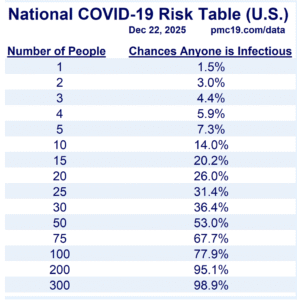
Based on current infection rates this means if you are at an event with 25 people there’s a 31.4% chance someone there will be infected with COVID. With a total of 50 people gathered the odds are better than even – 53% that someone will be infected with COVID.
If you are in a group of –
Why are COVID infections increasing?
COVID has been with us for 6 years now. It’s still here and will be with us for a very long time. It’s shown a bimodal seasonal pattern, rising in the winter and summer. This is primarily due to our own behavior: people gather indoors in the winter both because it’s cold outside and for holiday celebrations, and indoors in the summer for air conditioning because it’s hot outside.
COVID infections are also rising especially fast right now because fewer people received the latest updated COVID vaccine booster this year. As of December 13 only 15.8% of adults and just 7.5% of children were vaccinated.
COVID can spread quickly across long distances
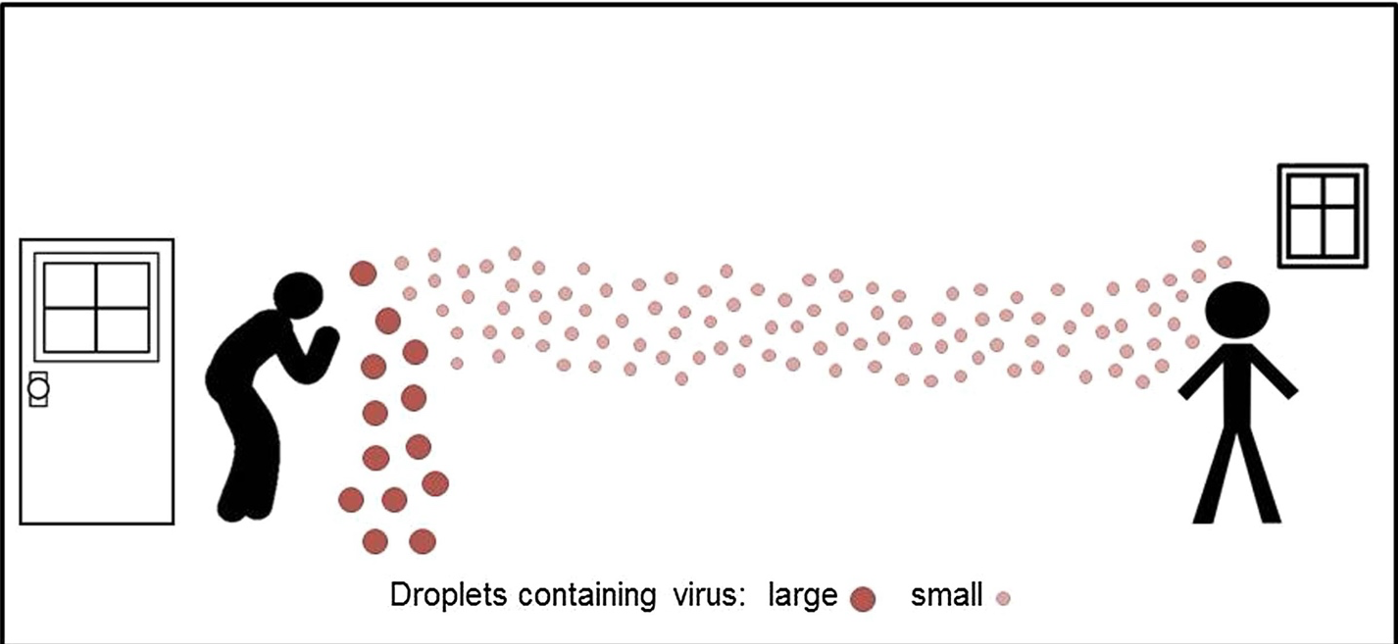
COVID infection can spread very quickly over long distances. One study showed that someone in a restaurant became infected with COVID in less than 5 minutes sitting more than 20 feet away from an infected person.
SARS-CoV-2 COVID and flu viruses are both airborne. Think if it like cigarette smoke. If someone was smoking, could you smell it from where you are? If the answer is yes, then you could also become infected if someone was infected with COVID or flu.
COVID is NOT like a ‘bad cold’
COVID has not become ‘mild.’ If anything some studies have shown it has become worse. It most definitely is not like a cold or the flu. It’s much more serious.
Flurona – You can be infected with flu and COVID at the same time
It’s possible to be infected with both the flu and COVID at the same time, sometimes called ‘flurona.’ With infection rates of both rising the chances of this happening are increasing. One study estimated 14% of infections are simultaneous COVID and flu.
A flurona co-infection is much more serious than having either flu or COVID alone, which is already a miserable enough experience. Those at greatest risk of a poor outcome from co-infection are the same people facing higher risks from either flu or COVID on their own:
- Older people, especially those over age 50. Age continues to be the single biggest risk factor for a poor outcome or death.
- Young children.
- People with weakened immune systems, such as those who have had cancer.
- People with disabilities.
- Pregnant women.
- People with other medical conditions that make them more vulnerable, such as high blood pressure, heart diseases, asthma, diabetes, and obesity.
No one likes to be sick and of course we’d prefer to think it’s ‘just a bad cold’ and not something more serious like the flu or COVID. If your main symptom is just sneezing it could be a cold. However, given the high and rising rates of COVID and flu, if you have a sore throat, cough, fever, aches and pains, it’s probably the flu or COVID. Please seek medical help if you are experiencing any of these symptoms, especially if you are in one of the increased risk groups.
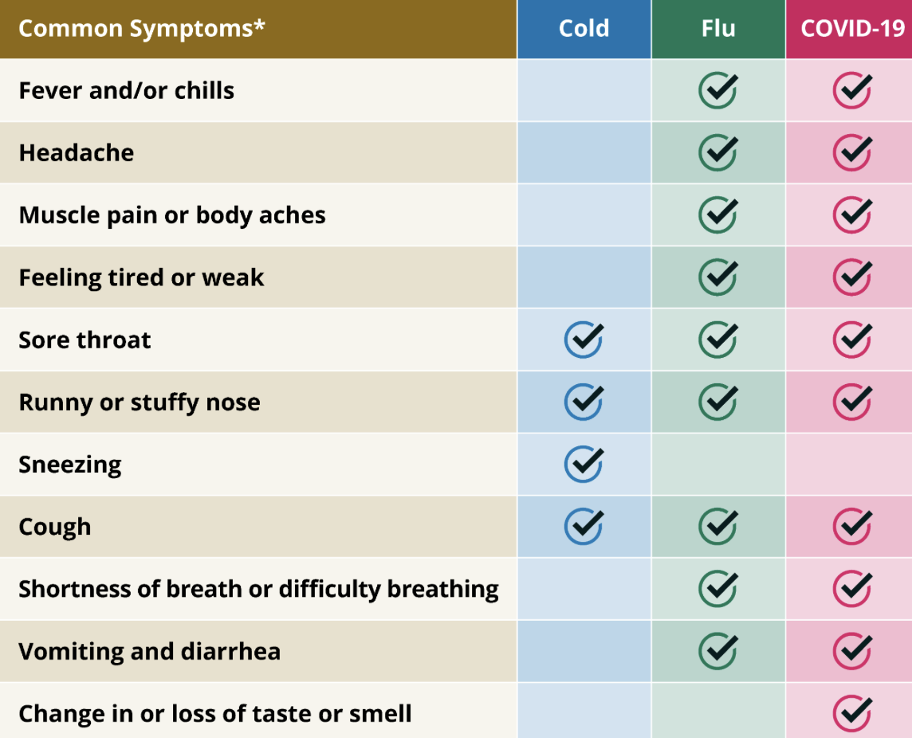
*Symptoms may vary based on new COVID-19 variants and vaccination status
Protect yourself and your loved ones
If you have not yet gotten an updated COVID or flu vaccine remember that it takes about two weeks for full effectiveness to be reached. One of the fastest, easiest, and most effective ways to protect yourself and others is to wear a N95 (or equivalent KN95, KF94, or FFP2) mask when you are indoors in crowded spaces. Masks can work very well to protect you from respiratory infections.
A mask starts working immediately as soon as you put one on, and works to protect you against COVID, flu, RSV, and even the common cold.
If there was ever a time to wear a mask in crowded indoor situations or on public transit, it’s from now until the end of January. Wearing a mask is easy. Having COVID or the flu – or both at the same time – is miserable.
Politics have changed but science has not.
Viruses are completely non-political and don’t care what anyone believes. The rules of biology are simple: unvaccinated people are more likely to become infected, to spread infection to others, and to have a worse outcome from infection.
Have a happy and healthy New Year!

Nick Landekic of Bristol is a retired C.E.O. and biotechnology entrepreneur who spent more than 35 years working in the pharmaceutical industry.