This post was originally published on here
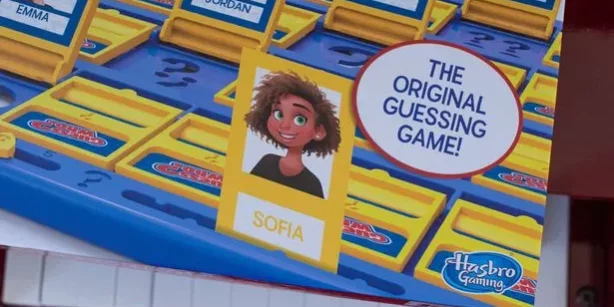
Guess Who has been a beloved family board game for decades. Created by Theo and Ora Coster, it launched in the UK in 1979 and has since spawned numerous spin-off versions.
The two-player guessing game challenges participants to identify the mystery character their opponent has selected from a collection of cartoon faces. Players take turns asking one question per round to narrow down the possibilities.
Typical questions used to eliminate suspects include – “Does your person wear glasses?”, “Is your person bald?” or “Does your person have red hair?”. However, you should avoid these questions until the very end of the game.
It turns out, there’s a far more effective strategy for winning, which could give you the upper hand during festive family gatherings this Christmas.
Dr David Stewart, a mathematician at the University of Manchester, advises players to aim to divide the suspect pool “as close as possible into halves”. This approach requires more imaginative questioning to eliminate half the characters in a single move, significantly accelerating your path to victory.
He explained to Daily Mail: “You can always ask a question that captures the exact number you want in the ‘yes’ category. Use a formulation like: ‘Does their name come before ‘Nancy’ alphabetically?'”.
(Image: Bloomberg, Bloomberg via Getty Images)
Removing 50% of the board with one question proves far more effective than enquiring about glasses or hats, since relatively few characters possess these features. You should only do this when you’re down to four remaining suspects, where experts suggest posing questions that create a 1-3 split amongst the possibilities.
You can add a playful twist by deviating slightly from the straightforward yes-no format if you’re feeling bold, though this might frustrate any competitive relatives. The experts suggest employing “tripartite” questions to genuinely unsettle your opponents.
Dr Stewart and his team recommend posing a three-part question such as: “Does your person have blonde hair OR do they have brown hair AND the answer to this question is no?”.
They explained: “If we were to ask you this question and your person had blond hair, then you would say yes because the first line succeeds.
“If they had grey hair, then both parts fail and you would say no; but if they had brown hair then you would find yourself, in effect, answering: ‘Is the answer to this question no?’ You cannot answer honestly, so we may assume that your head explodes.”
So there you have it – by bamboozling your opponent into revealing extra details about your character, you’re certain to gain an edge. Alternatively, if the tripartite technique is too mind-boggling for you to grasp, don’t worry because there are additional methods to claim victory.
How to win at Guess Who
1. Never ask questions about uncommon features at the start – for instance, “Does your person have earrings?” if only two characters possess them.
2. Aim to halve the remaining options with each question until you reach smaller numbers. Consider questions that will result in a near 50/50 split.
3. Strategise your questions rather than rushing – Prior to asking, swiftly scan your board and tally how many characters possess a certain attribute. This aids in selecting the most effective question.
4. Be observant of your opponent – Pay attention to how your competitor answers questions. These could provide hints about their chosen character, particularly if they appear to hesitate or alter their strategy.
5. Go for the jugular – Once the group has been whittled down, concentrate on unique characteristics (such as a specific colour of glasses or an uncommon accessory) to rapidly narrow down the possibilities.