This post was originally published on here
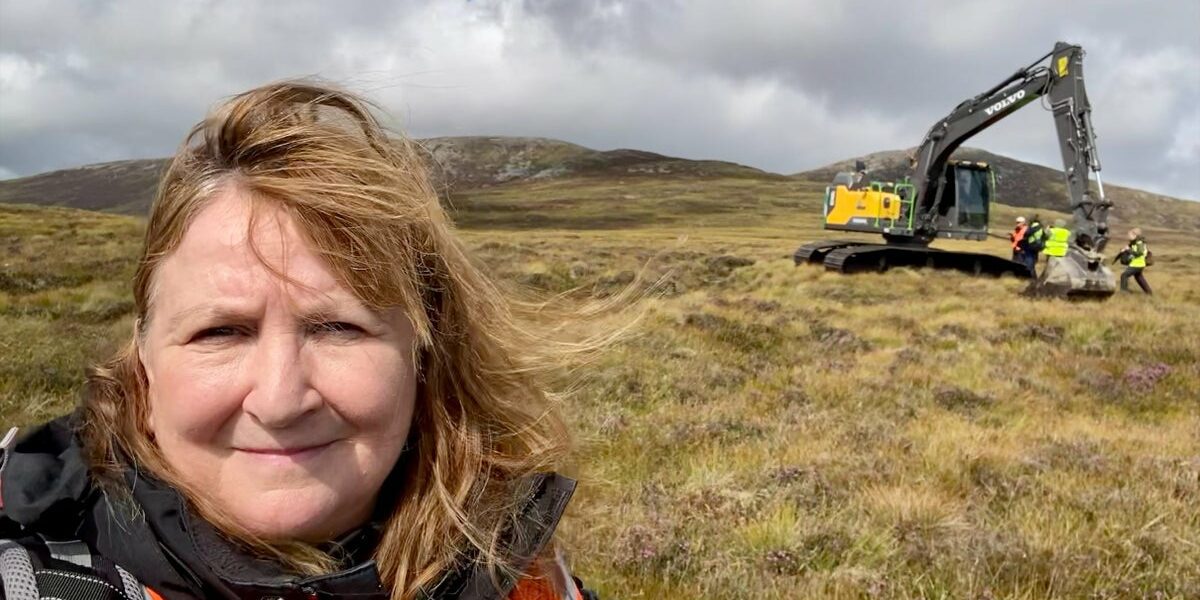
A forensic scientist who has worked with police and presented evidence in major court cases has said she is “delighted and humbled” to be given a damehood.
Professor Dame Lorna Dawson is head of the Centre for Forensic Soil Science at the James Hutton Institute, a Scottish-based independent research organisation.
She has spent more than three decades researching soil and plant interactions with a particular interest in how this can be used in the criminal justice system.
During the course of her career, she has advised on more than 150 cases and written more than 100 expert witness reports, both in the UK and abroad, and given evidence in many high-profile cases.
She said: “I am humbled and delighted on being appointed DBE for services to the innovation and application of forensic soil science.
“This honour recognises the power of scientific innovation, partnership, and how forensic soil science can support justice on a national and global scale.
“I thank in particular my family for supporting me, and the many people in organisations I have worked with to help establish forensic soil science as an accepted and invaluable discipline across the world.”
Her work developing forensic soil science techniques has helped the discipline grow from a “cottage industry” in around 2005 with a few scientists working in their front rooms with a microscope to an accepted tool in the criminal justice system.
She said: “The methods have been tested, peer reviewed, published by peers, and assessed and evaluated such that there’s the reliability of that evidence.
“That’s absolutely crucial of anything that is used within that court system.”
Dame Lorna has presented evidence in more than 20 cases, including the trial of the late Angus Sinclair who in 2014 was convicted at the High Court in Livingston of raping and murdering teenage girls Christine Eadie and Helen Scott in Edinburgh in 1977 in what became known as the World’s End murders.
The prosecution was the first under changes to Scotland’s double jeopardy law which meant he could be retried for their murders after a court case against him collapsed seven years earlier.
Methods developed in recent decades have enabled scientists to look at cold cases and help bring people to justice and find answers for families.
Speaking about the Sinclair case, Dame Lorna said: “That was incredible, because the forensic scientists at the time in the 1970s had preserved that evidence that we could go back and open up that secure pot and it hadn’t been touched and it was still able to be analysed, it was incredible.
“It really is an honour to be asked to work on these cases because you know that these families have been waiting for decades to find out what happened to their loved ones.
“I remember Helen Scott’s brother, he wrote to me after that court case and said thank-you so much, we’ve been able to get closure for the family.
“These little things and the little letters that you get occasionally – that reminds you of why you do these things, but at the time you’re not influenced by it, but it does remind you afterwards, just how important it is.”
She also presented evidence at the trial in Inverness of William MacDowell, who in 2022 was found guilty of murdering Renee MacRae, 36, and her three-year-old son Andrew in November 1976.
The scientist also gave evidence at the High Court in Glasgow during the trial of Iain Packer, who is serving a life sentence with a minimum term of 36 years after being convicted in 2024 of murdering Emma Caldwell in 2005 along with a number of sexual offences against other women.
She has given evidence at the Sheku Bayoh Inquiry which is looking at the circumstances around his death after he was restrained by around six police officers in Kirkcaldy, Fife, in May 2015 and whether race was a factor.
Dame Lorna, who lives in Aberdeen, has helped train police forces in crime scene sampling.
Away from court rooms and crime scenes, crime writers and television show producers have also drawn on her expertise.
The mother-of-three has worked with authors such as Ann Cleeves, Ian Rankin, Alex Gray and Stuart MacBride, and has contributed to television shows such as David Wilson’s Crime Files and Expert Witness.
She was presented with a special recognition award at the Pride of Britain awards in 2017, and a year later was made a CBE in recognition of her services to soil and forensic science.