This post was originally published on here
As the search for life on other planets continues, it provokes questions about how communities of living organisms get their start on barren surfaces. Mars, for example, has expanses of bare basalt rock, a testimony to its active volcanic past. Scientists wonder whether ancient volcanic eruptions on Mars might have fostered periods of suitability for life, by heating things up, melting ice, and releasing gases.
In a study in Nature Communications Biology, ecologists and planetary scientists from the University of Arizona and University of Iceland found clues about how life got restarted around an Icelandic volcano, which may offer hints about life elsewhere in the universe. The Fagradalsfjall volcano erupted three times between 2021 and 2023, providing an opportunity to study the aftermath of multiple eruptions, each one blanketing the tundra ecosystem around the volcano with lava.
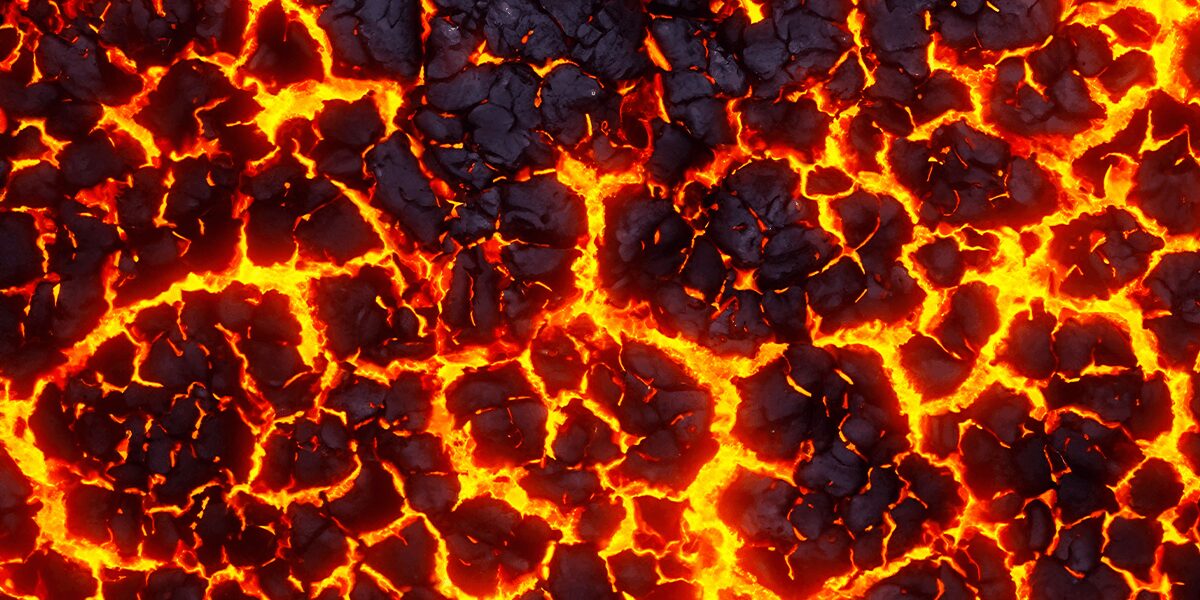
“The lava coming out of the ground is over 2,000 degrees Fahrenheit, so obviously it is completely sterile,” explained Nathan Hadland, first author and doctoral student in the University of Arizona Lunar and Planetary Laboratory in a statement, adding, “It’s a clean slate that essentially provides a natural laboratory to understand how microbes are colonizing it.”
Read more: “The Sound So Loud That It Circled the Earth Four Times”
Microbes are the first colonists of bare surfaces. Hadland and the research team sampled microbes in DNA extracted from recently solidified lava, rainwater, and aerosol particles over the three-year study period. They found that the initial microbes came mostly from airborne soils and particles blown onto fresh lava, such as Sphingomonas echinoides, a widespread soil bacterium.
Advertisement
Advertisement
These early colonists must be super resilient, since fresh lava is hot, dry, and low in available nutrients. The just-cooled lava, for instance, hosted Udaeobacter sp., a soil bacterium capable of surviving with virtually no nutrients. Those early colonists didn’t survive well, though; Udaeobacter sp. dropped off during the first winter, then disappeared altogether by a year out.
Within 100 days of a Fagradalsfjall lava flow, the microbes remained so sparse as to qualify as one of the lowest biomass environments on Earth, along with the driest part of the Atacama Desert, according to the study. But, following the winter, other microbes moved in, mostly species transported by rainwater.
“Seeing this huge shift after the winter was pretty amazing,” said co-author Solange Duhamel, “and the fact that it was so replicable and consistent over the three different eruptions—we were not expecting that.”
By the third year, the assemblages of microbes became more stable, with less exchange between communities. Many of the species that stuck it out were known from other volcanoes in Iceland and Hawaii. The results, modeled by the study authors, suggest that colonization of a barren lava surface follows a predictable trajectory, which may apply to other volcanic systems—even those on Mars.
Enjoying Nautilus? Subscribe to our free newsletter.
Lead image: Ahsanjayacorp / Shutterstock
This story was originally featured on Nautilus.