This post was originally published on here
Scientists have found that the appearance of a child’s backside may reveal a hidden sign of autism or attention-deficit hyperactivity disorder (ADHD).
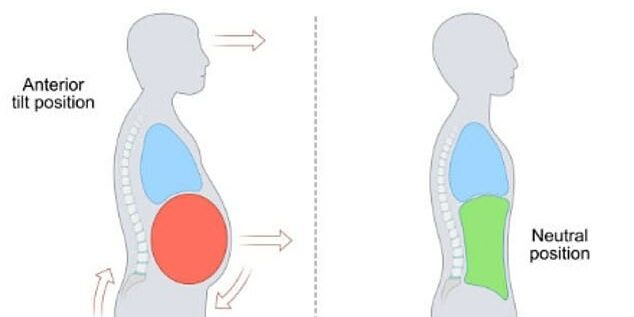
Multiple studies over the last decade have examined a peculiar change in the posture of children under ten years old, which makes their backside look bigger or more prominent, like a ‘duck butt,’ even though it’s not actually larger.
According to observations of kids with autism spectrum disorder (ASD), these children often exhibited a more forward-tilted pelvis while walking, about five degrees more on average, compared to children without the condition.
Autism is a condition that affects social skills, communication, and behavior, often leading to repetitive actions or sensitivities to sound, light, or smell.
The condition can also lead to behaviors such as toe-walking or spending long periods sitting in repetitive positions, which tighten the hip flexor muscles and contribute to this pelvic tilt.
All of this makes it harder to maintain a balanced posture, causing children with autism to compensate awkwardly in how they stand and walk.
Scientists have previously linked the onset of autism to atypical brain development in areas like the cerebellum and basal ganglia, which control movement and balance.
Researchers from separate studies in Japan and Italy revealed that a tilted pelvis and related changes in posture can become visible in school-aged children, typically between ages eight and ten, based on studies of their walking patterns.
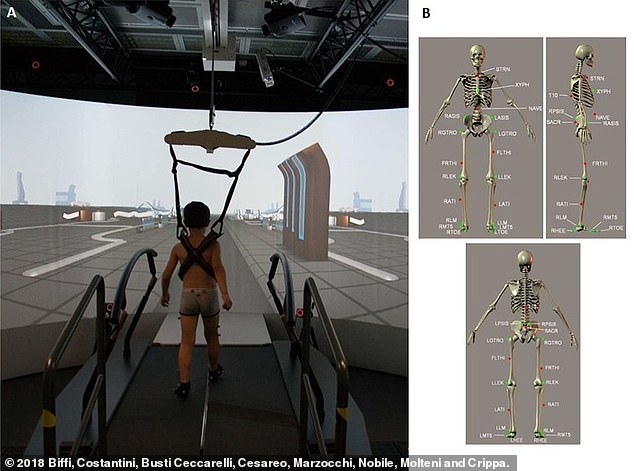
In 2018, researchers from the Scientific Institute for Research, Hospitalization and Healthcare in Italy discovered the visible clues that autistic children frequently walked with a ‘duck butt.’
Their study in the journal Frontiers in Psychology used 3D motion analysis while children walked on a treadmill in a virtual reality simulator to compare how youngsters with and without autism move.
This allowed the team to measure exact joint angles of the pelvis, hip, knee, and ankle over many steps during normal walking, as well as when sudden speed changes were introduced.
A comparison to average school-aged children revealed that an autistic child’s pelvis was tipping forward too much when their foot first touched the ground while walking, their thigh was bent forward at the hip more than usual, and they had less ankle movement.
Importantly, the team said autism symptom severity had a direct link to the unusual walking patterns. This could also lead to physical problems like lower back, hip, or knee pain, and make activities involving balance or quick movements harder.
This forward pelvic tilt throws your body’s alignment off balance, like standing with your hips pushed too far forward, which puts extra strain on your lower back, hips, and knees, causing pain over time, while also making it tougher to stay steady.
This physical change does not cause autism, the studies caution, but it could be a possible sign or side-effect from the condition’s impact on muscles, balance, and movement, and spotting it early might help with support like exercises or therapy.
Approximately one in 31 children, more than 3 percent, have been diagnosed with ASD, according to the CDC’s latest review in 2025.

Meanwhile, previous reports have also discovered connections to attention deficit/hyperactivity disorder (ADHD), which often overlaps with cases of autism.
Many children have both conditions together, with some studies showing the prevalence is up to around 50 to 70 percent, as the conditions share issues like attention problems, movement differences, or sensory sensitivities.
ADHD has become a common condition where children and adults struggle with paying attention, sitting still, or acting without thinking, often making school, work, friendships, and daily tasks harder to manage successfully.
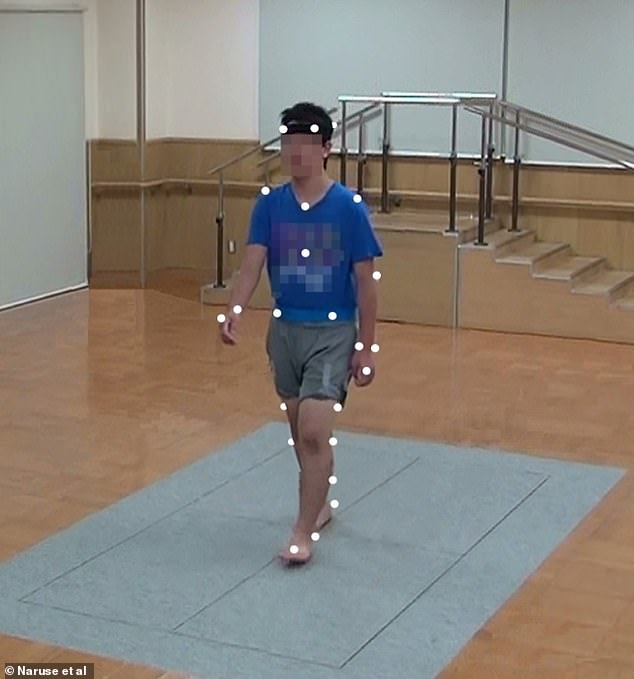
A 2017 study from Japan looked at how boys around age nine to ten with ADHD walked compared to boys without it, using special cameras to measure body movements in detail.
The researchers found that boys with ADHD had a more forward-tilted pelvis, about 4.5 degrees more on average, along with faster steps, and this tilt was strongly linked to their hyperactive and impulsive symptoms.
‘Our kinematic findings could have potential implications for evaluating the body movement in boys with ADHD,’ the Japanese team wrote in the journal PLoS One.

Scientists have suspected that autism is mainly caused by a mix of genetic abnormalities and environmental factors during pregnancy or early life, such as having older parents, low birth weight, or exposure to certain toxins.
Other suspected causes of autism include having a family member with ASD and certain genetic conditions like Fragile X syndrome, a mutation in the FMR1 gene, which prevents the production of a crucial brain protein.
There have been claims that vaccinations during early childhood increase the risk of developing autism, but the CDC has not revealed any proof that this alleged link is factual.
The agency has also noted that environmental factors like exposure to lead, tobacco smoke, or alcohol during pregnancy, premature birth, low birth weight, and brain injuries early in life could contribute to the onset of ADHD.
While the recent studies didn’t directly say posture and gait make autism symptoms worse, a forward pelvic tilt could worsen things by causing physical discomfort like back or hip pain, which might increase irritability, sensory overload, or difficulty with daily activities in children with ASD.