This post was originally published on here
An HIV diagnosis upended San Diego resident Jim Dunn’s life. But his willingness to participate in an end-of-life program is helping scientists to better understand the disease and hopefully find a cure.
In May 2003, a severe illness Dunn thought was Parkinson’s disease turned out to be HIV, the human immunodeficiency virus that attacks the immune system and can lead to AIDS.
Looking to help find a cure, he eventually enrolled in The Last Gift Study, a UC San Diego effort that studies HIV patients’ bodies through a rapid autopsy immediately after death.
His story is now chronicled in “The Last Gift: Jim’s Courage,” a documentary offering a firsthand account of his life, diagnosis, decision to enroll in the study and ultimately his death from cancer on Dec. 30, 2024, at age 76.
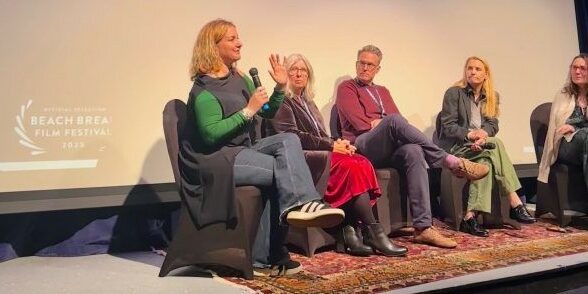
The film was screened Dec. 28 at the Beach Break Film Festival in Half Moon Bay in Northern California. It is available to view for free at lastgift.ucsd.edu.
Understanding HIV
Even if antiviral therapy keeps it at bay, HIV integrates in immune cells all over the body and can be very hard to access. As a result, scientists have lacked access to large amounts of fresh, high-quality tissue.
The Last Gift Study, launched in 2017, combats that issue by conducting an autopsy immediately after a patient’s death. Dr. Davey Smith, a professor of medicine and prominent infectious-diseases researcher at UCSD, is the lead investigator, while Dr. Sara Gianella Weibel, a virologist and professor of medicine, oversees aspects such as recruitment, enrollment and follow-up.
Gianella Weibel had a pitch for Neisz: Tell the human story behind The Last Gift Study’s scientific work.
“I think a lot of people, when they do research, they really get focused on the logistics of the research and they forget the human part,” she said.
“Ryan did an amazing job really capturing both the science and the human parts of Last Gift. That was really the scope of the movie … the human story behind the tissue.”
‘Do it justice’
“When I sat down and heard [Dunn’s] story, it was a beautiful story and he was a beautiful person,” Neisz said. “So it became important to me to do it justice. I went on this journey with him and I saw him decline. … I interviewed him multiple times over a year and a half to two years and I saw him pass away.
“The gravity of it was extremely important to deliver this story correctly.”
Gianella Weibel had similar sentiments.
“I do think The Last Gift, as a project, has completely changed the trajectory of my career,” she said. “I can almost tell [the story of] my career before and after Last Gift, because the human and ethics and community part is now embedded in everything I do.” ♦