This post was originally published on here
After years of perilous fieldwork and advanced data analysis, Mexican scientists have produced the first three-dimensional image of the interior of Popocatépetl, one of the world’s most active volcanoes whose eruptions threaten millions of people.
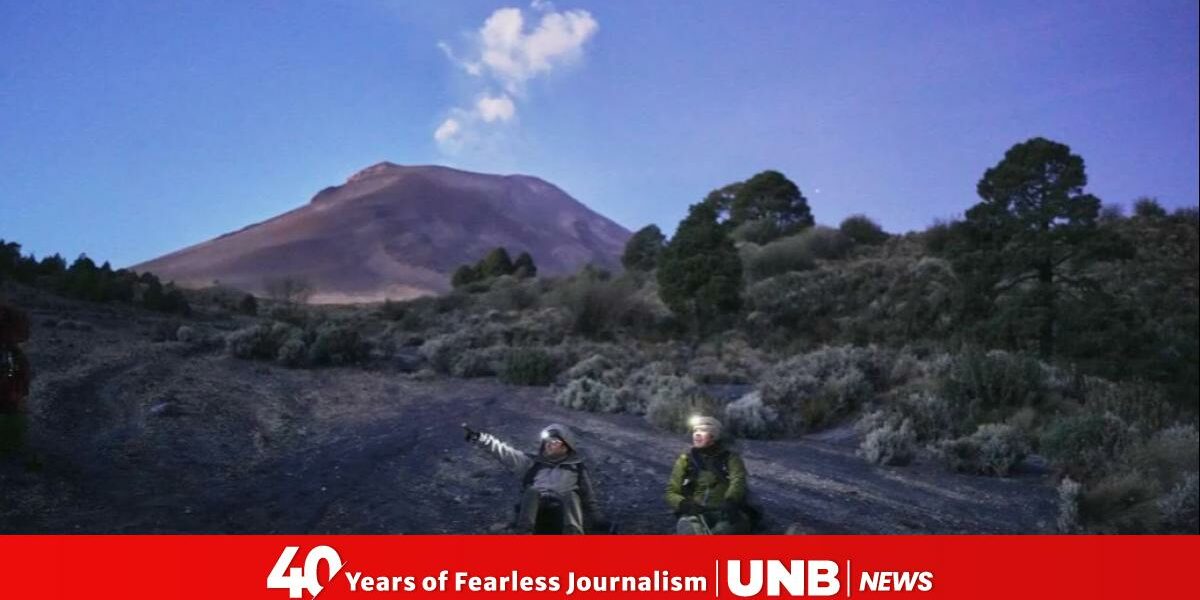
A team from the National Autonomous University of Mexico (UNAM) spent five years scaling the volcano before dawn, hauling heavy equipment and braving harsh weather and eruption risks to collect seismic data. Using artificial intelligence to analyze the information, the researchers were able to map where magma accumulates beneath the crater, a breakthrough expected to improve understanding of the volcano’s behavior and help authorities respond more effectively to eruptions.
Project leader Marco Calò of UNAM’s Institute of Geophysics said the new image offers unprecedented detail of the 17,883-foot volcano’s internal structure. The 3D cross-section extends about 11 miles below the crater, revealing several magma reservoirs at different depths rather than a single chamber, with more magma concentrated toward the southeast side.
Popocatépetl, known locally as El Popo, poses a major risk because about 25 million people live within 100 kilometers of it. Homes, schools, hospitals and five airports could be affected by a major eruption. Although the volcano has been closely monitored, it lacked a high-resolution internal map until now.
To achieve this, the team expanded the network of seismographs around the volcano from 12 to 22, allowing them to capture detailed underground vibrations. Doctoral researcher Karina Bernal used artificial intelligence to classify different types of tremors, helping scientists infer the materials, temperatures and depths inside the volcano before turning those findings into a map.
Popocatépetl has been active since 1994, releasing gas, ash and smoke almost daily and periodically forming lava domes that later collapse, triggering eruptions. The most recent eruption occurred in 2023.
Calò said working directly on the volcano transformed his research, calling Popocatépetl a “majestic” natural laboratory. He noted that firsthand experience helps scientists better understand the limits of their analyses and provide more reliable information to nearby communities.
During their expeditions, the team retrieved data from seismic stations high on the volcano’s slopes, sometimes finding equipment damaged by weather, animals or explosions. Despite setbacks, the project has delivered key insights and raised new questions, including why tremors are more frequent on the southeast flank and what that means for future eruptions.
With their findings set to be published, the scientists say seeing the volcano’s interior move in 3D makes the risks and effort worthwhile, and fuels their determination to continue climbing and learning more about El Popo.