This post was originally published on here
The report, tabled on 18 December 2025, reviews transactions and programmes across seven scientific and environmental ministries and departments, along with their autonomous bodies and public sector undertakings. Its findings point to a pattern of poor planning, inadequate monitoring and delayed decision-making that, taken together, have resulted in blocked funds, idle infrastructure, abandoned projects and avoidable financial losses running into hundreds of crores of rupees.
Atomic Energy and Space: Mounting Dues, Idle Systems
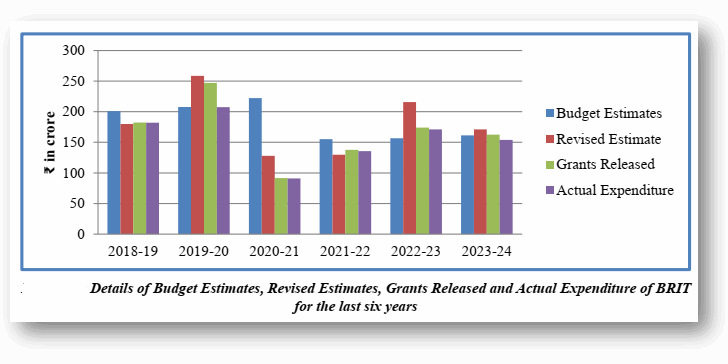
Among the most sharply criticised entities is the department of atomic energy (DAE), particularly the board of radiation and isotope technology (BRIT). CAG found that BRIT failed to recover outstanding dues worth ₹152.47 crore from customers as of September 2024, reflecting what the auditor described as a weak and ineffective recovery mechanism.
Compounding this lapse, BRIT incurred statutory liabilities of ₹62.04 crore on account of service tax, excise duty, cess, interest and penalties due to non-compliance with tax regulations. The audit also highlighted serious governance gaps, noting that BRIT did not prepare proforma accounts from its inception until FY15–16, making it impossible to ascertain its true financial position for years.
Project execution within BRIT fared no better. Nine projects undertaken between FY03–04 and FY22–23 suffered time and cost overruns due to poor monitoring. Several deliverables became obsolete or were abandoned altogether, effectively wasting public investment.
Even digital initiatives failed to deliver: an e-portal developed at a cost of ₹1.34 crore was found to be irregularly executed, while the BRIT Bandhu mobile application never became functional, undermining sales and customer management.
The audit also raised concerns over safety and procedural compliance, noting that BRIT issued test certificates for radioactive isotopes such as Caesium (Cs)-134 and Iodine (I)-131 without following approved procedures.
Within the same department, an information technology audit of the heavy water board (HWB) revealed that core operational modules of its integrated information system, including plant status reporting and maintenance management, remained unused for more than two years after the system went live. As a result, HWB continued to rely on manual processes and legacy systems, increasing the risk of errors and data gaps. Governance committees tasked with overseeing the rollout failed to review progress or address deficiencies in user requirements, application controls and information security, CAG says.
The department of space was also pulled up for avoidable expenditure and under-utilisation of assets. CAG flagged avoidable payments of ₹1.06 crore towards electricity charges due to inaccurate assessment, and pointed to the under-utilisation of two communication satellites, signalling gaps in operational planning and capacity utilisation.
Biotechnology Mission Falters Under Staffing Shortages
The CAG audit paints a similarly bleak picture of the national biopharma mission (NBM), a flagship initiative of the department of biotechnology aimed at making India globally competitive in biopharmaceutical innovation over a 10–15-year horizon.
Despite its ambition, CAG says the mission was undermined from the outset by a severe shortage of manpower. “The programme management unit operated with just 12 staff against a sanctioned strength of 51, a constraint that led to delays in project selection, limited competition and weak coordination with other sectors.”
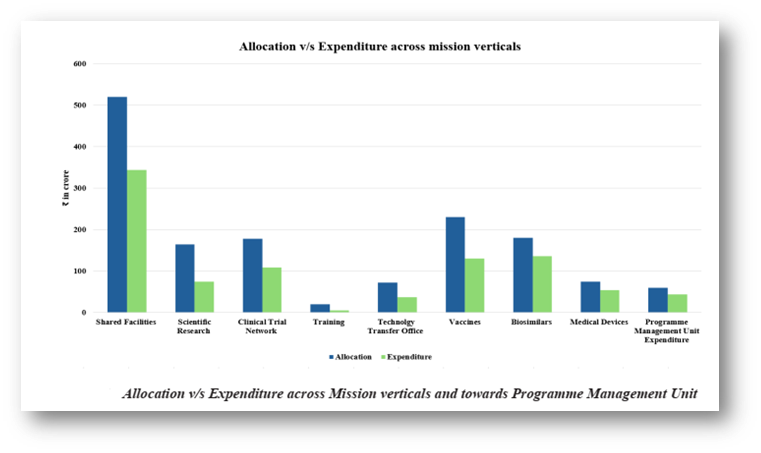
The biotechnology industry research assistance council (BIRAC), which implements the mission, was criticised for failing to act on key recommendations made by its steering committee and technical advisory group. These included developing a five-year roadmap for new products, setting up impact measurement frameworks, strengthening laboratories and engaging independent agencies for impact assessment. Most of these recommendations were either ignored or not followed up in a structured manner, CAG says.
The audit also found that monitoring and evaluation mechanisms were ineffective, and that grants worth ₹5.46 crore were released without meeting milestones stipulated in grant agreements, undermining financial discipline and accountability.
Environment and Earth Sciences: Delays Stretching Up To 16 Years
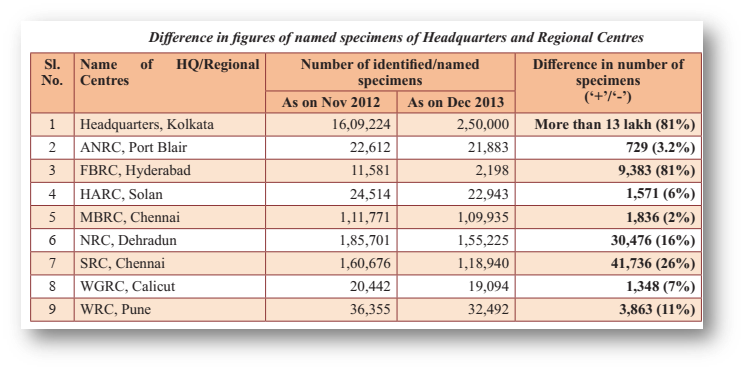
Perhaps the most striking evidence of institutional drift emerges from the audit of the Zoological Survey of India (ZSI), functioning under the Union ministry of environment, forest and climate change. CAG found that ZSI’s strategic plan, framed in 2001 with a focus on biodiversity conservation, was poorly implemented, with delays ranging from one to 16 years in surveys and research publications.
Despite assurances given after an earlier CAG report, ZSI failed to develop a formal survey manual even seven years later. Due to recruitment shortfalls, 77% of animal specimens collected over the past five years remain unidentified. The audit also pointed to the absence of basic infrastructure for specimen preservation, missing disposal procedures, slow digitisation and a lack of effort to address invasive alien species.
Financial lapses were also flagged under the ministry of earth sciences. The India meteorological department (IMD) failed to recover ₹7.28 crore in meteorological charges and statutory levies from private airport operators due to the non-execution of memoranda of understanding. In another case, inaccurate contract demand assessment led to avoidable electricity payments of ₹0.73 crore.
The Indian national centre for ocean information services incurred penalties of ₹1.58 crore for occupying buildings without securing mandatory construction permissions and occupancy certificates, a lapse that spanned several years.
Science And Technology: Idle Assets, Avoidable Losses
Across laboratories under the department of scientific and industrial research and the department of science and technology, the CAG audit catalogues a series of cases where equipment and infrastructure were procured without adequate planning or follow-through.
At CSIR–Central Mechanical Engineering Research Institute in Durgapur, an autonomous underwater vehicle prototype costing ₹0.78 crore has remained completely unused since its delivery in 2017. At CSIR–National Physical Laboratory, the failure to install a rainwater harvesting and wastewater recycling system resulted in the loss of water charge rebates, leading to avoidable expenditure of ₹1.14 crore.
At the Bose Institute, a cleanroom facility built at a cost of ₹0.66 crore lay unused for over five years because complementary equipment was neither planned nor procured in time.
A Pattern of Weak Controls
Taken together, CAG’s findings point to systemic weaknesses rather than isolated lapses. The report repeatedly flags inadequate internal controls, poor project monitoring, failure to act on expert recommendations and a lack of accountability at multiple levels.
The auditor has urged the concerned ministries and departments to tighten oversight, strengthen governance mechanisms and ensure that public investment in science, technology and environmental protection translates into tangible outcomes. Without urgent corrective action, the report warns, India risks continuing to pour scarce public resources into projects that deliver little beyond paperwork and penalties.