This post was originally published on here
The Pew Charitable Trusts recently awarded funding to scientists trying to crack the code behind the temperature adaptation of the snow fly.
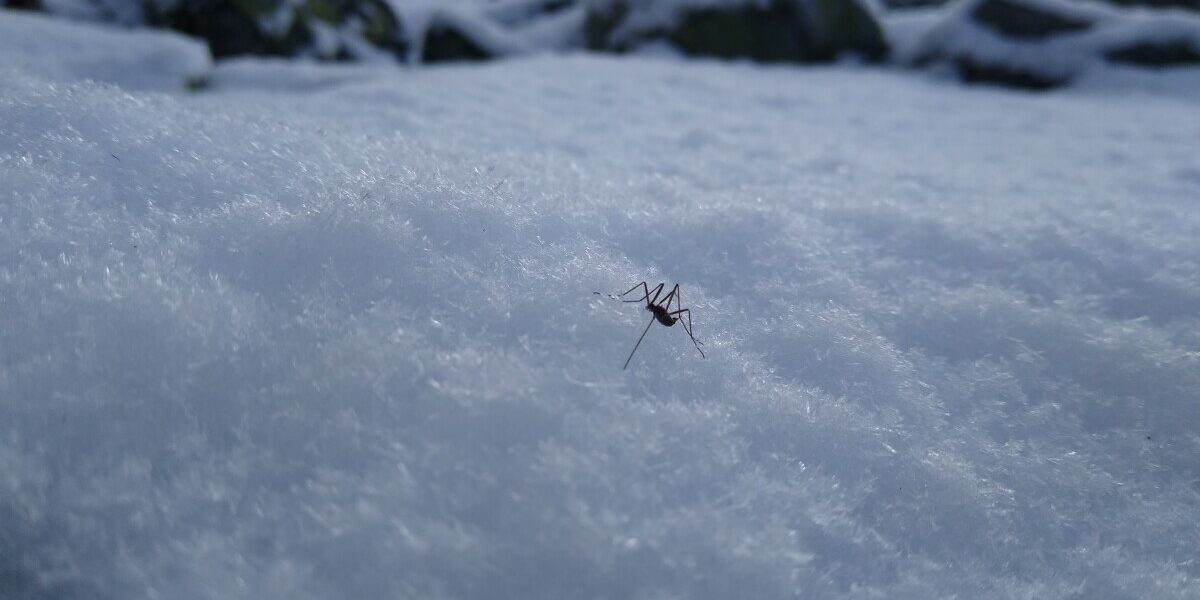
Snow flies run across the snow on sunny days in higher elevations near the tree line, then burrow down when the surface gets too chilly. According to University of Washington School of Medicine Professor John Tuthill, their internal body temperatures can drop to around 15 degrees Fahrenheit. Fruit flies in comparison stop moving when their body temperatures reach 41 degrees.
Tuthill is pairing up with Professor Sebastian Brauchi of Chile to find out how the flightless, long-legged snow fly thrives in such chilly conditions.
“The fundamental question is, how is it that their bodies, especially their nervous system and their muscles, are adapted by evolution to allow them to sustain movement whereas no other insects are able to do this, or very few?” said Tuthill.
They believe it could be because of the unique structure of the snow fly’s cell membranes.
“You can imagine as you cool down a liquid it starts to get thicker and more viscous, that you can kind of compensate for that by essentially packing the membranes with more fats to make it more jiggly and allow these channels to operate,” said Tuthill. “So, we’re testing that hypothesis by measuring the contents of the cell membranes in neurons in snow flies.”
Tuthill is tapping citizen scientists and skiers in particular to help collect specimens.
According to the Snow Fly Project website, they’ve received insects so far from Washington, Oregon, California, Colorado, New Mexico, Maine, Vermont and Canada.