This post was originally published on here
In a rainforest stream in Far North Queensland, a rare Australian freshwater fish is quietly writing a story of survival.
But scientists are working to have the Bloomfield River cod officially protected amid threats from the climate and introduced species.
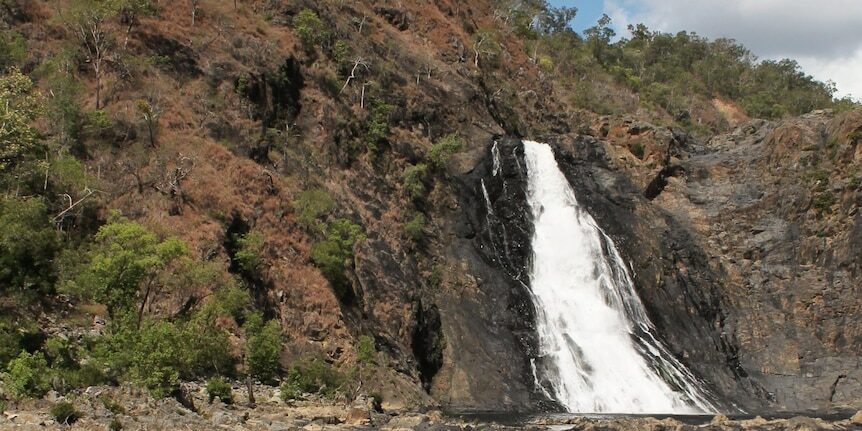
The fish is found only along an 11-kilometre stretch in the Bloomfield River catchment, 330 kilometres north of Cairns.
It is the world’s only tropical freshwater cod, with its closest relative living thousands of kilometres south in the Murray-Darling Basin.
The Bloomfield River cod is found upstream of Wujal Wujal Falls. (Supplied: Carley Rosengreen, Griffith University)
Scientists estimate the fish existed 25 million years ago, at a time when the Australian continent had just broken away from Antarctica.
They describe it as a relict species — a remnant from a group that once ranged widely across the continent.
However, despite its discovery more than 30 years ago, little was known about the fish.
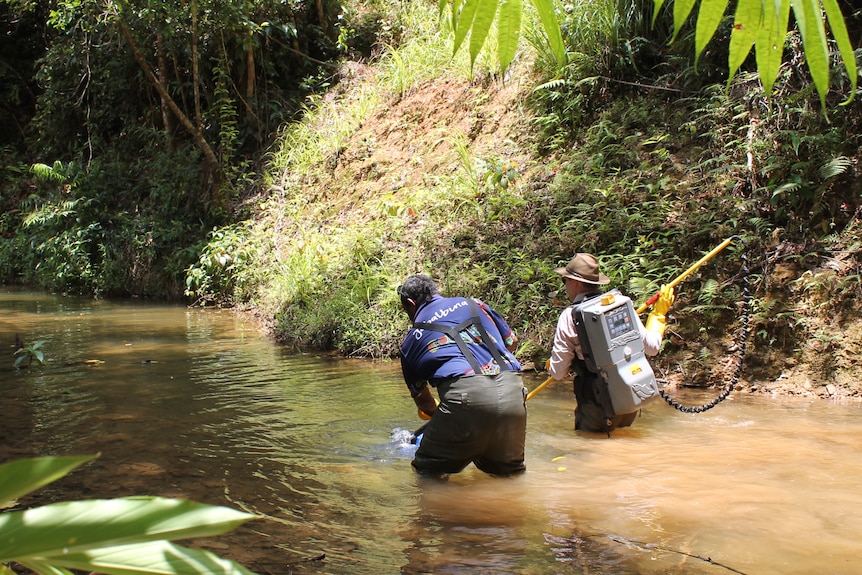
Researchers surveying and catching fish in the Bloomfield River catchment. (Supplied: Carley Rosengreen, Griffith University)
So, researchers were keen to check how the cod were affected following Cyclone Jasper in 2023 and with the spread of introduced fish species up the waterway.
“The cod are still persisting,” said Mark Kennard from Griffith University’s Australian Rivers Institute.
Professor Kennard, alongside Brad Pusey, discovered the fish in 1993.
The pair named it Guyu wujalwujalensis, using the language of the Bloomfield River’s traditional owners, the Kuku Yalanji people.
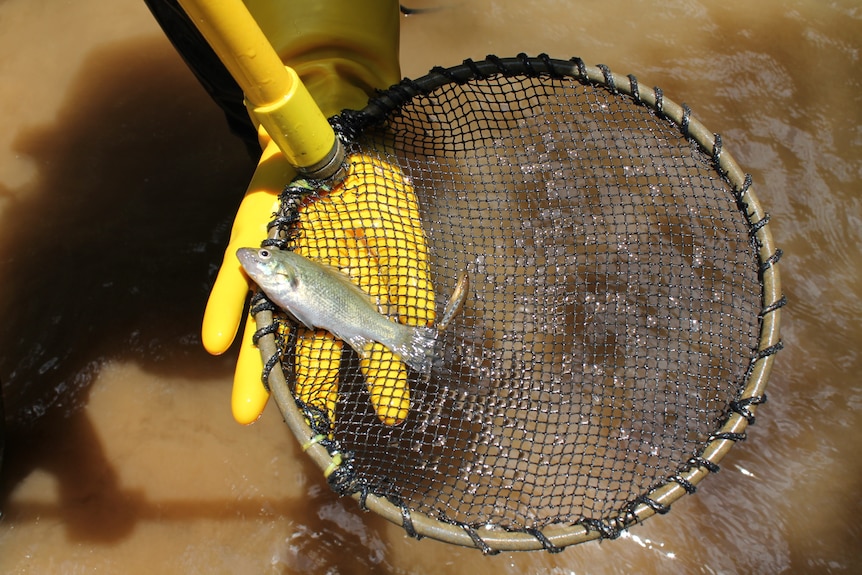
Scientists caught more than 100 cod during surveys. (Supplied: Carley Rosengreen, Griffith University)
He said his team sampled 15 sites and caught 108 Bloomfield River cod across two field trips, confirming the fish had survived severe environmental disruption.
“One fish we caught was just 13 centimetres long but about 15 years old,” he said.
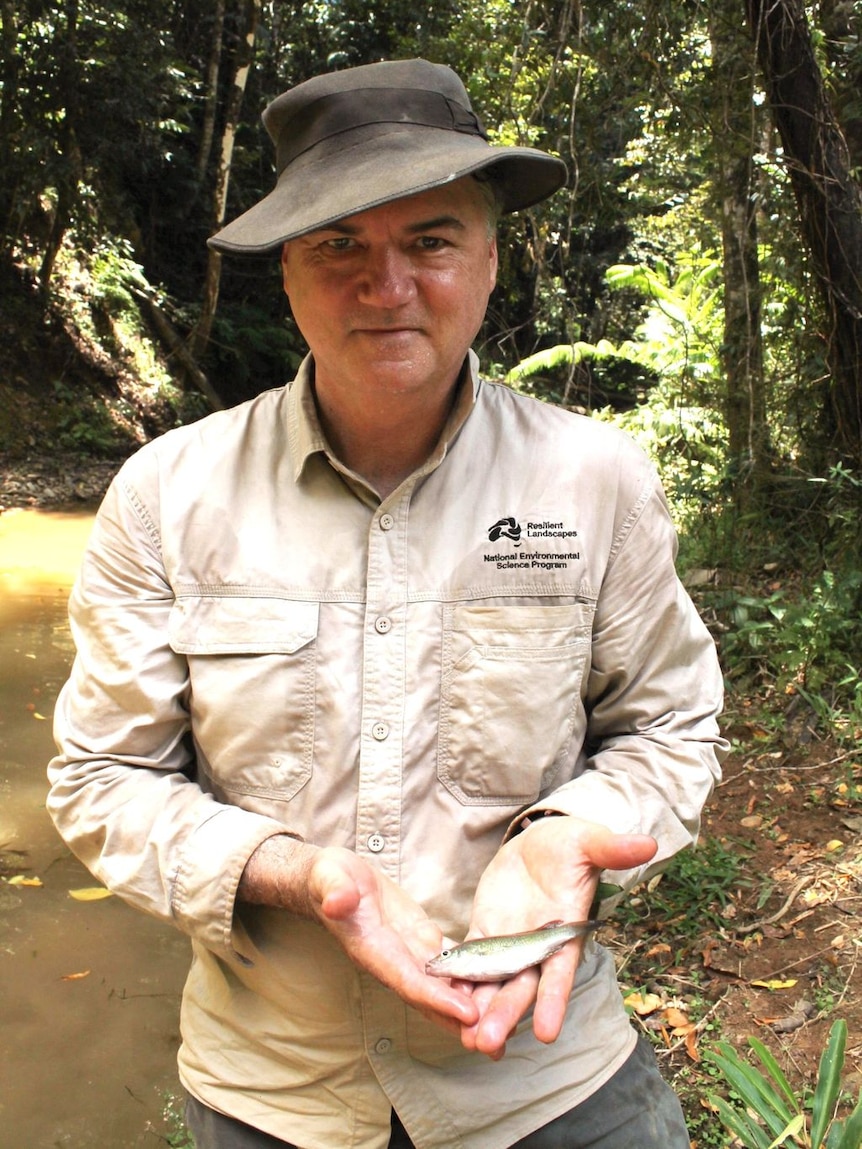
Mark Kennard discovered the Bloomfield River cod 30 years ago. (Supplied: Carley Rosengreen, Griffith University)
However, cod numbers were dwarfed by the number of introduced fish found at the same locations.
Professor Kennard said Tully grunters and other species were caught in their thousands.
“[The cod are] small, slow-growing and very long-lived. It’s quite unusual.”
He said there was still so much to learn about the fish that it was yet to be classified under any threatened species scheme.
This meant it was not afforded additional protection measures, such as restrictions on collecting the fish or ongoing conservation support.
Ancient species inform modern science
Earlier this year, the Biodiversity Council Australia completed a national conservation assessment of more than 300 freshwater fish species.
One recommendation from the collection of 52 freshwater fish experts who compiled the report was that the Bloomfield River cod be listed as vulnerable under the federal conservation law.
Freshwater ecologist and CLLMM Research Centre science program manager Nick Whiterod, who contributed to the assessment, said species with such restricted ranges were particularly at risk.
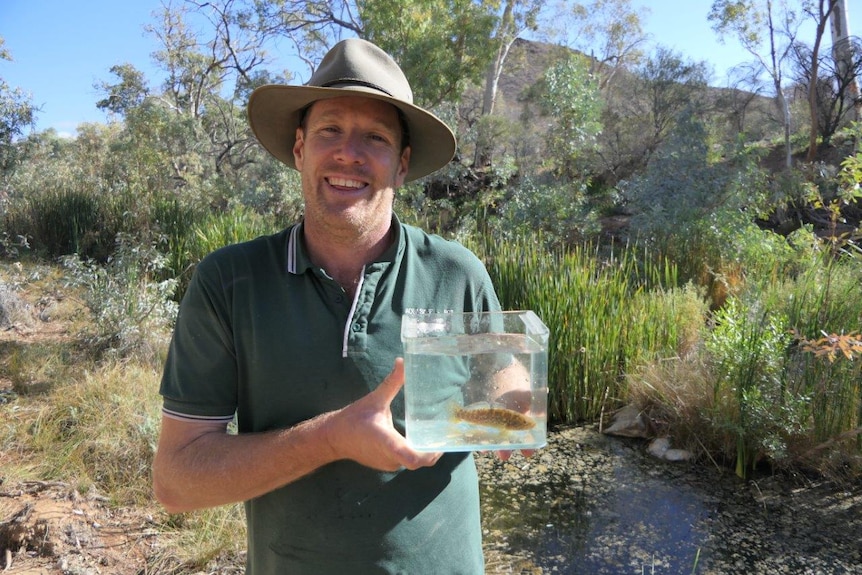
Nick Whiterod says a large majority of fish in Australia need protecting. (Supplied: Nick Whiterod)
“Species in Australia, freshwater fish, particularly those that are range restricted, are really important,” Dr Whiterod said.
“About one-third of our Australian [freshwater] species occur in really restricted locations.
“So birds, any animal can have a restricted range.”
But he said where a bird might survive in a patch of vegetation, fish were often confined to a river.
“So it’s even more restricted.”
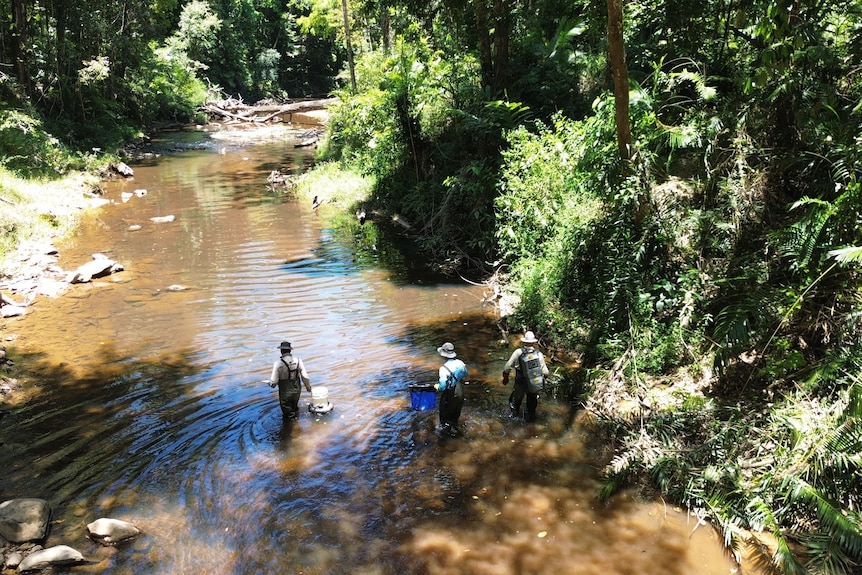
Researchers slowly move through the water to catch and identify local species. (Supplied: Carley Rosengreen, Griffith University)
Dr Whiterod said the Bloomfield River cod’s vulnerability was now being amplified by climate change, altered river flows and introduced species.
“About 37 per cent of all Australian freshwater fish are threatened with extinction,”
he said.
Dr Whiterod said species like the Bloomfield cod also told a deeper story about Australia’s past.
When those species vanished, he said, an entire evolutionary chapter could be lost.
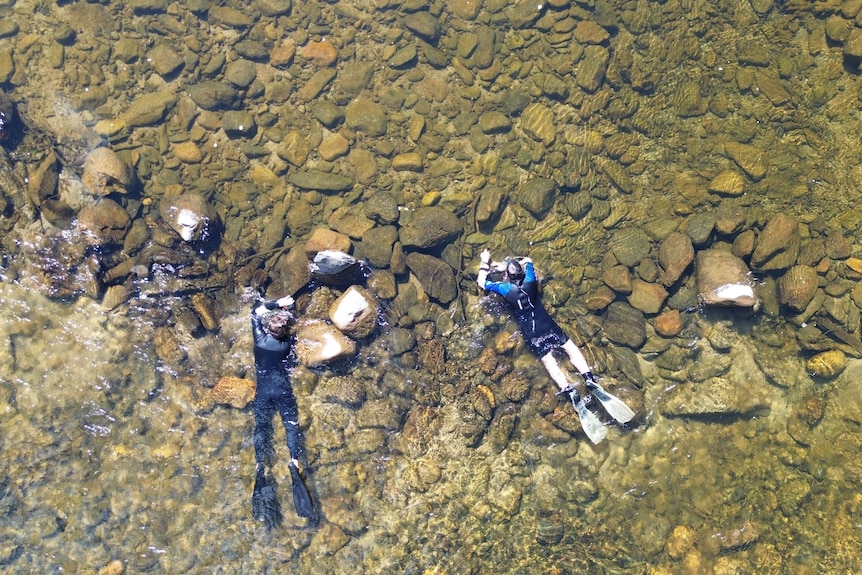
Researchers surveyed fish over several weeks out on the river. (Supplied: Carley Rosengreen, Griffith University)
“These species are, again, so in tune, so adapted to their environment, and they play a critical role in the ecological functioning of the areas they do occur,” he said.
“Be it as a predator, eating smaller fish or as a prey item, or a whole range of different functions they perform in these environments.”
Indigenous rangers team up with scientists
Jabalbina ranger and traditional owner Bobby Kulka joined the fieldwork and said he did not know about the species prior to its “Western” discovery.
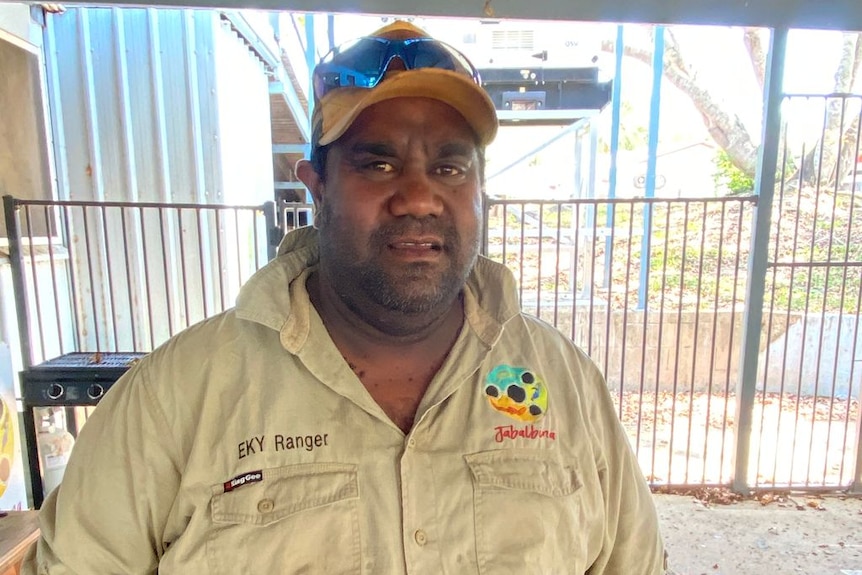
Bobby Kulka is a traditional owner for the area in which the cod is found. (Supplied: Carley Rosengreen, Griffith University)
He said he hoped the research could help the community share knowledge about the fish in schools.
“Educating the kids about the Bloomfield cod and how important it is that we protect them,” Mr Kulka said.
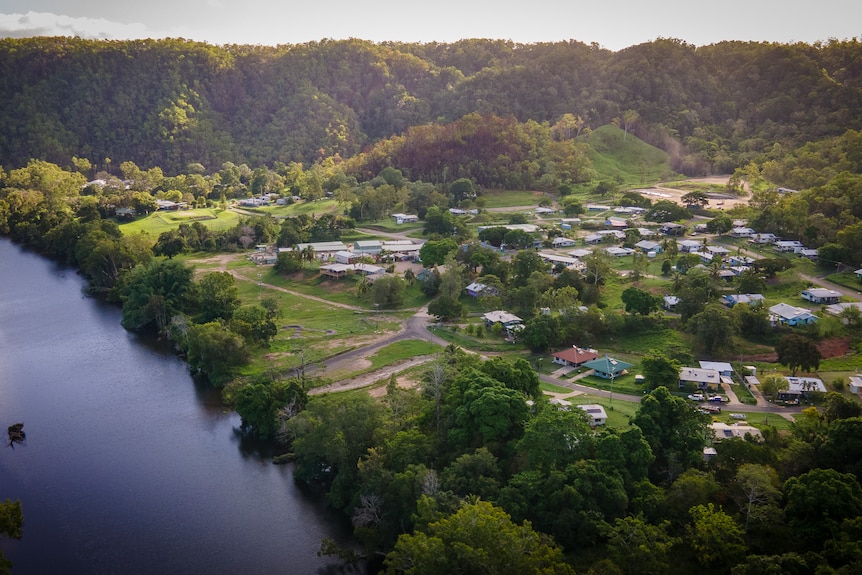
Bobby Kulka hopes information about the fish can be taught at his nearby community of Wujal Wujal. (ABC News: Brendan Mounter)
For Professor Kennard, the results of recent field trips were a relief, but he said there was work to do for the fish to gain protected status.
His team is now analysing genetic samples and tiny ear bones called otoliths, with little knowledge about the fish’s life span or breeding cycles.
“We do know how rare and threatened it is,”
he said.