This post was originally published on here
Indian diaspora scientists driving global change
Leading work in climate, sustainability & ecosystem
Diaspora
January 2, 2026
From soil science and climate modelling to ecosystem management and clean energy innovation, Indian diaspora scientists are helping solve problems that affect billions
From distant laboratories and field sites, Indian-origin scientists are helping shape global responses to climate, food security and sustainability, even as their innovative work stays outside public view.
In the global race to combat climate change, food insecurity, ecosystem collapse and public health crises, some of the most consequential work is being done far from political podiums and public attention. Among these quiet contributors are Indian-origin scientists working across continents researchers whose innovations influence international policy, protect vulnerable communities and reshape how the world understands sustainability. Despite their scale of impact, their stories rarely reach the mainstream.
From soil science and climate modelling to ecosystem management and clean energy innovation, Indian diaspora scientists are helping solve problems that affect billions. Their work reflects not only scientific excellence, but a deeply global outlook one that connects local challenges to planetary solutions.
Also Read: Indian diaspora festivals: Celebration of cultures across continents
Rattan Lal, Soil Scientist
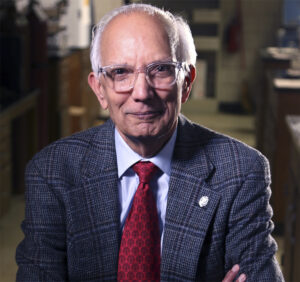
Rattan Lal
Few scientists have altered the global understanding of climate change mitigation as profoundly as Rattan Lal, born in what is now Pakistan and raised in India, where his family farmed small parcels of degraded land. A soil scientist by training, Lal earned his BSc from Punjab Agricultural University and his MSc from the Indian Agricultural Research Institute in New Delhi before completing his PhD in soil science at the Ohio State University in the United States.
Lal reframed soil from being an overlooked natural resource to a central pillar of climate and food security strategies. His research demonstrated that degraded agricultural soils spread across hundreds of millions of hectares worldwide can be restored to store significant amounts of carbon. Lal’s work showed that improved land management practices such as reduced tillage, cover cropping, and organic amendments can simultaneously reduce atmospheric carbon dioxide, improve soil fertility, and raise crop yields. At a time when global food demand continues to rise while arable land shrinks, this “triple-win” approach has become foundational to sustainable agriculture policies.
Lal spent much of his career at the Ohio State University in Columbus, Ohio, USA, where he served as Distinguished University Professor of Soil Science and Director of the Carbon Management and Sequestration Center. He currently resides in Columbus, USA, continuing to influence soil science and climate policy globally.
For his contributions, Lal was awarded the World Food Prize in 2020 and India’s Padma Shri in 2021.
Also Read: Indian diaspora caught in crossfire of xenophobia
Auroop Ratan Ganguly, Hydrologist
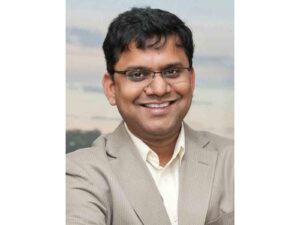
Auroop Ratan Ganguly
As climate change accelerates, the challenge is no longer limited to rising temperatures; it is about managing risk in an increasingly volatile world. Born at Mathura in Uttar Pradesh, Auroop Ratan Ganguly earned his BTech (Hons) in civil engineering from the Indian Institute of Technology (IIT) Kharagpur before moving to the United States for graduate study at the University of Toledo and the Massachusetts Institute of Technology (MIT), where he completed his Ph.D. in civil and environmental engineering. Ganguly operates at the intersection of climate science, data analytics, and public policy.
His work focuses on understanding extreme weather events, water stress, and cascading climate risks. Floods, droughts, and heatwaves rarely act in isolation; they disrupt food systems, energy grids, transport networks, and public health simultaneously. Ganguly’s research helps governments and institutions anticipate these domino effects before they unfold.
By combining climate models with advanced data science, his work translates uncertainty into decision-ready insights. This is particularly critical for rapidly urbanising regions and climate-vulnerable economies, where a single extreme event can push millions into crisis. He is currently a Distinguished Professor at Northeastern University in Boston, Massachusetts, USA, and also serves as Chief Scientist at the Pacific Northwest National Laboratory (PNNL) in Richland, Washington. Ganguly also collaborates with Indian institutions as a Visiting Professor at IIT Gandhinagar and has held visiting appointments at IIT Kharagpur and IIT Bombay. He lives in the United States.
He has received best-paper awards at highly-selective computer science conferences such as ACM KDD and SIAM Data Mining, authored a textbook on Critical Infrastructure Resilience and edited books on Knowledge Discovery from Sensor Data.
Deepa Pullanikkatil, Environmentalist
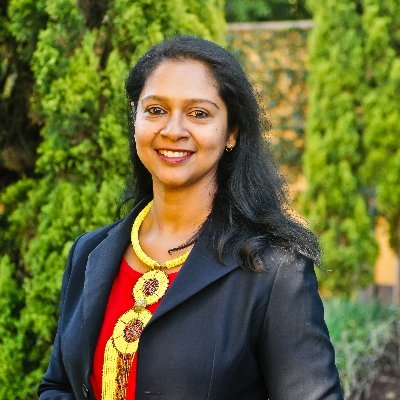
Deepa Pullanikkatil
While climate and environmental debates often unfold at global summits, Deepa Pullanikkatil, born at Kannur in Kerala, begins her work at the community level. She earned a bachelor’s in civil engineering from Mahatma Gandhi University in Kottayam, Kerala, a master’s in environmental management from the University of the Free State in South Africa, and a PhD in environmental science from North-West University also in South Africa. Operating across Africa and the Pacific, she focusses on ecosystem management that directly links environmental protection with human livelihoods.
Nearly a billion people worldwide depend directly on forests, wetlands, and fragile ecosystems for food, income and shelter. Pullanikkatil’s projects recognise that conservation efforts cannot succeed unless local communities benefit from them. Her work integrates scientific research with indigenous knowledge, ensuring that land restoration, biodiversity protection and climate adaptation efforts also strengthen economic flexibility.
From sustainable land-use planning to ecosystem-based climate adaptation, her initiatives address interconnected crises: biodiversity loss, land degradation, and poverty. She currently lives in Fiji, serving as the Commonwealth National Climate Finance Advisor, and continues to work across Africa and the Pacific. In regions already bearing the brunt of climate change, her work demonstrates that environmental sustainability and social justice are inseparable.
Also Read: Craft, identity and influence: The rise of Indian diaspora designers
Ashok Gadgil, Civil and Environmental Engineering
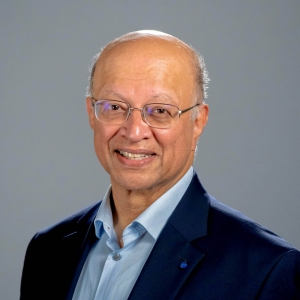
Ashok Gadgil
Dr Ashok Gadgil, born in Mumbai, India, completed his early education in India before moving to the United States, where he earned a physics degree from IIT Kanpur and his master’s and PhD in physics from the University of California, Berkeley.
Gadgil’s expertise ranges from computational fluid dynamics of indoor air and pollutant flows, simulation of indoor radon transport, building energy efficiency, to methods for treating drinking water. He has published over 135 refereed journal papers, 120 conference papers, and holds several patents, earning national and international recognition.
His work focusses on affordable technologies for clean energy, safe water, and public health, areas where small innovations can produce outsized impact. From energy-efficient cookstoves that reduce indoor air pollution to low-cost water purification systems that remove toxic contaminants, Gadgil’s solutions are designed specifically for low-income communities.
He is currently a Professor at the University of California, Berkeley, and lives in Berkeley, continuing to develop low-cost technologies that improve health outcomes while reducing carbon emissions.
Indoor air pollution from traditional cooking methods remains a major cause of respiratory illness globally, while unsafe drinking water continues to affect millions. Gadgil’s technologies address these challenges directly, exemplifying how climate action and human development can move together, especially in resource-constrained settings.
Renu Malhotra, Planetary Sciences

Renu Malhotra
Dr Renu Malhotra, born in New Delhi, India and partly raised in Hyderabad, earned her MS in physics from IIT Delhi before completing her PhD in physics at Cornell University, USA. She is a Louise Foucar Marshall Science Research Professor and Regents Professor of Planetary Sciences at the University of Arizona’s Lunar and Planetary Laboratory in Tucson, Arizona.
Malhotra is known for using orbital resonance between Pluto and Neptune to infer large-scale orbital migration of the giant planets and to predict the existence of Plutinos in resonance with Neptune. Her pioneering work has illuminated the formation and dynamics of the Kuiper Belt and asteroid belt. She currently lives in Tucson, USA.
Her research has earned her election to the National Academy of Sciences, the American Academy of Arts and Sciences, and an asteroid, 6698 Malhotra, named in her honour.