This post was originally published on here
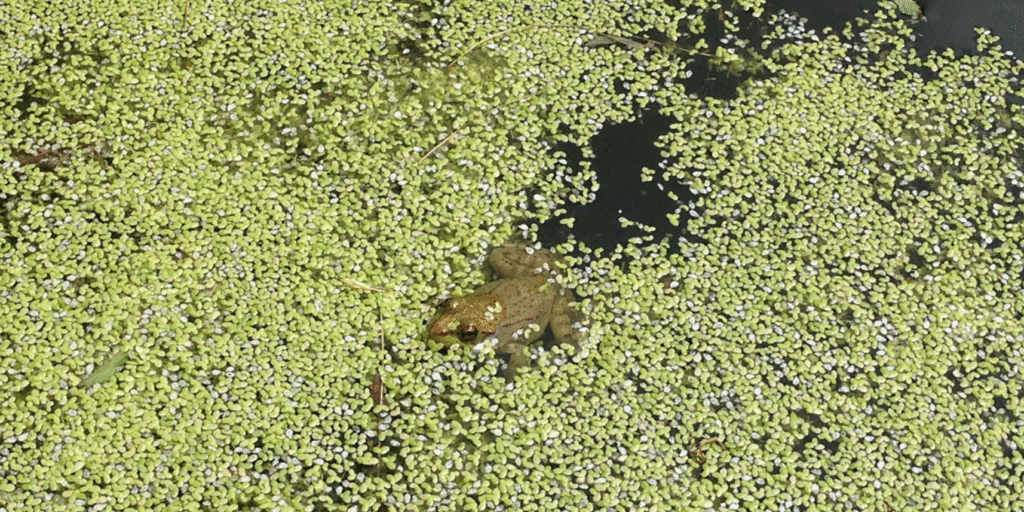
Photo, top: URI – NATURE IS RIBBITING: Discoveries in the natural world can encourage science interests in kids from an early age.
URI natural resources faculty offer screen-free suggestions for an active new year
Make a resolution to engage more with the natural world
As youth social media time remains a worldwide topic, faculty in the University of Rhode Island College of the Environment and Life Sciences offer some last-minute shopping suggestions for family activities or pastimes that get children — and their family members — off devices and out of the house.
Mindful gift planning can build science literacy and future scientists as well as offer connection and benefits for adults looking to minimize their own screen time in the year ahead, say faculty members, drawing on not only professional expertise, but also their off-campus roles as parents, grandparents, aunts and uncles.
“There are a number of ways to encourage science interests in young people from an early age,” said Becky Sartini, the college’s associate dean. “We don’t have to wait for kids to be in high school to give them opportunities to try science or explore.”
Looking at the world around you
Scott McWilliams, professor of natural resources science, says a simple pair of binoculars is a great idea for a holiday gift. “It changes the way kids see the world and also makes them feel like a real birder,” he said.
McWilliams, an expert in birds and their migratory patterns, says the first foray into birding can start in one’s own backyard. He likes the bird feeders that come with a camera so children (“and adults that behave like kids”) can see their feathered friends up close. Likewise, he says a dissecting microscope can open up a whole new world for a young person. He also is a fan of collection display cases; future geologists might use them to store rocks — McWilliams’ grandson uses one for bugs. Bug boxes are fun to get or give, too.
Other gift suggestions from faculty include microscopes, mineral kits, a bird field guide, nature journal, a plant or tree ID guide, a lupe magnifying tool, nature notebook, or a plant press to start a dried plant collection (heavy books and old newspapers can also be used).
Michelle Peach, a clinical assistant professor in the Department of Natural Resources Science, enjoyed many outdoor activities with her own children and says that nets make a fun gift for younger kids to catch insects or frogs. Children might also find the idea of a butterfly garden appealing, she says, and can learn about which plants attract butterfliesby contacting the University’s Cooperative Extension Gardening Hotline at [email protected].
Faculty members also suggested ways for Rhode Island families to be more active or set adventures in the year ahead that don’t require shopping.
“Many places offer free educational opportunities for kids and families such as Audubon Society of Rhode Island, Kettle Pond Visitor Center, Block Island Maritime Institute, and more,” Peach says. “Families, or anyone, can also look at organizations like FrogWatch for volunteer opportunities.”
“You can join local citizens science projects such as Watershed Watch here at URI or the American Chestnut Foundation,” adds her colleague professor Laura Meyerson, “volunteer for the Rhode Island Natural History Survey, Bioblitz, or iNaturalist to photograph and identify plants, animals, and fungi, contributing to global biodiversity data. As scientists we rely on data and the movement toward opportunities for crowd-sourced data is something fun and exciting that families and young people can get involved in.”
Meyerson’s colleague, Sarah Kienle, a mom of two, says that experiences or annual passes make a great idea for family gifts. She’s used several with her own family at Save the Bay Aquarium, Roger William Park Zoo, and Norman Bird Sanctuary (and chances are good, you might run into an alum of the college working there).
Armchair nature
Though she’s an Antarctic researcher, Kienle knows everyone may not be keen to get outdoors on the chilliest days. You can also explore nature from your own home; she recommends getting the books 100 Things to Know About Planet Earth or 100 Things to Know About Saving the Planet from your local library or playing a game of Outfoxed or Match a Pair of Birds (though she probably won’t want to play McWilliams for that). You also can’t go wrong with humor: scat is a subject of animal study and also the subject of a book, sure to please the kid set, especially those curious to know Whose Poop is That.
Leopard seals, bobcats and lizards, oh my!
To see research from URI’s College of the Environment and Life Sciences in action all year long (on the topics above and more), follow @uri_cels on social media for videos, tips and information on public-interest projects. URI’s Cooperative Extension program also offers a variety of programs and activities for a range of ages. Contact the Gardening and Environmental Hotline (401-874-4836) with your gardening questions or sign up for the Extension mailing list to hear about programs coming up in the new year: email [email protected] or visit https://web.uri.edu/coopext/.
___
URI, Brown, Rhode Island College, Roger Williams University to study microplastic ingestion – need your hunter-harvested ducks
Four Rhode Island institutions partner in GI/ingestion study to assess microplastic levels in Narragansett Bay waterfowl
Postdoctoral fellows Tori Mezebish Quinn and Dylan Bakner and Professor Scott McWilliams in the University of Rhode Island’s Department of Natural Resources Science are initiating a project in collaboration with colleagues from three other local colleges that involves collecting hunter-harvested ducks to quantify and characterize microplastics in their digestive tracts.
The URI researchers are involved in a multidisciplinary investigation of the presence, distribution, effects, and fate of microplastics within Rhode Island’s coastal ecosystem. The work is part of a large collaborative effort between URI, Brown University, Rhode Island College, and Roger Williams University and is supported primarily by the National Science Foundation EPSCoR Program. The project, called SIMCoast (www.simcoastri.org), will provide local agencies, industries, and community organizations with actionable information to inform future plastic pollution mitigation strategies.
Quinn says they hope to receive donations from local hunters over the course of three Saturdays this January and have issued a request for whole or breasted-out common eider, red-breasted merganser, and bufflehead carcasses.
To donate:
- Freeze Rhode Island-harvested whole or breasted-out carcasses (foil wrapped if possible, but not necessary) individually in bags labeled with your name and phone number, species, harvest date, town nearest to where the bird was harvested, and the distance of harvest from that town.
- Bring labeled carcasses to any of three drop-off locations on Saturday, Jan. 3, Jan. 17, or Jan. 31, between noon to 3 p.m.: URI Coastal Institute (1 Greenhouse Road, Kingston), West Greenwich Park & Ride (92 New London Turnpike, West Greenwich), and Newport Town Center Park & Ride (209-221 JT Connell Highway, Newport).
To coordinate delivery of donated common eider, redbreasted mergansers, and bufflehead, please contact [email protected] or [email protected]. For more information on the project, contact Professor Scott McWilliams at [email protected].