This post was originally published on here
Utah biologists have characterized D. woaabi, the first of two nematode species recently discovered in the lake’s microbialites.
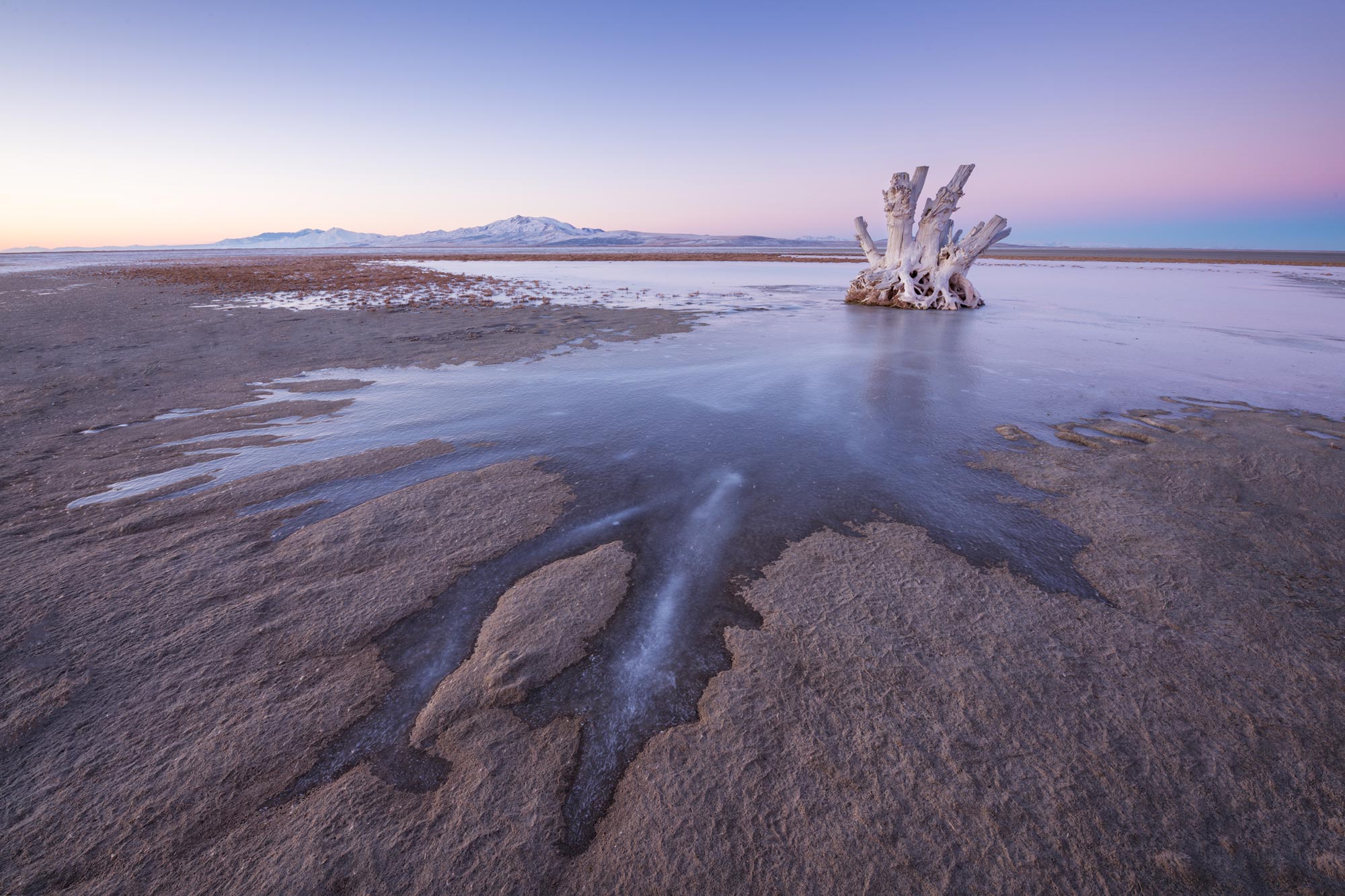
Scientists studying the Great Salt Lake have identified tiny roundworms that belong to at least one species never before described, with evidence suggesting there may be two new species. Researchers from the University of Utah detailed the discovery in a newly published study that documents the organism’s features and assigns it a name recognizing the Indigenous people whose ancestral homelands include the lake.
The species, known as Diplolaimelloides woaabi, appears to exist only in the Great Salt Lake and may serve an important ecological role that scientists have not yet fully defined. The research team, led by assistant professor of biology Michael Werner, worked with the Northwestern Band of the Shoshone Nation when naming the species. Tribal elders suggested Wo’aabi, an Indigenous word meaning “worm.”
Nematodes are among the most widespread animals on the planet, thriving in environments ranging from polar ice and deep sea hydrothermal vents to ordinary backyard soil. Because most measure less than a millimeter in length, they often go unnoticed. Scientists have identified more than 250,000 nematode species, making them the most abundant animal phylum across land and water ecosystems. They account for roughly 80% of animal life in soils and about 90% of animals living on the ocean floor.
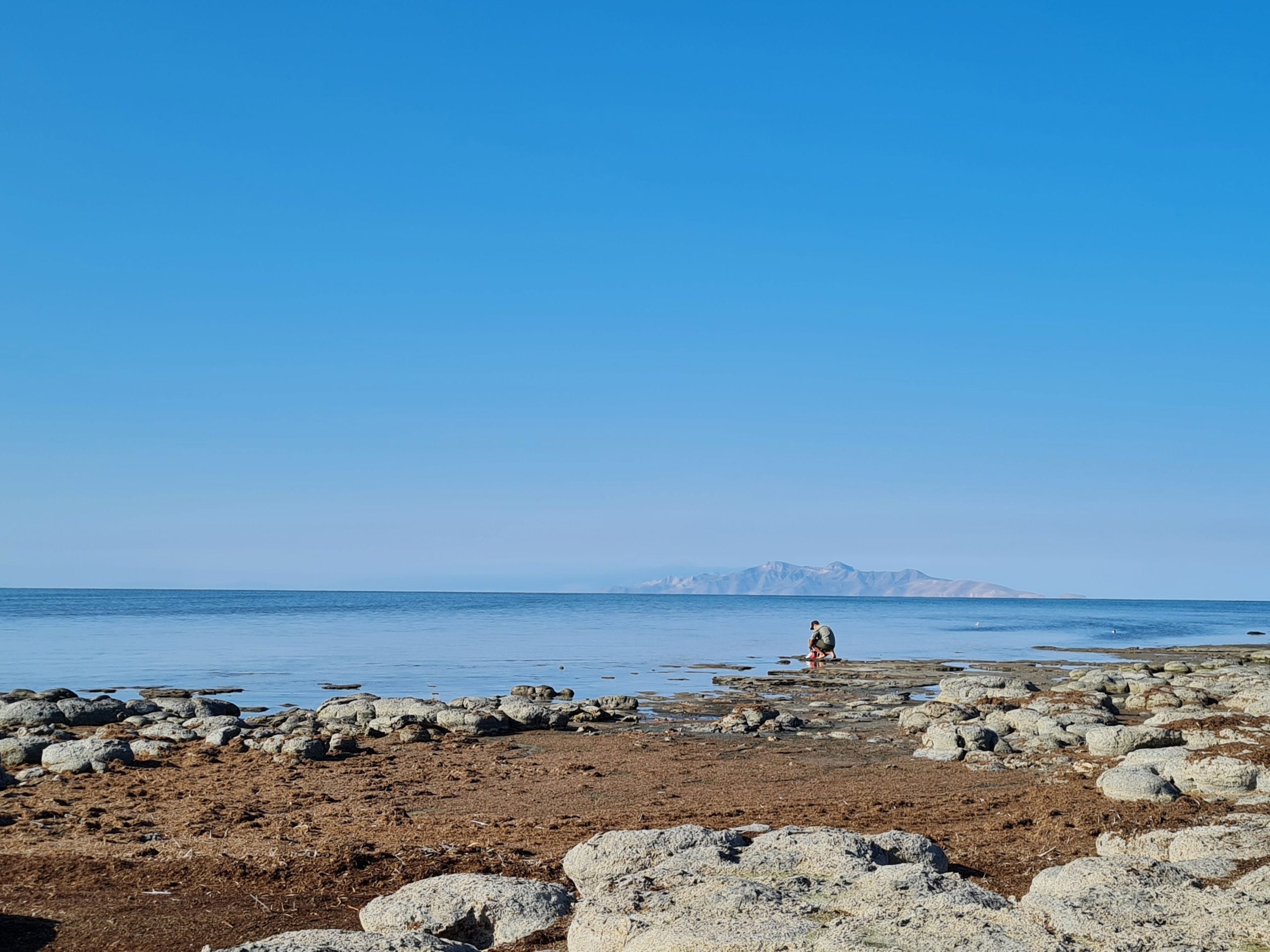
Yet none had been positively detected in Great Salt Lake until 2022, when expeditions by kayak and bike led by Julie Jung, then a postdoctoral researcher in Werner’s lab, recovered nematodes in the lake’s microbiliates, the lithified mounds covering parts of the lakebed. Werner’s team reported that discovery in a paper last year.
“We thought that this was probably a new species of nematode from the beginning, but it took three years of additional work to taxonomically confirm that suspicion,” said Jung, now an assistant professor at Weber State University.
A new creature in the Great Salt Lake
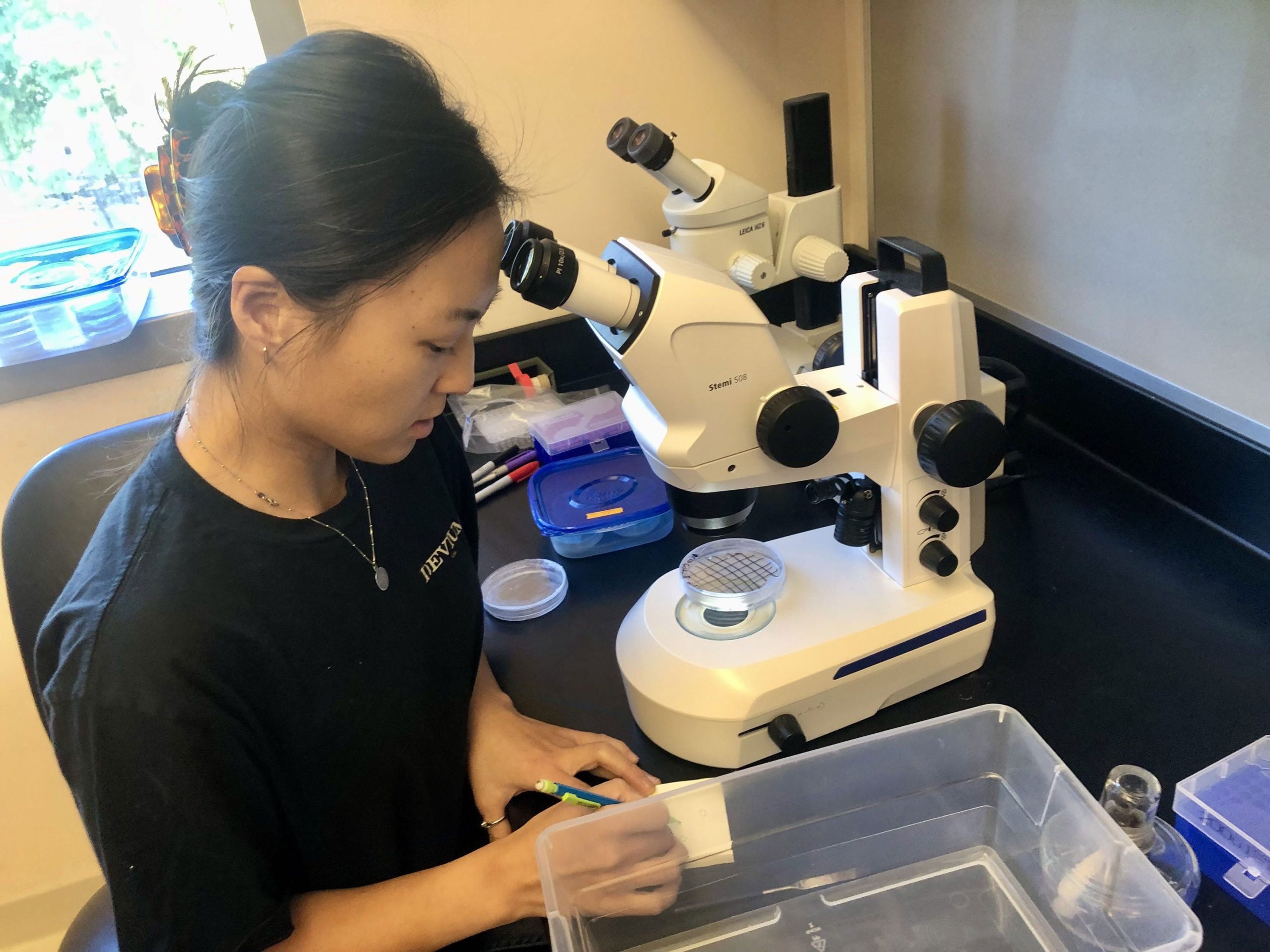
With the Werner lab’s discovery, nematodes became just the third metazoan taxon known to inhabit the lake’s highly saline waters, the other animals being brine shrimp and brine flies, which support vast populations of migratory birds during their seasonal stopovers. Ongoing work in the Werner lab also indicates that there might be a second, potentially new species among the specimens his team has brought into the lab, but it will take more research to be certain. The second author on the paper, Thomas Murray, is an undergraduate in the Werner lab who has been sampling different parts of the lake.
“It’s hard to tell distinguishing characteristics, but genetically we can see that there are at least two populations out there,” Werner said.
The Great Salt Lake nematode discovery raises two new big questions. How did the worms get there? And what role do they play in the lake’s ecology?
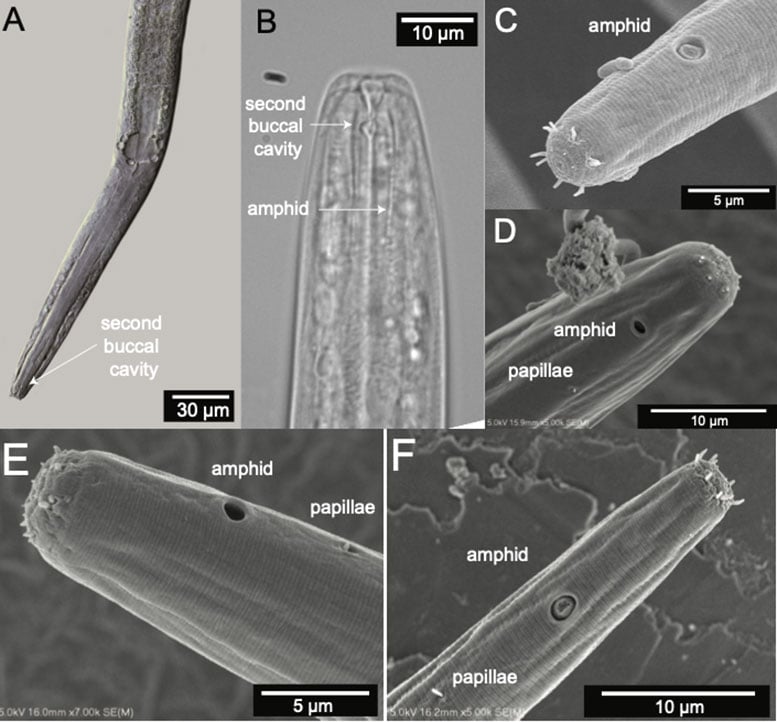
From the onset, Werner’s team suspected the lake’s nematodes belonged to the family Monhysteridae, an ancient branch of the nematode phylum known for its adaptation to highly saline and other extreme environments. Through genetic and taxonomic analysis, the researchers concluded the new species under study belongs to the genus Diplolaimelloides, free-living nematodes found in coastal marine and brackish environments.
How did the worms get there?
The new species is now one of two members of this genus that don’t inhabit coastal environments, the other being found in eastern Mongolia. So how did it get to a lake 4,200 feet higher and 800 miles from the nearest sea?
“That begs some more interesting, intriguing questions that you wouldn’t have even known to think of until we figured out the alpha taxonomy,” Werner said. “There are two hypotheses, two models that are both kind of crazy for different reasons.”
The first was proposed by co-author Byron Adams, a Brigham Young University biology professor and renowned nematologist. Millions of years ago, during the Cretaceous Period, Utah sat on the west shore of a marine waterway bisecting what is now North America.
“So we were on the beach here. This area was part of that seaway, and streams and rivers that drained into that beach would be great habitat for these kinds of organisms,” said Adams, himself the namesake for a nematode species. “With the Colorado Plateau lifting up, you formed a great basin, and these animals were trapped here. That’s something that we have to test out and do more science on, but that’s my go-to. The null hypothesis is that they’re here because they’ve always kind of been here.”
But Werner noted northern Utah has not always been home to a saline lake. Between 20,000 and 30,000 years ago, the region was covered by the vast freshwater Lake Bonneville.
“If the nematode has been endemic since 100 million years ago, it has survived through these dramatic shifts in salinity at least once, probably a few times,” he said. The other possibility, which Werner admits is even “crazier,” is that the nematodes arrived in the feathers of migratory birds that picked them up from saline lakes in South America.
“So who knows. Maybe the birds are transporting small invertebrates, including nematodes, across huge distances,” Werner said. “Kind of hard to believe, but it seems like it has to be one of those two.”
A crucial bioindicator of the lake’s health
In the lab, the team made another mystifying observation. Female nematodes far outnumbered males among the samples.
“That’s another confusing part of the story for us. When we sample out there on the lake and bring them back in the lab, we get less than 1% males. But when we have cultured them in the lab, the males make up about 50% of the sex ratio,” Werner said. “We’re super happy to be able to culture them in the lab, but there’s something about it that’s clearly different than the lake environment.”
These creatures inhabit the algal mats covering the lakebed microbialites, dining on the abundant bacteria that live on them. The researchers discovered the worms are largely confined to the top few centimeters of the mats; below that, they were not detected. More research is needed to determine where exactly the nematodes fit in the lake’s food chain, but given their abundance and importance in other ecosystems, it’s almost certain they play an important role in the Great Salt Lake.
Nematodes are bioindicators of environmental health. Their numbers, species diversity, and where they’re found can reveal changes in water quality, salt level,s or the chemistry of sediments. With the Great Salt Lake under heavy human pressure, this newly discovered species could become a useful “early warning system” for tracking ecosystem change, according to the study.
“When you only have a handful of species that can persist in environments like that, and they’re really sensitive to change, those serve as really good sentinel taxa,” Adams said. “They tell you how healthy is your ecosystem.”
The fact that it lives only on microbialites suggests it may have special relationships with microbes or unusual life strategies that deserve more study. Because microbialites are key to producing much of the lake’s energy and food, any interactions between these nematodes and other organisms could ripple through the entire Great Salt Lake ecosystem.
Reference: “Diplolaimelloides woaabi sp. n. (Nematoda: Monhysteridae): A Novel Species of Free-Living Nematode from the Great Salt Lake, Utah” by Julie Jung, Thomas R. Murray, Morgan C. Marcue, Thomas Powers, Solinus Farrer, Abigail Borgmeier, Byron J. Adams, Jonathan A. Wang, Gustavo Fonseca and Michael S. Werner, 1 February 2025, Journal of Nematology.
DOI: 10.2478/jofnem-2025-0048
Funding for this research came from the National Institutes of Health, Society of Systematic Biologists, National Science Foundation and Conselho Nacional de Desenvolvimento Científico e Tecnológico.
Never miss a breakthrough: Join the SciTechDaily newsletter.
Follow us on Google and Google News.