This post was originally published on here
Share and speak up for justice, law & order…
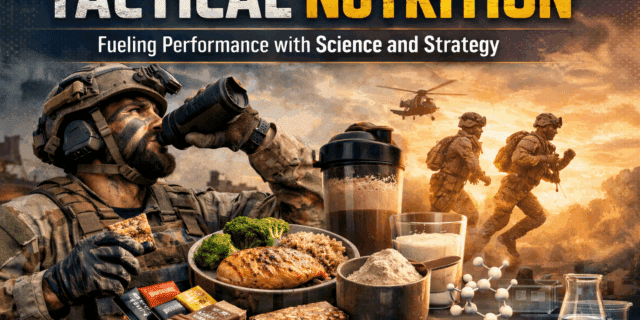
The purpose of this article is to give first responders and special operations personnel the education needed to make effective food choices on and off-duty, particularly during high-stress encounters where performance and decision-making can have life-or-death consequences.
It is relatively easy to plan nutrition for training or competition when timing is predictable and preparation is controlled. Law enforcement and tactical operations rarely offer that luxury. Calls come without warning, stress escalates rapidly, and the physical and cognitive demands often exceed those of any sporting event. In these environments, nutrition must support readiness at a moment’s notice- not just recovery afterward.
While having a shift’s worth of food available in a patrol vehicle is ideal, performance nutrition does not require elaborate meal prep. Many effective options are readily available at grocery stores and even gas stations, and several of the examples discussed below can be purchased and prepared with minimal time or equipment. The goal is not perfection, but consistency and strategic choices that support alertness, stamina, and resilience on duty.
The Building Blocks: Macros, Micros and Calories
Our bodies require six classes of nutrients: protein, carbohydrates, fat, water, vitamins and minerals. These macronutrients and micronutrients are the raw materials for everything from tissue repair to hormone production. A calorie is simply a unit of energy; without sufficient calories, there’s no growth, repair or energy to chase a suspect down an alley. Protein and carbohydrates provide 4 calories per gram, while fat provides 9 calories per gram.
Protein
Protein isn’t just for bodybuilders. It is the structural component of muscles, skin and internal organs and it bolsters the immune system. While some protein is found in most foods, vegetables, nuts, grains, and legumes are typically considered incomplete protein sources due to their limited amount of essential amino acids. Sources of complete proteins would be foods such as eggs, meats, and dairy products along with the vast amount of protein powders and bars available on the market today.
Carbohydrates
Carbohydrates are the body’s preferred fuel source. Glucose – the simplest form of carbohydrate – powers the brain and muscles. Simple sugars (monosaccharides anddisaccharides) digest quickly, spiking blood sugar. Complex carbohydrates such as potatoes, rice and oats digest slowly, providing sustained energy. Fiber, although technically a carbohydrate, isn’t digested but is essential for a healthy gut; every population that lives long and well eats plenty of fiber. Research shows that our Paleolithic ancestors often consumed 100 grams or more daily, which is far more than today’s average of under 20 grams.
Fats
Fat has been demonized in the past, but quality fats are crucial for hormone production, vitamin absorption and nervous-system function. Saturated fats give cell membranes their structure and protect the liver from toxins, while unsaturated fats (from olive oil, fatty fish and nuts) improve cholesterol and reduce inflammation. The key is balance – too much saturated fat can make cell membranes rigid, whereas too much unsaturated fat leaves them too fluid.
Micronutrients: Vitamins, Minerals and Performance
Hitting your macros is only half the battle. Vitamins and minerals – the micronutrients – are just as vital for metabolic health, hormone balance and performance. Deficiencies in a single micronutrient can disrupt insulin sensitivity, impede energy production and undermine immunity. Many Americans are deficient in multiple vitamins and minerals, often because refined sugar and processed foods provide empty calories devoid of micronutrients. Worse, metabolizing sugar requires B-vitamins and magnesium, further depleting the very nutrients we’re already lacking.
Electrolytes
Electrolytes – sodium, chloride, potassium, magnesium and calcium – maintain fluid balance, muscle contractions and nerve signaling. Lose enough of them and your performance will crash.
- Sodium: Obtained from salt, it regulates fluid balance and allows muscles to contract. When you skimp on sodium, your body will cannibalize it from the bones. Healthy kidneys can filter nearly 100 grams of salt per day, far more than the recommended 2.3 grams; athletes can lose up to 7 grams per hour.
- Chloride: The sidekick to sodium, also found in salt, maintains blood pressure and helps make stomach acid.
- Potassium: Required by every cell; low levels cause fatigue, muscle cramps and abnormal heart rhythms.
- Magnesium: Supports more than 600 biochemical reactions, assists in muscle contraction and helps the body use carbohydrates.
- • Calcium: Crucial for bones and muscle contractions; 99% is stored in bone.If you’re sweating a lot on a hot day, you’re not just losing water. Per liter of sweat, you lose 500–2,000 mg sodium and 100–500 mg potassium. That’s why I add salt to my drinks and meals, and I encourage athletes to carry electrolytes in their cruiser. Sports drinks often fall short – for example, coconut water is high in potassium but too low in sodium; milk has a better mineral profile but still needs extra salt.
Gut Check: Digestion and the Microbiome
Food isn’t truly inside the body until it’s absorbed through the intestinal wall. Digestion begins with chewing – your stomach has no teeth, so chew each bite 30–40 times. Chewing also triggers the production of hydrochloric acid in the stomach. From ingestion to elimination, food travels through six stages: ingestion, propulsion, mechanical digestion, chemical digestion, absorption and defecation.
Guarding the Barrier
The gut lining protects the immune system from foreign invaders. Overeating, alcohol and irritants can damage this barrier, leading to “leaky gut” – undigested particles leak into the bloodstream, triggering inflammation and autoimmune diseases. Gluten and lactose sensitivities can exacerbate gut issues.
Feeding Your Microbiome
The trillions of bacteria in your gut influence digestion, immunity and even mood. Feed them with fiber and resistant starches – green bananas, potato starch and cooled starches create fuel for beneficial bacteria. Bone broth, aloe vera, marshmallow root and chia seeds support the gut lining.
Impact of Stress on Digestion
Stress triggers cortisol and adrenaline, halting digestion and spiking blood sugar. When you’re sprinting after a suspect, blood is diverted from the gut to the muscles and skin. That’s why a full stomach before high-intensity activity can lead to vomiting or diarrhea. Feel like you ate too much? A 10-minute walk after a large meal will speed up digestion and keep blood sugar in check. Consuming apple cider vinegar, cinnamon and bitter melon extract before a large meal will help with digestion and control blood sugar as well.
Gut Transit Time and Meal Order
Imagine your digestive tract like a convoy of squad cars: put the slowest vehicle up front and everything bottlenecks. Fast-digesting foods (juice, fruit) should lead the way; slower foods (vegetables, beans, meats) follow. Chicken and turkey digest in about two hours, beef in fourhours, while watermelon is gone in 20 minutes. Water empties from the stomach immediately, smoothies in 20–30 minutes, and blended foods digest faster than whole foods. Paying attention to the order of food has made the biggest difference in how I and other officers perform on-duty. To determine your gut transit time, try a tablespoon of beet root powder and note how long until it appears in your stool. Ideally, food should transit from mouth to large intestine in 11–48 hours; faster than that and nutrients are lost, slower and constipation may occur.
Hydration: Beyond H₂O
Dehydration as little as 2 % causes performance declines; at 4 %, work capacity drops 20–30 %. Yet drinking half your bodyweight in ounces of water is an oversimplified guideline – you must adjust for activity, climate and sweat rate. I wake up and down 32 oz of water before my first sip of coffee. Prehydrate by drinking half your bodyweight (pounds) in ounces throughout the day and tailor intake to conditions. Hydration isn’t just about water – you need to replace what you sweat out. A 5–9 % glucose concentration accelerates water absorption; adding salt and caffeine to a glucose/fructose mix triples or quadruples glycogen replenishment which we’ll learn the importance of next in the glycogen section. A ready-made drink with a 1:1 ratio of glucose to fructose, half a teaspoon of salt and some caffeine is ideal for replenishing during or after a high-intensity encounter. If you’re in a pinch, coconut water with a salt packet and a caffeinated beverage works.
Fueling for the Job
Glycogen: Filling the Tank
Your body stores glucose as glycogen in muscle (350–420 grams) and the liver (75–100 grams). The first 10–12 seconds of an all-out sprint uses creatine phosphate and muscle glycogen. A foot pursuit of 100–400 meters deplete a significant portion of glycogen. That’s why topping off glycogen with carbohydrates before a shift and replenishing afterward is critical. If an encounter is extremely demanding, aim for 1 gram of carbohydrate per kilogram of bodyweight – about 82 grams for a 180-pound individual. A mix of glucose and fructose plus salt and caffeine speeds up replenishment.
On-Duty Meals
Planning meals as a law-enforcement officer is tough. Keep a shift’s worth of food in your vehicle and eat in a secluded area when possible. Stop when you’re ½ to ¾ full – this takes discipline but prevents sluggishness. Focus on foods that digest quickly and enhance physical and mental performance:Meal examples:
Option 1 – 4-6 ounces of beef, 1-2 cups of cooked spinach, half an avocado
Option 2 – 4 egg whites, 1-2 cups of cooked spinach, ¼ cup of macadamia nuts
Option 3 – 4-6 ounces of ground turkey, mixed with 1-2 eggs, 1-2 cups of cooked kale. When not on-duty, adding jalapenos here is a tasty option.
Option 4 – 5-12 ounces of canned chicken breast, 1-2 cups of cooked spinach
Option 5 – Whey or beef isolate shake with 1 tablespoon of olive oil
Option 6 – Blend your favorite protein powder and a small amount of veggies/fruit and consume immediately.
*All solid meals should be salted to taste.
A clear pattern should be obvious in these meals: a moderate dose of complete protein—at least 20 grams to stimulate muscle protein synthesis—paired with quality fats to support hormones, satiety, and steady energy. You don’t need perfection or endless variety; you need consistency. Aim for roughly 20–40 grams of protein and a minimum of 10 grams of fat per meal and you’ll cover the bases for performance and recovery.
While I’m not a big fan of snacking, a practical option in a pinch is walnuts with a small amount of 100% dark cacao, both of which support nitric oxide production and blood flow. And for those times when preparation falls apart, gas stations can still provide workable choices—protein bars, mixed nuts, electrolyte drinks, and even fruit at some locations. Some of the meals listed above can also be assembled quickly on the fly. Just remember: those who fail to plan, plan to fail.
Off-Duty Carbohydrates
When you’re off-duty, it’s time to replenish glycogen and prepare for the next shift. Add sweet potatoes, white rice, fruits or whole-grain bread to your protein and vegetables. These carbohydrates are best consumed in the hours leading up to your shift or post-training.
Performance Enhancers and Supplements
The right compounds can sharpen both body and mind. Here’s a breakdown of evidence-based options:
- Salt: Besides balancing fluids, salt regulates body temperature, improves muscle contraction, increases blood volume and delays fatigue. Preloading with salt beforetraining can keep you up to one degree cooler and preserve performance in hot environments. I use Redmond Real Salt (it’s unrefined and rich in minerals).
- Beta-alanine: Boosts muscle carnosine, buffering acidity during high-intensity exercise; recommended dose is 4–6 grams a day. This is the ingredient in pre-workout supplement that cause the tingly sensation known as paresthesia.
- Creatine: Aids in ATP replenishment for explosive movements and is now being recognized for its cognitive benefits as well; 5 grams per day with occasional breaks is typical.
- Citrulline malate: Increases nitric oxide and enhances blood flow; take 6–8 grams (watermelon is a natural source).
- Cordyceps mushrooms: Support lung function and oxygen use; 1–3 grams daily.
- Caffeine: The most researched ergogenic aid; improves focus, reaction time and physical performance. Effective doses range from 100–300 mg, peaking between 15 and 120 minutes. Combining caffeine with L-theanine (100–200 mg) reduces jitters and enhances cognitive benefits.
- Theacrine: Similar to caffeine but without the same anxiety or blood-pressure effects; 100–200 mg is effective.
- L-Theanine: Great for cognitive performance and can decrease some of the anxiety/jittery effects some experience from caffeine.
- Natural sugars: Maple syrup and honey provide quick fuel and micronutrients
- Functional foods: Cacao, maca root, chia seeds, honeybee pollen and beet root powder offer antioxidants, nitric-oxide boosters and endurance benefits.
Body Composition and Hormones
Showing some muscle under your uniform can deter confrontation and, more importantly, ensures you have the strength to prevail. Aim for at least 1 gram of protein per pound of bodyweight (or per pound of lean mass if overweight). To gain muscle, eat 10–15 % above maintenance calories.
Hormones govern everything from fat storage to mood:
- Insulin: The storage hormone. Frequent high-carb meals spike insulin and may lead to insulin resistance, metabolic syndrome and type 2 diabetes. Reversing insulin resistance involves intermittent fasting, prioritizing animal protein and limiting carbs around activity.
- Adiponectin: Helps break down fatty acids and protects against insulin resistance; increase it by eating walnuts, olive oil, avocados and fiber, and by exercising.
- Glucagon: Encourages fat burning; stimulated by protein.
- Growth hormone (GH): Boosts muscle growth and metabolism; optimize it through quality sleep, low body fat, reduced sugar intake, intermittent fasting and high-intensity exercise.
- Cortisol: High levels redistribute fat from limbs to the trunk and increase sugar cravings. Manage stress and avoid chronic sleep deprivation.
- Thyroid hormones (T3 & T4): Control metabolic rate; iodine is essential for their production.
- Insulin-like growth factor 1 (IGF-1): Vital for physical and mental performance; increase it with zinc, vitamin C, magnesium, selenium, cinnamon, vitamin D, creatine, exercise and sauna use.
Reproductive Hormones
For men, testosterone is essential for aggression, confidence and muscle mass. Levels have been declining about 1 % per year for two decades. Low testosterone diminishes motivation and increases body fat, while high levels correlate with aggressive behavior. Avoid sleep deprivation, heavy metals and excessive endurance training, and supplement with Tongkat Ali, vitamin D, zinc and magnesium. Estrogen isn’t just a female hormone. In men it contributes to bone health and fertility; too little or too much leads to problems. Women require balanced estrogen for reproductive health; low levels cause irregular cycles and mood swings, while high levels cause weight gain and fatigue.
Damage Control: Indulging Without Derailing
We’re human. There will be birthdays, holidays and stress-eating. Here are some tactics to minimize the damage:
- Preload meals: Consume a small protein-rich snack (whey protein, walnuts, avocado, cheese or an egg) 30 minutes before a large meal. It curbs appetite, slows gastric emptying and improves insulin sensitivity.
- Curb cravings: Supplement with glutamine, fish oil or eat foods like chia seeds, berries, coconut oil, green tea and dark chocolate. Poor sleep, stress and dehydration magnify sugar cravings.• Lower post-meal blood sugar: As mentioned earlier, take apple cider vinegar, bitter melon extract, cinnamon, chromium, alpha-lipoic acid or berberine before a high-carb meal and walk for 10 minutes afterwards.
- Manage hunger: Coffee, tea, spices (cayenne, cumin, cinnamon), staying busy and a low-carb diet can help.
The Takeaway
Just as your cruiser is a high-performance vehicle, your body is/should be a high-performance machine. Just as your firearm is a precisely engineered piece of equipment, much more so is your body. Your body deserves high quality food at the right time. You wouldn’t like to go into a gunfight with a dirty gun, don’t do it with your body either. Eat to perform. Hydrate with inte
Eat to perform. Hydrate with intent. Supplement wisely. Fight evil, save lives and refuel so you can do it again and again.
Scott Hayes is a former police officer and field training officer who worked in a high-crime environment and served on a Special Crimes Unit conducting multiple high-risk warrant operations. He has participated in numerous pursuits and has extensive experience managing critical incidents, use-of-force decisions, and officer safety in real-world conditions.
Scott later transitioned to federal service as an intelligence analyst with a U.S. government agency, where he supports threat assessment and national-level intelligence work. He is also the author of Tactical Nutrition, a book focused on helping officers optimize their health, performance, and resilience through practical nutrition strategies. With more than 27 years in fitness and nutrition, and competitive experience in combat sports and strength training, Scott brings a practitioner’s perspective to officer wellness and performance.
References:
Breit, S., Kupferberg, A., Rogler, G., & Hasler, G. (2018, March 13). Vagus nerve as modulator of the brain-gut axis in psychiatric and inflammatory disorders. Frontiers in Psychiatry. Retrieved February 24, 2022, from https://www.ncbi.nlm.nih.gov/pmc/articles/PMC5859128/
ScienceDaily. (2016, June 27). Food’s transit time through body is a key factor in digestive health. ScienceDaily. Retrieved February 24, 2022, from https://www.sciencedaily.com/releases/2016/06/160627125525.htm
Fajans, S. S., Floyd, J. C., Knopf, R. F., & Conn, J. W. (2013, October 21). Effect of amino acids and proteins on insulin secretion in man. Schering Symposium on Endocrinology. Retrieved February 25, 2022, from https://www.sciencedirect.com/science/article/pii/B9780080133959500216
MacDonald, P. E., El-kholy, W., Riedel, M. J., Salapatek, A. M. F., Light, P. E., & Wheeler, M. B. (2002, December 1). Multiple actions of GLP-1 on the process of glucose-stimulated insulin secretion. American Diabetes Association. Retrieved February 24, 2022, from https://diabetes.diabetesjournals.org/content/51/suppl_3/S434
Berend, K., van Hulsteijn, L. H., & Gans, R. O. (2012). Chloride: The queen of electrolytes? European Journal of Internal Medicine. Retrieved February 25, 2022, from https://pubmed.ncbi.nlm.nih.gov/22385875/Oh, H., Lee, H. Y., Jun, D. W., & Lee, S. M. (2016, January). Low salt diet and insulin resistance.
Clinical Nutrition Research. Retrieved March 1, 2022, from https://www.ncbi.nlm.nih.gov/pmc/articles/PMC4731857/
Graudal, N. A., Hubeck-Graudal, T., & Jürgens, G. (2016, March 24). Reduced dietary sodium intake increases heart rate. Frontiers in Physiology. Retrieved March 1, 2022, from https://www.ncbi.nlm.nih.gov/pmc/articles/PMC4805644/
Burke, L. M. Caffeine and sports performance. Applied Physiology, Nutrition, and Metabolism. Retrieved February 25, 2022, from https://pubmed.ncbi.nlm.nih.gov/19088794/
Exton, J. H. (1979). Regulation of gluconeogenesis by glucocorticoids. Monographs in Endocrinology. Retrieved February 25, 2022, from https://pubmed.ncbi.nlm.nih.gov/390819/
Davidson, J. R., Moldofsky, H., & Lue, F. A. (1991, July). Growth hormone and cortisol secretion in relation to sleep and wakefulness. Journal of Psychiatry & Neuroscience. Retrieved March 1, 2022, from https://www.ncbi.nlm.nih.gov/pmc/articles/PMC1188300/
Vitamins and minerals. The Nutrition Source. (2021, October 19). Harvard T.H. Chan School of Public Health. Retrieved March 1, 2022, from https://www.hsph.harvard.edu/nutritionsource/vitamins/
Magnesium. The Nutrition Source. (2021, October 14). Harvard T.H. Chan School of Public Health. Retrieved February 25, 2022, from https://www.hsph.harvard.edu/nutritionsource/magnesium/
Share and speak up for justice, law & order…