This post was originally published on here
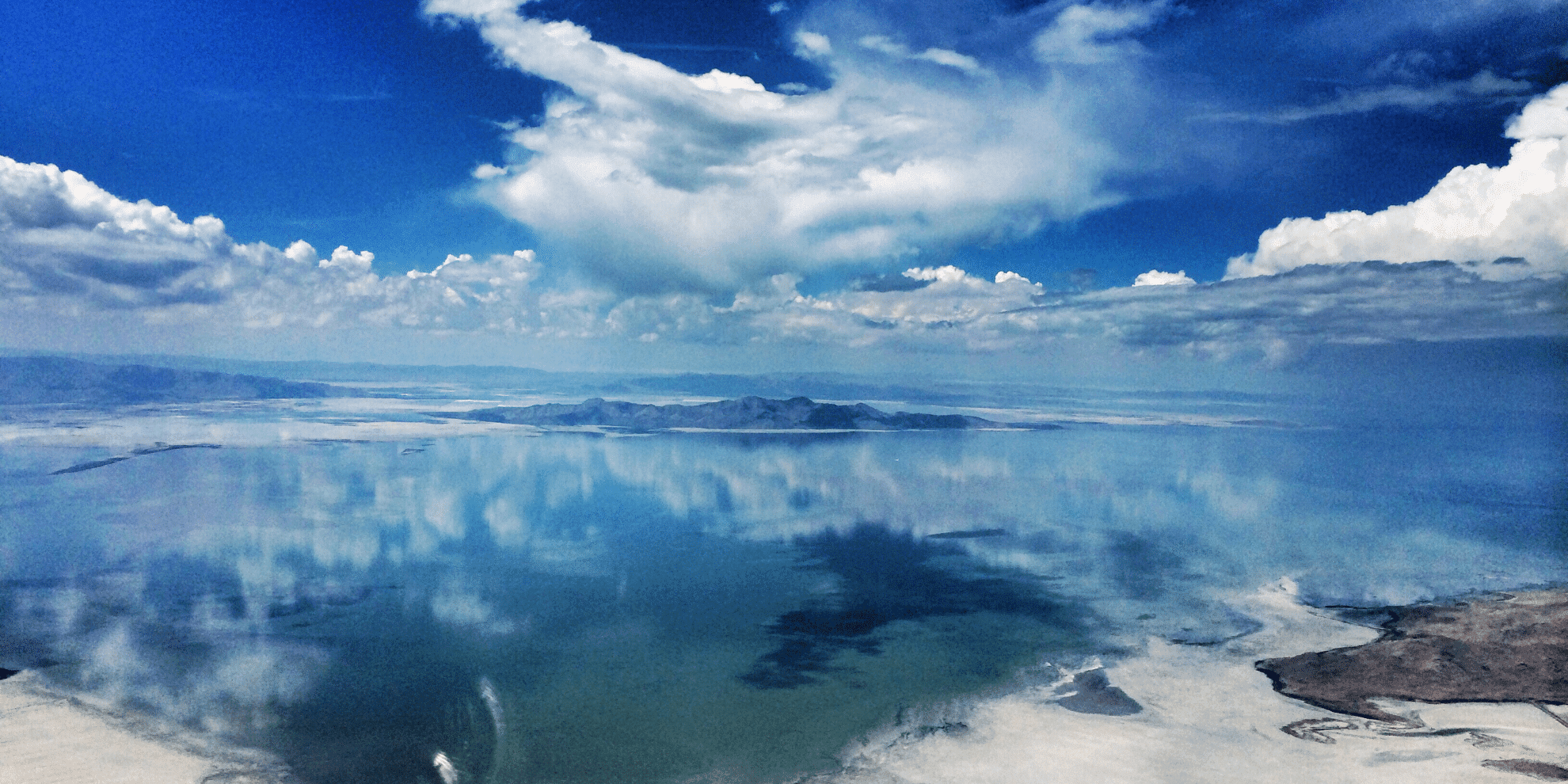
Researchers have uncovered a previously unknown animal species living in the extreme environment of the Great Salt Lake, Utah. The microscopic organism, a free-living nematode now formally named Diplolaimelloides woaabi, was described in detail in a new paper published in the Journal of Nematology. The findings may reshape our understanding of the lake’s fragile ecosystem, long believed to host only two known animal taxa.
A Microscopic Discovery Three Years in the Making
What began as a promising hunch has now been confirmed after years of meticulous work. In 2022, scientists from the University of Utah began finding tiny nematodes in microbialite formations during kayak and bike expeditions to isolated parts of the Great Salt Lake. The breakthrough came after postdoctoral researcher Julie Jung retrieved samples that revealed living roundworms, a surprising find in a body of water known for its extreme salinity.
“We thought that this was probably a new species of nematode from the beginning, but it took three years of additional work to taxonomically confirm that suspicion,” said Jung, who now teaches at Weber State University. With confirmation finally in hand, the team has introduced the species to the scientific world as Diplolaimelloides woaabi, with the name “woaabi” suggested by elders from the Northwestern Band of the Shoshone Nation, whose ancestral homelands include the lake.
As part of the Monhysteridae family, nematodes known to thrive in saline and extreme conditions, D. woaabi adds a third metazoan taxon to the Great Salt Lake’s ecosystem. The only other known animals were brine shrimp and brine flies, both vital links in a food chain supporting millions of migratory birds. Now, the nematodes may join that list of crucial ecological players, possibly filling a previously overlooked niche.
Ancient Origins or Aerial Travelers?
The discovery opens new doors, and questions, about how the nematodes came to inhabit this isolated, hypersaline lake in the first place. Genetic analyses conducted by the team show evidence of two distinct populations of the worm. “It’s hard to tell distinguishing characteristics, but genetically we can see that there are at least two populations out there,” said Michael Werner, assistant professor of biology and head of the research team.
To explain the worm’s presence in such a landlocked, extreme environment, scientists have floated two radically different hypotheses. One is geological: that the species has been here all along. “That begs some more interesting, intriguing questions that you wouldn’t have even known to think of until we figured out the alpha taxonomy,” Werner said. “There are two hypotheses, two models that are both kind of crazy for different reasons.”
Byron Adams, a nematologist at Brigham Young University and co-author of the paper, supports the ancient origin theory. “So we were on the beach here. This area was part of that seaway, and streams and rivers that drained into that beach would be great habitat for these kinds of organisms,” said Adams. “With the Colorado Plateau lifting up, you formed a great basin, and these animals were trapped here. That’s something that we have to test out and do more science on, but that’s my go-to. The null hypothesis is that they’re here because they’ve always kind of been here.”
Yet this explanation has its challenges. Between 20,000 and 30,000 years ago, the area was underwater beneath Lake Bonneville, a massive freshwater body. “If the nematode has been endemic since 100 million years ago, it has survived through these dramatic shifts in salinity at least once, probably a few times,” Werner pointed out.
The second hypothesis takes to the skies literally.
“The other possibility, which Werner admits is even ‘crazier,’ is that the nematodes arrived in the feathers of migratory birds that picked them up from saline lakes in South America.” Werner elaborates: “So who knows. Maybe the birds are transporting small invertebrates, including nematodes, across huge distances. Kind of hard to believe, but it seems like it has to be one of those two.”
Ecological Role and Early Warnings for a Changing Lake
What the nematode does within its ecosystem is still under investigation, but early signs suggest it could be a key species. The worms were found specifically in the microbialite mats, living among bacteria-rich algal layers and feeding just centimeters below the surface. Their numbers and behavior could make them powerful bioindicators, a living sensor of the lake’s environmental shifts.
The researchers observed a curious phenomenon: nearly no males among samples collected in the wild. Yet in laboratory cultures, a normal sex ratio resumed. This could hint at significant environmental pressures or unknown ecological dynamics shaping the nematode’s reproductive strategy.
The full study, “Diplolaimelloides woaabi sp. n. (Nematoda: Monhysteridae): A Novel Species of Free-Living Nematode from the Great Salt Lake, Utah,” is available in the Journal of Nematology. The research was funded by institutions including the National Institutes of Health, National Science Foundation, and Society of Systematic Biologists.
The presence of this newly discovered worm in an already strained ecosystem could prove vital in the coming years. With climate change, declining lake levels, and human impact looming over the Great Salt Lake, D. woaabi may become a sentinel of things to come.
One Microscopic Clue, A Giant Leap for Lake Science
The discovery of Diplolaimelloides woaabi shifts the baseline of what we know about the Great Salt Lake. Once thought to harbor only two metazoan species, the lake now shows signs of greater complexity. Whether the nematode is a relict from ancient oceans or a global traveler hitching rides with birds, it represents a leap in our understanding of extreme ecosystems.
As Werner’s lab continues its work, another potential new species is already under analysis. “We’re just scratching the surface,” he said. “There’s so much more to uncover right beneath our feet, or paddles.”