This post was originally published on here
Meanwhile, the deposed leader’s administration was known for jailing scholars it saw as critical of the government and has been accused of installing those with pro-Maduro views into leadership positions at universities.
ADVERTISEMENT
Benjamin Scharifker, emeritus professor at Simón Bolívar University, said the country’s university system and scientific institutions “absolutely collapsed” under Maduro, with attacks on universities seen as a way to maintain power.
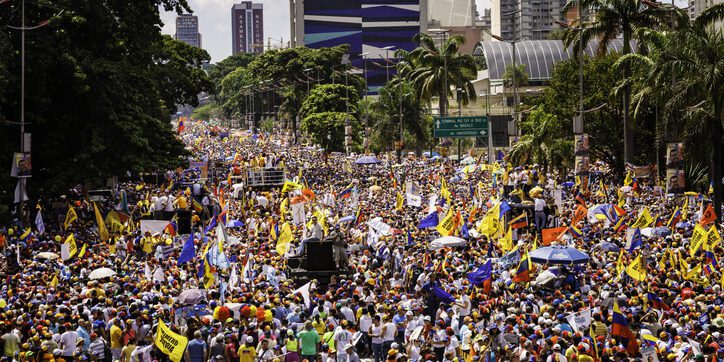
“If you collapse the universities, then you also collapse the possibility of students going to the street and protesting against the government,” he said.
While they may not be grieving Maduro’s departure, academics said Rodríguez, who has been vice-president since 2018, is no better. “We are only changing a face,” said Scharifker, with many of those who ruled under Maduro remaining in power despite his departure.
Jorge Rodríguez, for example, was re-appointed as the president of Venezuela’s National Assembly days after the US attack. Brother of the interim leader, Rodríguez also previously held academic posts at universities in the country and was a prominent student leader.
ADVERTISEMENT
But, despite their links with the higher education sector, the Rodríguez family are not thought to be interested in helping universities recover from years of damage.
“I don’t think that somebody that in 25 years has done [nothing] for the university will start doing it now,” said Jaime Requena, member of the Academy of Physical, Mathematical and Natural Sciences of Venezuela and a researcher on brain drain. “I would be extremely surprised.”
“It is a tremendous task to rebuild,” he added.
Although the US may influence the country’s future policy direction, the academics were doubtful that president Donald Trump would be interested in prioritising the university sector. In the US, Trump’s second presidency has been characterised by a crackdown on higher education, including funding cuts.
And, while new ties with the US may make travel in and out of the country easier after a period of international isolation, many academics are unlikely to return without economic and political reform, Requena said. “You cannot have a research system working in a place where there is no freedom.”
ADVERTISEMENT
He added that international cooperation and partnerships, including loans, will be crucial to the future recovery of the sector.
“If you don’t have political freedoms, then you cannot really be a university professor,” Scharifker agreed.
ADVERTISEMENT
“If we really want science to recover to…the level that we once had many years back, we need a profound political change in Venezuela – not only the change of who is sitting in the presidential palace, but really what are the policies, and that I think that is not going on in Venezuela at the moment.”