This post was originally published on here
HCMC – Representatives from media organizations and Ho Chi Minh City University of Technology (HCMUT) under Vietnam National University-HCMC have held discussions on solutions to promote science, technology and innovation, underscoring the pivotal role of higher education and the media in implementing resolutions on human resource development and the knowledge-based economy.
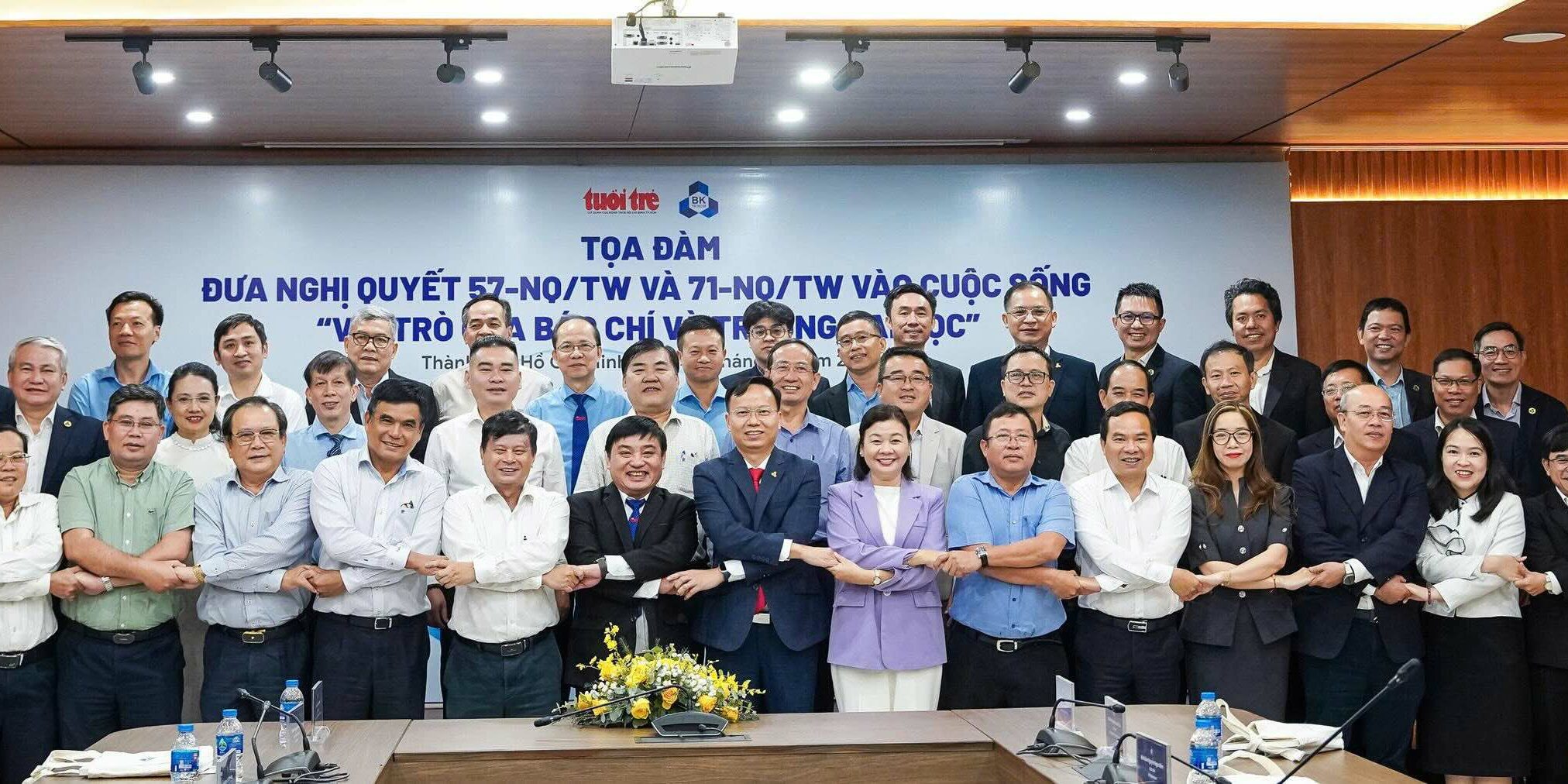
The seminar, jointly organized by HCMUT and Tuoi Tre newspaper on January 7, focused on the theme “Translating Resolution 57 and Resolution 71 into practice: The role of the media and universities.” It was attended by leaders and editors-in-chief of several central and HCMC-based media outlets, along with the university’s management board and scientists.
At the event, a representative of Tuoi Tre said science and technology and education and training have a close, mutually reinforcing relationship, in which science and technology help modernize education, while education supplies high-quality human resources to serve innovation, digital transformation and socio-economic development. On that basis, the media can play a role in communicating policies while working with universities to enhance digital skills among young people.
Participants noted that the media’s role goes beyond conveying policies and guidelines to include reflecting real-life stories from society and research activities, thereby encouraging changes in action and building support for new initiatives. In addition, the media can help propose solutions, monitor and critique policies, and assist in removing bottlenecks during implementation.
Some participants suggested establishing joint action groups between media organizations and universities to translate science, technology and education initiatives into concrete outcomes.
From the university’s perspective, leaders of HCMUT said their institution has disseminated relevant resolutions among its staff and lecturers and developed implementation plans aligned with new requirements. These adjustments have yielded initial positive results, reflected in a sharp increase in the number of scientific publications in reputable databases and the formation of specialized research groups. Between 2015 and 2025, the university carried out numerous technology transfer activities with a total value of about VND1.7 trillion.
In addition, the university has developed an entrepreneurship and innovation ecosystem, including a technology startup incubator, facilities supporting product testing, and units that assist in the commercialization of research outcomes.
Opinions at the seminar also emphasized the role of universities as the nucleus of the innovation ecosystem, where science and technology targets are realized and high-quality human resources are trained. Meanwhile, the media were seen as a bridge that helps “translate” complex mechanisms and policies into accessible messages, inspire action and generate motivation across society.
However, some participants said that linkages between universities and businesses in the science and technology sector have yet to fully realize their potential. As a result, the media need to engage more deeply in connecting stakeholders, while working with universities to shape early awareness of STEM (Science, Technology, Engineering and Mathematics) among students, thereby attracting and developing long-term human resources for science and technology.