This post was originally published on here
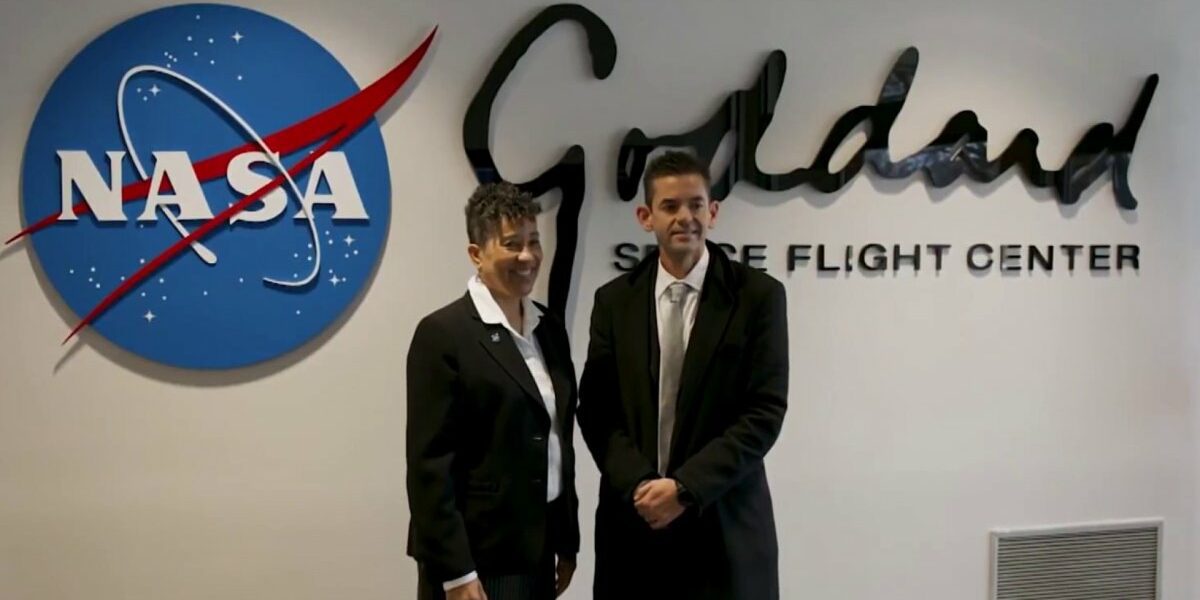
NASA’s newly confirmed administrator visited Goddard Space Flight Center in Maryland and defended the decision to close the facility’s library – NASA’s largest.
Jared Isaacman emphasized Goddard’s importance Friday.
“We’ve got Roman Space Telescope here, Nancy Grace Roman Telescope, so if I like Hubble, you’ve got to love Roman,” he said. “I mean, you know, 100 times the field of view, 1,000 times scan rate. I mean, it’s instruments like this that are made here at Goddard Space Flight Center that help us pursue and unlock the secrets of the universe.”
Isaacman said on his first visit to Goddard he learned about upcoming missions, took a survey of the facilities and spoke to the workforce.
Last week, Isaacman released statements about the library closing, saying it was part of a long-planned facilities consolidation plan approved in 2022 under the Biden administration.
“We’ve gradually been consolidating on plans that far predated my administration, the president’s administration,” Isaacman said. “We’ve recognized for a long time. Actually, some of the first library closures went back to the early 2000s at NASA.
“Hey, we need to digitize,” Isaacman said. “We need an East Coast library, we need a central library, maybe we need a South library. We don’t need one at every single facility if it’s coming at the expense of doing the mission.”
That drew harsh criticism from the International Federation of Professional and Technical Engineers, NASA’s largest union.
“This was not part of some ‘long-planned facilities consolidation’ as Isaacman claims,” union president Matt Biggs responded in a statement. “The Goddard Master Plan, written in 2022, does not call for the library’s closure. Building 21, which houses the library, was scheduled for renovation not elimination.”
Now, NASA is going through the Goddard library collection.
“So, for a 60-day period of time, NASA is going to take care of its own business,” Isaacman said. “So, the NASA scientists, engineers, researchers who put together a team that’s going to evaluate all of the materials for historical significance, technical relevancy, and that material that we identify that we need to preserve or digitize, we’re going to flag.”
Also on the minds of Isaacman and the union: staff retention and morale.
“We expect better from NASA and its managers,” the union said. “The American public and the scientific community beyond also expect and should demand that NASA work to expand our knowledge of space, science, and engineering, and not to contract it.”
“I would hope the workforce here at Goddard – and I’ve been trying to interact with as many of them as I can – understand and appreciate, I love science,” Isaacman said.
“What we need to do here, we need to figure out a way to clear as many obstacles as possible which means a lot of scary infrastructure that’s robbing resources away from doing more missions, and we can.”