This post was originally published on here
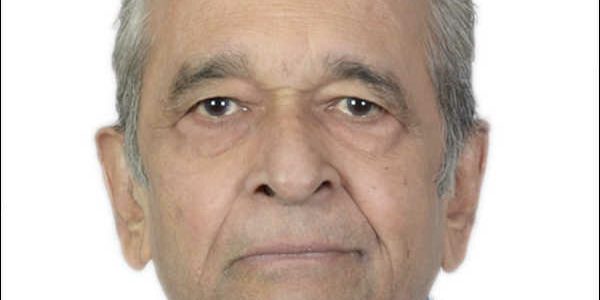
Pune, 10th January 2026: Dr. Arun Bapat, a renowned Indian seismologist and former Head of the Earthquake Engineering Research Division at the Central Water and Power Research Station (CWPRS), Khadakwasla, passed away in the early hours of Saturday following a brief illness. Dr. Bapat died peacefully at 2.40 am on January 10, 2026, at Deenanath Mangeshkar Hospital, Pune, his family said.
Dr. Bapat was widely respected for his pioneering work in seismology, seismic hazard assessment, reservoir-induced seismicity, and earthquake-resistant structural design. Based in Pune, he served CWPRS for several decades and retired in 1998 as the head of the Earthquake Engineering Research Division. Even after retirement, he remained active in the field as a senior consultant and was known for his bold and independent views on earthquake prediction and forecasting.
Among his notable scientific contributions were early warnings related to seismic activity in the Andaman region in 2004, prior to the Indian Ocean tsunami, which later drew attention within the scientific community. He was also credited with successfully anticipating major earthquakes, including the 1989 Loma Prieta earthquake in the United States, the 2014 Mexico earthquake, and seismic events in China and the Kamchatka region in 2017.
Beyond his professional achievements, Dr. Bapat was deeply involved in promoting holistic well-being. He served as a yoga advisor and mental health coach, influencing many lives outside the realm of science. Colleagues and students remember him as a thinker who seamlessly blended scientific inquiry with mindfulness and compassion.
A gifted linguist, Dr. Bapat was proficient in eight languages and could read, write, and speak Bengali, Gujarati, Hindi, Marathi, English, Russian, and others. He was also a passionate admirer of Indian classical music, an interest that remained close to him throughout his life.
Dr. Arun Bapat is survived by his family, colleagues, students, and a wide circle of admirers across scientific and wellness communities.
His legacy endures through safer infrastructure practices, ongoing earthquake research, and the many individuals he guided through science, yoga, and mental well-being.