This post was originally published on here
In recent months, the United States has adopted an increasingly aggressive foreign policy. Notable actions include seizing Venezuelan vessels in international waters, a military intervention in Venezuela that resulted in the kidnapping of President Nicolás Maduro and his wife, threats from President Trump towards Colombia, and his persistent interest in “acquiring” Greenland.
International order shifts as US changes role
Against this backdrop, questions are emerging about whether the US is shifting its role in international politics – from a hegemonic leader towards that of an empire. According to Josip Glaurdić, a political scientist at the University of Luxembourg, while the US has always harboured imperial ambitions, its current position within the international system is clearly in flux.
The United States’ recent conduct – from its moves in Venezuela and threats towards Colombia, to its interest in Greenland, alongside withdrawals from over 60 international institutions – signals a retreat from its international obligations, Glaurdić stated.
He highlighted recent remarks by President Donald Trump in an interview with The New York Times as particularly revealing. “He effectively said, ‘I don’t need international law; I am only constrained by my own morality.’ Given what we know of the president’s morality, that is certainly cause for concern”, Glaurdić added.
The political scientist argues that the US is undeniably recalibrating its global role. “Some describe this as a managed retreat from global hegemony to a more hemispheric one”, he noted. “There is truth to that. The current administration perceives the world – and the US’ place in it – differently than its predecessors, with clear priorities anchored in the Western Hemisphere”, Glaurdić said.
Glaurdić believes the international order that has prevailed since the Cold War’s end is in its final days. However, he points out that this system has faced repeated challenges over the past 25 years – primarily from the United States itself.
“The second Iraq war, for example, comes to mind. That represented a massive challenge to the rules-based international order”, he explained.
The EU must confront the challenge
Predicting the precise shape of the future international order remains difficult, according to Glaurdić. From a European standpoint, however, he insists that the fundamental principles of a rules-based system must not be abandoned. “At least on our continent”, he emphasised, “Because if that should happen, our way of life would be over – and that would be a disaster.”
He argued that Europe must now look ahead and begin working to rebuild an international framework that preserves as much of the previous rules-based order as possible. “For that, we must find partners who can help us”, Glaurdić stated.
The political scientist observed that the EU and its key allies have so far displayed a spectrum of reactions to US behaviour. In general, however, he criticised major European powers for being “more or less lenient” towards the United States, consistently attempting to keep it aligned even under the Trump administration.
European leaders have really made an effort over the past year to satisfy the Trump administration, Glaurdić noted. “But now here we are, a year later, and the results of this policy are an absolute disaster”, he noted.
He described the EU’s initial approach as one of strategic caution but argued that with each subsequent attempt to accommodate, show understanding, and seek compromise, the bloc “loses an ever-larger piece of itself.”
This strategy, Glaurdić warns, is ultimately self-harming. He contends that whenever long-term principles – such as the rules-based order that defines the EU – are sacrificed for short-term interests, the outcome is a loss.
“And we have been losing for the entire past year”, he concluded, adding, “That is very unfortunate.”
If the European Union wishes to play a meaningful geopolitical role in the future, institutional reform is unavoidable, according to the political scientist. He argues that abolishing the unanimity principle in key policy areas is an essential step.
However, Glaurdić criticises the current political reality, suggesting that several influential member states are not genuinely interested in such a change. “They use countries like Hungary, Slovakia, or to some extent even Bulgaria – for instance, on the issue of North Macedonia – as an alibi”, he said, “because they themselves do not want to deviate from the principle of unanimity.”
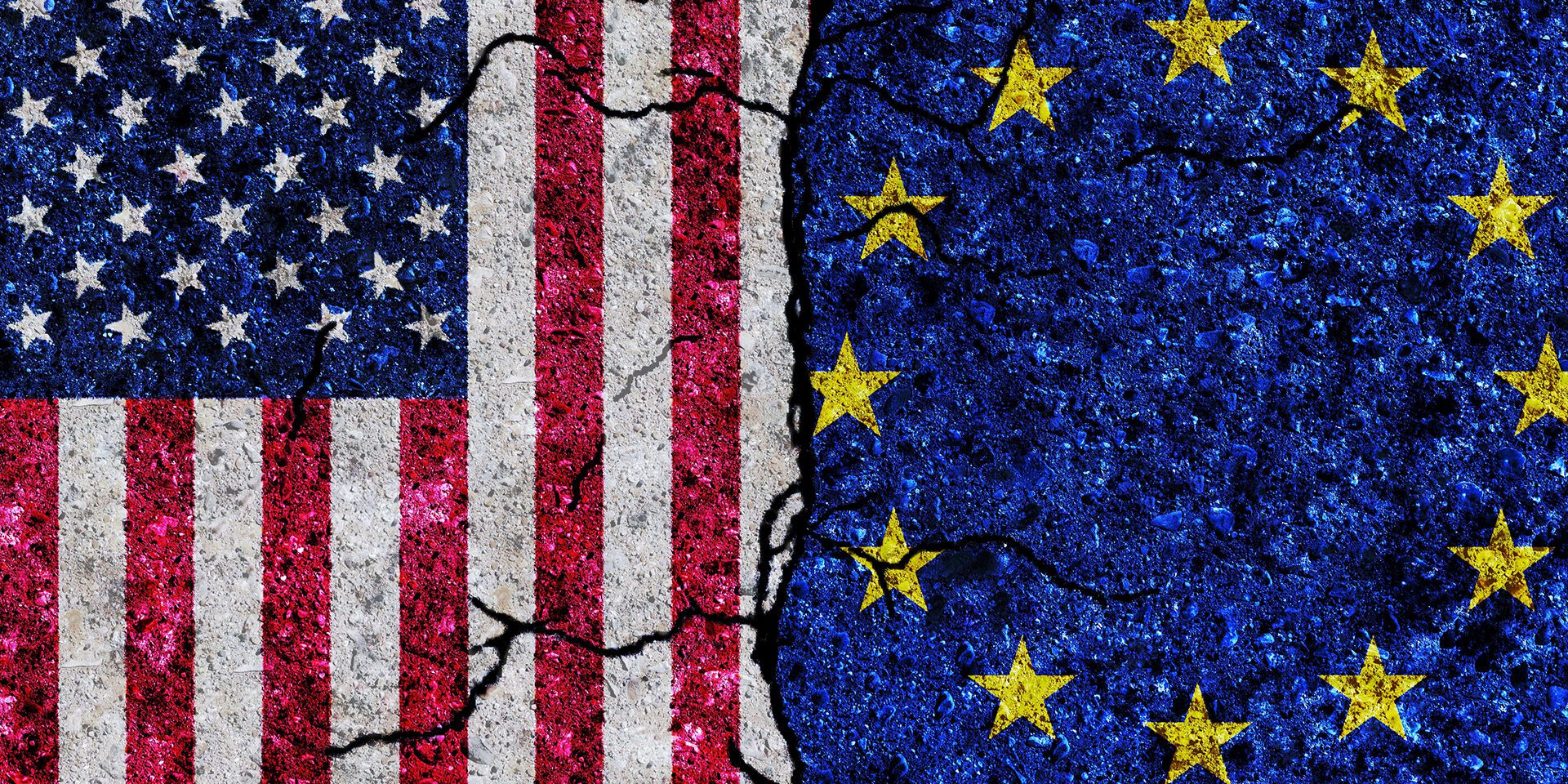
“The USA under Donald Trump is no longer Europe’s ally. But at a certain point, that must also become clear to European politicians.”
Josip Glaurdić
He warned that as long as the EU remains bound by unanimity, it will be trapped in a state of political limbo. “It will be governed by the policy of the lowest common denominator, which is not a real answer to the political challenges of our time. That is simply the nature of the beast”, Glaurdić stated. Until the political will for change emerges, particularly in capitals like Berlin and Paris, the EU will remain “a second-rate power” that “will have to follow instructions that come from elsewhere.”
According to Glaurdić, such a profound shift within the EU would likely require an external shock. “I think the only thing that could possibly lead to a change of this kind would be, for example, a decision by the USA to take Greenland by force or a massive escalation of the war in Ukraine that would spill over into EU member countries”, he analysed. A severe escalation in security challenges – especially one that makes the rift with the United States unmistakable – could be a catalyst.
In his view, that rupture has already occurred. “The USA under Donald Trump is no longer Europe’s ally”, Glaurdić concluded, “But at a certain point, that must also become clear to European politicians.”
The EU–US relationship must rebalance
A path back to a genuine alliance would be possible should a future Washington administration adopt a more favourable stance towards the transatlantic partnership, Glaurdić noted. He emphasised that it remains in the EU’s strategic interest to have the United States as an ally, describing the two as “practically natural allies” with a long history of cooperation and still “immense” potential for collaboration.
European policymakers thus face the challenge of preserving the relationship as constructively as possible to enable rebuilding bridges after a potential change in US leadership, he argued. However, Glaurdić cautioned that uncertainty clouds the future: no one can predict the makeup of the next US government or the state of US politics in two, four, or ten years.
“The EU cannot afford to depend on fifty or a hundred thousand voters in a few US swing states”, he stressed. Therefore, he contended, the balance of power between the EU and the United States must become more even in the years ahead.
In the long term, Glaurdić called for a fundamental reordering of the relationship – one in which Europe takes greater responsibility for its own defence and where both sides operate, in principle, from a position of equal partnership.