This post was originally published on here
AFP
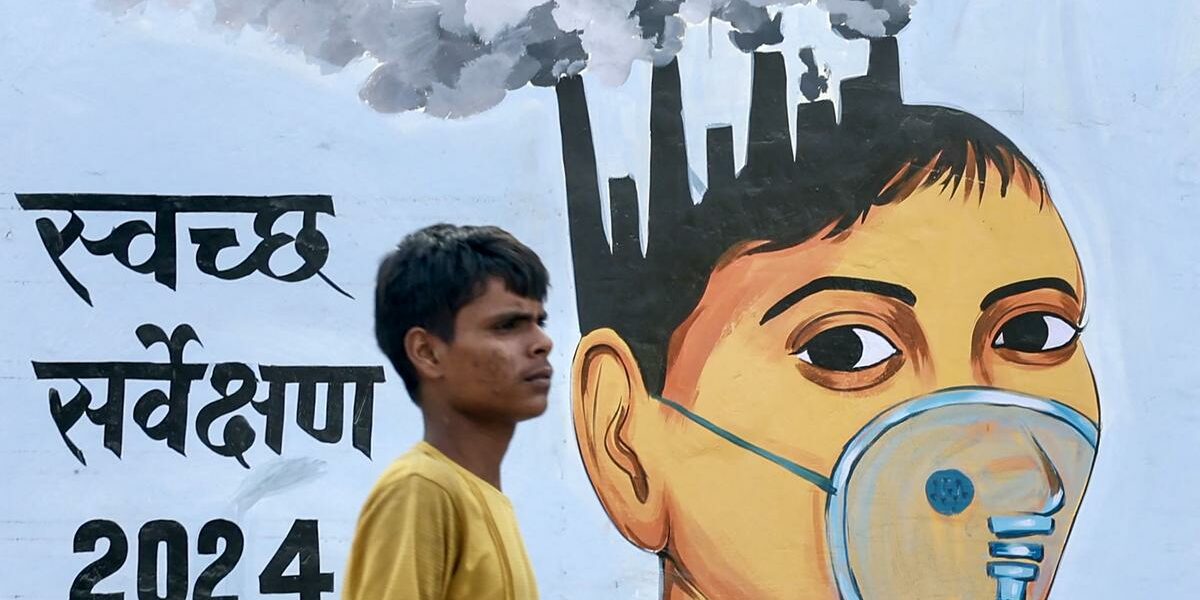
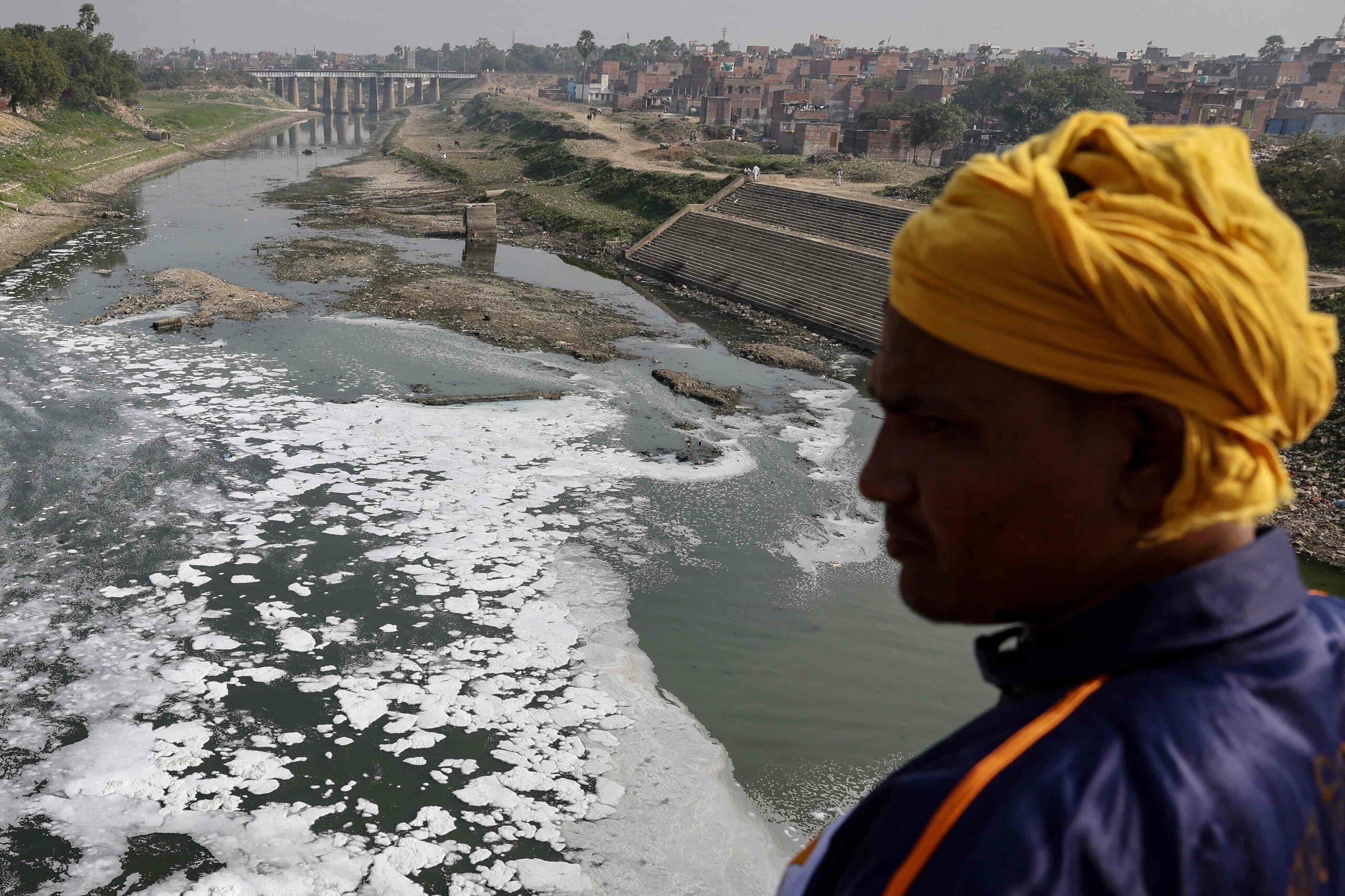
The 70 million citizens of India’s national capital region and its extended districts are choking on air pollution. Freshwater underground is depleting rapidly in the NCR with the pressure of urbanisation. Delhi’s 70 million are not alone in their environmental misery. India, with its 1.5 billion population, is the most environmentally-stressed large economy in the world.
Environmental stress is a global problem: the air above and aquifers underground, cross state and national boundaries. Nations are unable to cooperate to arrest global climate change. The US, the wealthiest nation, and the largest polluter per capita, has backed away from global climate agreements. Even wealthy, “green conscious” European nations are avoiding the “polluter pays” principle. They want to impose a carbon tax on poor countries, who have suffered the most from the Western, techno-centric, free market driven model of economic growth that has been imposed on all.
“Decarbonisation” is not happening fast enough to reverse the addition of more carbon into the atmosphere. Global temperatures will continue to rise for much longer than they should to attain the moonshot goal of “net zero”.
Albert Einstein, who upended the physical sciences in the 20th century with his theories of relativity, said that it is madness to continue solving problems with the same thinking that may have caused them. Even scientists now admit that the present approach to arresting climate change is not working. The time has come to take a much broader systems view and to reexamine the physics and economics of climate change.
The physics of climate change
Runaway climate change is fuelled by the relentless drive to increase the “productivity” of economies and humans by replacing the energy of humans with energy extracted from the Earth’s resources. Obtaining energy by burning wood was the first technological advance of humans over other animals. Coal was tapped next, a denser source of energy which required more technology but produced more energy.
Then came the extraction of energy from hydrocarbon sources and its use for driving machinery and transportation equipment, with which the pace of industrialisation and economic growth accelerated. These combined factors have led to the climate crisis, and the search for “renewable” sources of energy.
Today’s artificial intelligence algorithms operating in the cloud are supported by large server farms on earth, running on massive amounts of electricity.
There is no escape from the universal law of conversion of material energy. All energy is derived from materials. The amount of energy that can be extracted from materials is limited by Einstein’s famous formula, E=MC2.
The Earth is a complex system of materials and energy. The extraction of so-called renewable energies, whether nuclear, hydro or wind, alters the configuration of the Earth’s material structures with long-term consequences. Large dams affect geological structures while irrigation systems alter the chemistry of soils. Though immediately increasing the availability of low-cost energy and improving agriculture productivity, these large-scale Earth-altering solutions harm livelihoods and lives in the medium and long term.
The production of “clean” nuclear energy, by radically transforming basic materials, produces dirty materials, the safe disposal of which is an existential hazard. Finally, the only additional “new energy” for increasing productivity that comes from outside the Earth’s bio-sphere is solar energy from the Sun.
Energy is not the only resource that humans need for their existence. Water is fundamental for the sustenance of life. Scientists are looking for signs of water on other planets to determine whether other planets may be habitable for humans in the future. Large-scale industrial, and even clean energy projects like nuclear, impact the availability and quality of water while harming the lives of communities around them.
Tribes and nations, even states within nations, demand their fair share of the Earth’s water resources. For centuries, populations have warred with changing geographies of water availability and soil fertility caused by changes in climate patterns; large-scale migration, in search of better livelihoods, has caused immense human suffering and continues to.
The resort to narrow scientific solutions to the many problems affecting humanity simultaneously – carbon in the air, dwindling freshwater availability and increasing soil infertility – are affecting the sustainability of the whole ecosystem. Systemic solutions are necessary for the sustainability of livelihoods and economic growth, which will ensure the self-sustainability of the Earth as a self-adapting complex system.
Therefore, a new systems science must be applied.
The economics of climate change
An intractable problem for economic policymakers is how to finance “green energy” technological solutions. Finance is available with the richer countries in the West, who have accumulated their resources and also increased their geo-political power, with their scientific, technological advances. But they are reluctant to share their technologies without adequate protection of their intellectual property and compensation. They are also unwilling to share their wealth with the poorer and, so far, less technologically-advanced nations who need new technological solutions.
Food, clean water and energy are basic human needs to sustain life. The United Nations’ sustainable development goal, SDG 7, on affordable and clean energy’ “aims to ensure universal access to modern, reliable, and sustainable energy by 2030”. Even the poorest human beings, who may have no income or wealth, are entitled to adequate and affordable clean energy. Here lies a core problem of 21st century economics. Who will pay for the energy they must have if they cannot pay for it themselves?
A private business should not be expected to bear a social burden. The business of a business must be only business. It must stay focused on improving its internal efficiency and producing better returns for its financial owners and investors.
Social investments should be made by governments who must provide for those who are not earning enough to pay market prices for their basic needs. However, 21st century economics is making this difficult, by insisting that governments balance their own budgets and also insisting that governments must not tax the rich and private corporations because it would curb their animal spirits to make more profits for themselves.
If their governments will not pay, and the people themselves cannot, then how will they sustain their lives amidst the many ecological and economic crises listed in the 17 sustainable development goals, all of which were aimed to be achieved by 2030?
The privatisation of the financial sector has gone too far with the swing away from “socialist” and more humanist economic models towards the new millennium’s free market, private capital-driven models. They are driven by the late 20th century “Washington Consensus”, with American control of the global financial system.
India’s policymakers must break out of the Western, techno-economic paradigm of progress to find a new path for socio-economic progress with equitable improvement of living conditions of all Indian citizens. They should look East, and search inwards for native wisdom for a new paradigm of progress.
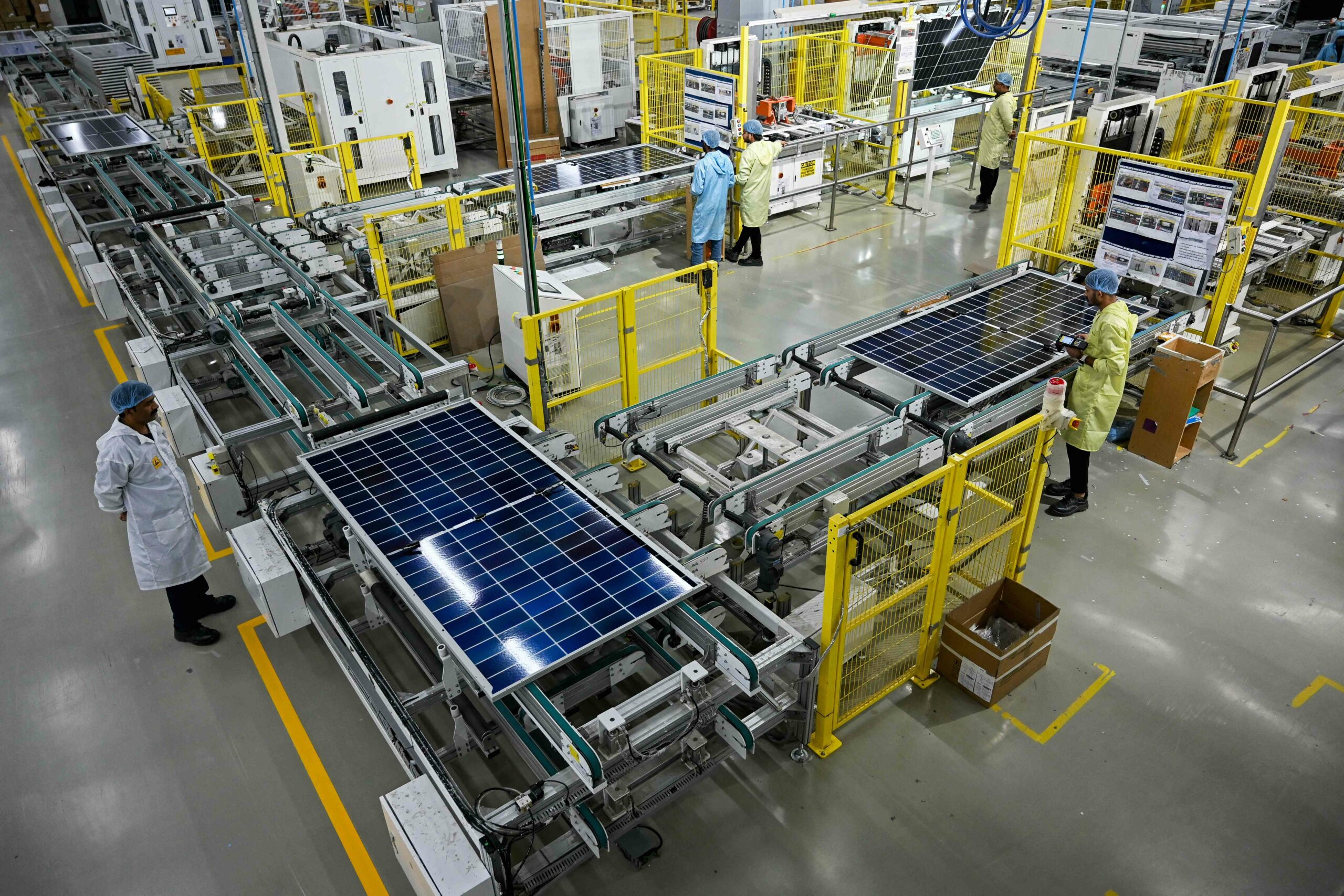
China, for example, is the world’s leader in green technologies. China’s exports of green technology products now exceed exports of the US hydrocarbon industry. Moreover, China has lifted its billion-plus citizens much faster and much further out of poverty than India has.
India should give up slavishly following Western models but must not blindly imitate China either. India must find its own, ecologically sustainable way to its tryst with destiny, to provide poorna swaraj – equal, political, social and economic freedom – for all its citizens. Local systems solutions, cooperatively implemented by communities, is the only way global systemic problems of climate change and persistent poverty can be solved sustainably. We can learn a lot within India and don’t have to rely on imported solutions.
Arun Maira is the author of Reimagining India’s Economy: The Road to a More Equitable Society.