This post was originally published on here
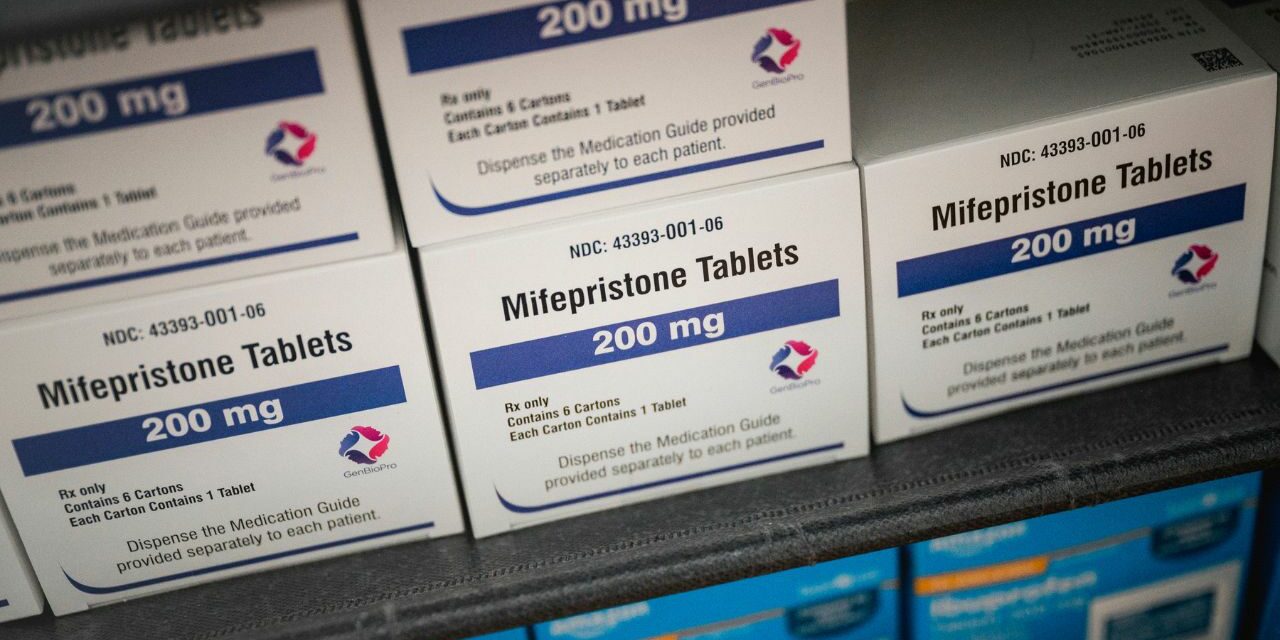
The abortion pill mifepristone is one of the most politically contentious medications in the United States, one increasingly targeted by anti-abortion activists trying to limit its availability and championed by abortion rights supporters seeking greater access.
Both sides have pressured the Food and Drug Administration for years — and both have, at times, accused the FDA of political considerations in its regulatory decisions about the medication.
Now, a new study, published Monday in the medical journal JAMA, evaluates the FDA’s track record of making decisions about mifepristone, drawing on rare access to internal memos, emails and thousands of pages of other documents.
The study was led by experts in federal health policy and drug regulation at Johns Hopkins University. They found that, in the 12 years they examined, from 2011 to 2023, important FDA actions involving mifepristone almost always adhered to evidence-based recommendations from the agency’s scientists.
Scientific Recommendations Guided FDA Actions
“We found that FDA staff and scientists were basing the recommendations on the evidence, and that’s how it’s supposed to be,” said one of the study’s authors, Dr. Caleb Alexander, a professor of epidemiology and medicine at the Johns Hopkins Bloomberg School of Public Health. “The FDA wasn’t making decisions that suggest that they were on one side or another of larger societal debates governing mifepristone regulation.”
One major exception to the overall finding occurred during the first Trump administration, the authors wrote.
In 2020, as the COVID-19 pandemic raged, and government health authorities advised people to stay home, major reproductive health organizations filed a lawsuit asking the FDA to lift its requirement that women obtain mifepristone in person from health providers. The FDA’s scientists supported that request, finding that research indicated that the pills were safe to be prescribed by telemedicine and mailed, without an in-person medical visit, but the agency’s leadership declined to lift the restriction and argued against it in the lawsuit, even appealing to the Supreme Court.
It wasn’t until the spring of 2021, after the Biden administration took office, that the FDA agreed to drop the in-person requirement.
The findings of the study are particularly relevant now because abortion pills have increasingly become a political battleground since the Supreme Court eliminated the nationwide right to abortion in 2022. Their use, including by patients in states with abortion bans, has swelled since then, and pills now account for about two-thirds of pregnancy terminations in the United States.
Lawsuits brought by several conservative states are seeking to force the FDA to sharply restrict access to mifepristone or even withdraw its 25-year-old approval of the medication. The U.S. health secretary, Robert F. Kennedy Jr., and the FDA commissioner, Dr. Marty Makary, said, after pressure from Republican politicians and anti-abortion advocates, that the FDA would review mifepristone’s safety, despite decades of research showing that it is overwhelmingly safe, and that serious complications are rare.
On the other side, lawsuits by abortion rights advocates and petitions by several Democratic-led states ask the FDA to ease restrictions further and to lift a special regulatory framework that limits who can prescribe and dispense mifepristone.
Amid it all, the FDA in October granted approval for a new generic version of the medication.
Limited Political Discussion In Internal Documents
A major finding of the new study is that internal documents show that the FDA has repeatedly evaluated new evidence about mifepristone and reaffirmed that it is safe.
“There were very consistent findings on the safety of mifepristone, and the FDA has continued to monitor this based on many different types of data,” Alexander said. He said the data included adverse event reports submitted to the FDA, clinical studies, manufacturer assessments, published literature and information submitted by professional organizations and advocacy groups.
The study also found that, when the FDA took steps to expand mifepristone access and to lift some restrictions, it did so cautiously.
“While the FDA considered more radical changes at several key moments, they opted against them to better balance various considerations,” the authors wrote. The team included Joanne Rosen, a lawyer who codirects the university’s Center for Law and the Public’s Health, and Dr. Joshua Sharfstein, a vice dean at the school of public health and a former deputy commissioner of the FDA, who served before the time frame examined in the study.
In an editorial also published Monday by JAMA, Dr. Reshma Ramachandran, an expert on regulatory policy at Yale University, and Christopher Morten, a pharmaceutical law expert at New York University, wrote that the findings “challenge Kennedy and Makary’s contention that the FDA has, in recent years, failed to apply ‘adequate consideration’” to its mifepristone regulation.
Any review of mifepristone, the editorial says, must ensure that “the FDA’s scientific staff are at the helm of the analysis and protected from political interference.”
To obtain the documents, the researchers filed Freedom of Information Act requests, then a lawsuit when the agency failed to produce some of the requested documents. They eventually received 264 documents totaling 5,239 pages, from between June 2011 and January 2023, including internal communications, regulatory correspondence, agency reviews and company reports. The agency redacted some documents.
Mifepristone, approved in 2000, has always been regulated under strict frameworks. Since June 2011, it has been governed under a program called Risk Evaluation and Mitigation Strategies (or REMS). About 70 drugs in the United States currently fall under REMS frameworks, typically applied to medications with serious safety concerns.
The researchers focused on five significant points in the FDA’s mifepristone regulation, starting with the 2011 REMS. The other four points were: a 2013 decision that the REMS remained necessary; the 2016 easing of some restrictions in response to a request from mifepristone’s manufacturer; decisions during the COVID pandemic that allowed temporary access by telemedicine and mail; and a 2021 evaluation making telemedicine and mail access permanent and paving the way for allowing retail pharmacies to dispense mifepristone.
The internal documents rarely mention the political debate over abortion. They evaluate safety in extensive detail. One review reported that, for the 1.88 million women in the United States who had abortions using mifepristone as of Oct. 31, 2012, there were 2,740 total adverse events and that about 1 in 2,448 patients required hospitalization. There were 14 deaths, the document said, but at least three were completely unrelated to mifepristone (one was a suspected homicide, one involved cocaine and fentanyl poisoning, and one was a methadone overdose).
Importance Of Protecting Scientific Integrity
In 2016, after a thorough review, the FDA expanded access in significant ways: allowing additional types of health providers, not just doctors, to become certified to prescribe mifepristone; extending the official time frame for mifepristone use to 10 weeks’ gestation instead of seven; and eliminating the requirement that the second medication in the two-drug abortion regimen, misoprostol, be taken in front of a doctor instead of at home. The agency also reduced some information about adverse events that the manufacturer had to file because it said it was already receiving that information in other ways, the documents indicated.
During the 2016 review, FDA scientists also recommended eliminating the requirement that patients sign an agreement form saying they had chosen pregnancy termination and understood what to expect from the medication. The scientists said the form was “duplicative” of other information patients received.
In the only other example, though, that the new study found of scientists being overruled, the FDA commissioner in 2016, Dr. Robert Califf, appointed by President Barack Obama, decided to retain the patient agreement form, saying that it would provide additional assurance that patients were informed and would not disrupt abortion access.
“As the FDA prepares to review the safety data again, as legal challenges are expected to continue, and as state policies diverge, mifepristone will likely remain a flashpoint in reproductive health policy,” the authors wrote. “Maintaining integrity in this process will require a continued commitment to scientific evidence and an avoidance of political interference.”
This article originally appeared in The New York Times.
By Pam Belluck/Hannah Yoon
c.2026 The New York Times Company