This post was originally published on here
Diane Condon has a mantra she recites every time the Young Scientist and Technology Exhibition (YSTE) comes around.
“Never again,” said the science teacher from Ardscoil Rís in Limerick.
She’s been saying that for 14 years but, like most years, she was in school over the Christmas holidays, pushing and cajoling her students through their final preparations.
“I love it. I always say I’m never doing this again and then, here we are.”
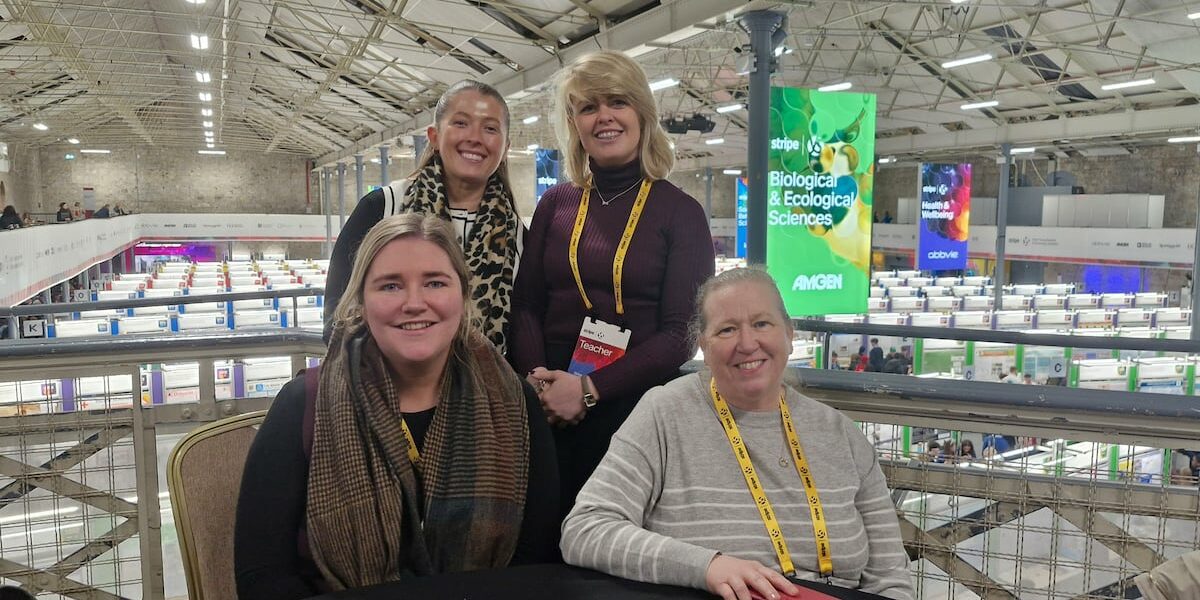
Others grabbing lunch and a quiet moment to correct homework in the teachers’ corner of the YSTE venue understood the mixed sentiments exactly.
“It’s a big ask,” said Jennifer Denny, who teaches at Cistercian College, Roscrea, in Tipperary.
“I have transition year students here so project work is timetabled, but if you have other years it’s mainly done outside of class time, so it’s after school, lunchtimes, weekends.”
“And it’s not just the project work,” said Condon. “It’s the report book, the poster for the display, the video to go along with the entry and then practising the presentation and interviews with judges. There’s a lot to it.”
And yet Aoife Fogarty from Ursuline College, Thurles, newly qualified and in her first year teaching science, couldn’t wait to take it on.
“The students are in their element up here. They’re so passionate,” she said. “And I’m learning so much from meeting other teachers and seeing how other projects are presented.”
Robyn Hickey, Condon’s colleague at Ardscoil Rís, is also an ardent advocate for the competition.
“It’s great for the school and it’s such a high for the students. And if they happen to get a prize, they’re like celebrities when they come back,” she said.
“I mean, it does take effort. When you have groups here, you have them from 8am in the morning until 10pm at night and then you’re worrying about them until 8am the next morning. But that’s just part of it.”
Apart from the time commitment and parenting by proxy, there are other challenges for teachers taking on the competition. School labs are not equipped for complex tests, standard-issue microscopes are not powerful enough and research papers are often available only from paid-for science publishers’ sites or university libraries.
“Computer capacity is an issue too,” said Hickey. “One of our students created an AI system. His poster was so large in megabytes, we couldn’t even load it on the school computer to print it off.”
“If they have aunts, uncles or any other connections in the field they’re researching, that’s really helpful,” said Fogarty. “We do our best, but school resources are limited.”
“Even financially, there are limits,” said Denny. “We get an accommodation grant from YSTE but it doesn’t cover everything.”
Despite the challenges, the YSTE has been running for 62 years on the enthusiasm of students and dedication of teachers.
“I can think of reasons not to do it,” said Condon. “Students, especially younger ones, don’t know what deadlines are. They think it’s a suggestion. They don’t believe you when you say you have to practise your interview because, sure, they know everything.
“And then they come up here and see the high standards and then professor so and so from Trinity or wherever comes around to judge them and they say, ‘Ah, now we know why you sat on us to get this done.’
“I see a huge change in them from the first day to the last. It benefits them tremendously. That’s my big thing over the years. I say I’ll never do it again but it changes them and opens up their horizons. That’s what makes it for me.”