This post was originally published on here
“Hearst Magazines and Yahoo may earn commission or revenue on some items through these links.”
Here’s what you’ll learn when you read this story:
-
Researchers analyzed 60,000-year-old arrowheads found in South Africa and discovered they had been tinged with poison.
-
This is the earliest known case of poison-enhanced hunting weapons in the human historical record.
-
The native South African “poison bulb” plant is a well-known source of poison, indicating it may have been the source of what ancient humans used to poison the arrowheads.
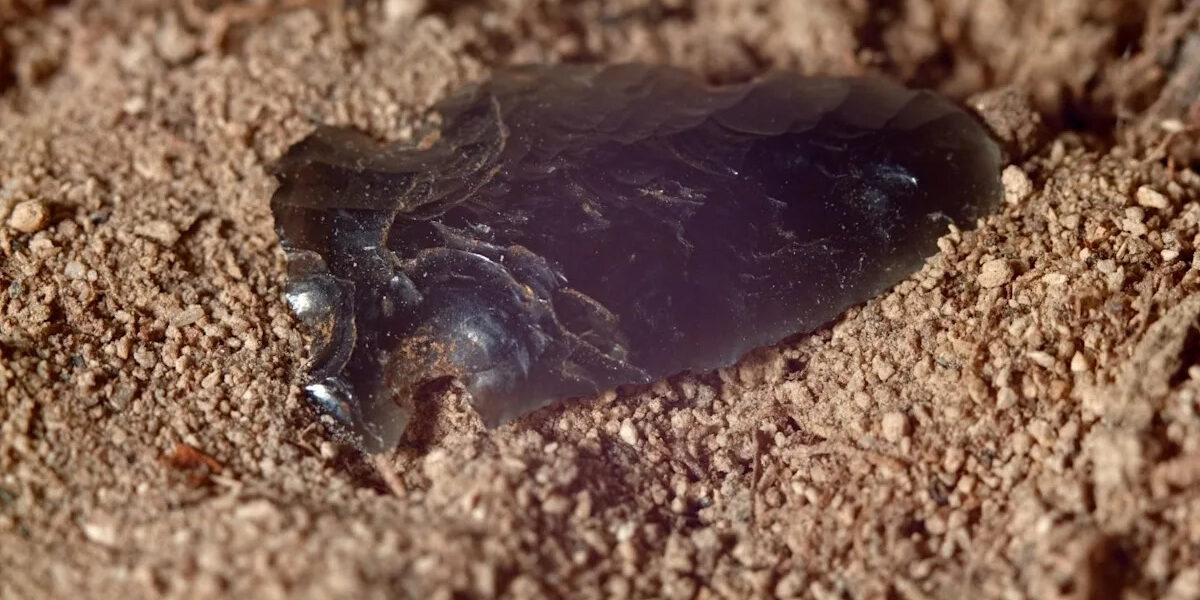
Thanks to the discovery of toxins on five arrowheads found in the Umhlatuzana rock shelter, it’s evident that, roughly 60,000 years ago, South African hunters were dipping arrowheads in poison from a local plant’s bulb in an attempt to weaken prey and streamline their hunting process.
Advertisement
Advertisement
“To our knowledge, we present the first direct evidence for the application of this plant-based poison on the tips of Pleistocene hunting weapons,” researchers wrote in a study on the find published in the journal Science Advances. “The discovery highlights the complexity of subsistence strategies and cognition in southern Africa since the mid-Pleistocene.”
The team analyzed 10 arrowheads, dated to 60,000 years ago, that were found in excavated soil layers from the Umhlatuzana rock shelter in KwaZulu-Natal, South Africa. Through targeted microchemical and biomolecular analyses, they identified traces of toxic plant alkaloids on five of the arrowheads.
The poison? It comes from a flowering bulbed plant. The alkaloids buphandrine and epibuphanisine only originate from Amaryllidaceae, which is indigenous to southern Africa, meaning the most likely source of the poison is Boophone disticha, a plant known as the poison bulb or the pincushion bulb.
Marlize Lombard, professor at the Palaeo-Research Institute at the University of Johannesburg and author on the study, wrote that “in southern Africa, people have a long history of hunting with poisoned arrows.” And the poison bulb is “well-recorded as the source of an arrow poison.”
Advertisement
Advertisement
The poison would have been a slow-acting threat to an animal. Once struck by the poison-tipped arrow, the hunted would have suffered a quicker-than-expected loss of strength, allowing the hunter to more easily locate and eventually kill the prey. The toxins also interact well with mineral surfaces, allowing the poison to remain on arrowheads for lengthy periods of time (in this case, 60,000 years).
“It demonstrates that these ancient bowhunters possessed a knowledge system enabling them to identify, extract, and apply toxic plant exudates effectively,” Lombard wrote. “They must have also understood prey ecology and behavior to know that the delayed effect of poison shot into an animal would weaken it after some time.”
The team analyzed 10 arrowheads with visible residue on them out of a stash of 216 originally excavated in the 1980s, finding remnants of the poison chemical in five cases. Finding the specific alkaloids on five of the 10 quartz arrow tips studied “cannot be coincidental,” Lombard wrote. “Ancient hunter-gatherers would have been familiar with the toxic properties.”
The weakening of the chemicals over thousands of years may contribute to the incomplete history of poison, as debate has circled about the earliest uses of poison weapons in hunting. Lombard cited evidence for poison recipes from 1,000 years ago and the previous oldest known use on an arrow from 7,000 years ago. Poisons were found on a stick at Border Cave in KwaZulu-Natal possibly up to 35,000 years ago, an indirect suggestion of early hunting poisons. But this latest discovery stretches the timeline much further back.
Advertisement
Advertisement
“Humans have long relied on plants for food and manufacturing tools, but this finding demonstrates the deliberate exploitation of plant biochemical properties,” Sven Isaksson, lead author and laboratory archaeology professor at Stockholm University, told Live Science. The use of the poison also highlights that prehistoric hunters not only understood the power of plants but shows poison-tipped arrows were in use roughly 50,000 years earlier than previously thought.
You Might Also Like