This post was originally published on here
A supplement called Elcella is claimed to work in the same way as weight-loss jabs using natural oils from foods, but experts say more evidence is needed
As slimming jabs explode in popularity, interest is growing in a potential alternative, in the form of a weight-loss supplement sometimes called “natural Ozempic”.
It consists of natural oils designed to stimulate production of hormones normally released after eating – one of which is the same hormone mimicked by weight-loss jabs, called GLP-1.
There is some evidence supporting the supplement, but experts including one of the developers of Ozempic, have said the science is still at too early a stage to show the product works.
Real Ozempic is a prescription medicine called semaglutide, first developed as a treatment for type 2 diabetes.
It mimics GLP-1, normally released by cells in the gut, which has several effects: stimulating the blood sugar hormone insulin, making people feel fuller, and reducing the urge to eat in the brain’s appetite-control centres.
When people using Ozempic to treat diabetes lost weight, another version of semaglutide, called Wegovy, was developed as a slimming aid. A similar medcine called Mounjaro has been developed that mimics both GLP-1 and a second gut hormone called GIP.
Use of Wegovy and Mounjaro has soared in the UK, although most people are buying it privately from online clinics, as NHS use is highly restricted. And people need to demonstrate they are over a certain weight before the online clinics will be prescribe it.
But there may be a way to get the effects of gut hormone boosting, regardless of starting weight, and without the need for injections.
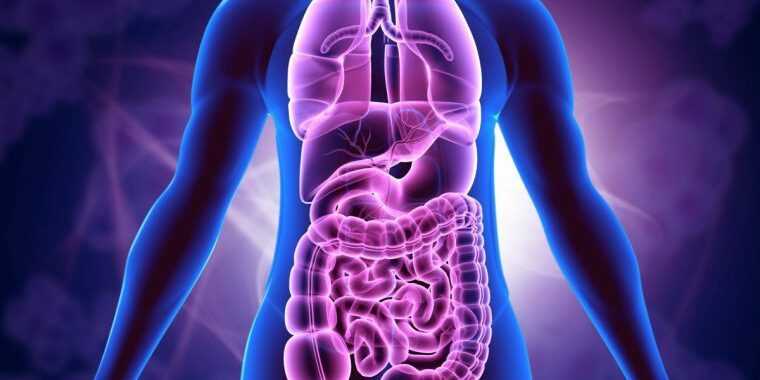
The appetite-regulating hormones are released when cells in the gut, called L cells, detect that someone has eaten, because food arrives in the intestines.
The so-called “natural Ozempic” supplements, sold as Elcella, are designed to work by delivering unnaturally high levels of nutrients to the lower part of the gut, called the colon.
“This is a way of getting people’s bodies to release their own appetite-lowering hormones,” said Dr Madusha Peiris, who co-founded the supplement firm Elcella after research at Queen Mary University of London.
Coconut and linseed oil
The nutrients in the capsules are a mixture of three fatty acids – the building blocks of fat molecules – called capric acid, lauric acid and alpha linoleic acid, derived from coconut and linseed oil.
To make sure the oils reach the lower gut without being absorbed, they are packaged in capsules that resist digestion. “The capsules are coated on the outside to make sure that they travel at least six meters down your gastrointestinal tract to reach your colon, at which point the capsules disintegrate,” said Dr Peiris.
There is some early-stage research published suggesting this approach stimulates L cells. For instance, when applied to these cells in a dish, the fatty acids made them release more gut hormones, including GLP-1 and a further hormone called PYY.
Dr Daniel Drucker, an endocrinologist at the University of Toronto, who helped discover the effects of GLP-1 in the 1980s, said that various groups of researchers had been developing drugs that stimulate L cells for decades, but they had little effect on weight.
“They produce some weight loss in humans, but it’s extremely modest, and not commercially viable,” he said.
“The progress in the field has been so substantial that we now have [drugs] that mimic GLP-1 action that are producing 10 to 15 per cent weight loss, and none of these GLP-1- secretion efforts have come close to producing results like that.”
Only a randomised trial, comparing the capsules with a placebo version, would convince him that the approach worked, said Dr Drucker.
Large calorie deficit needed for weight loss
Elcella says it has carried out a “consumer trial” of the capsules, completed by 34 people, who lost an average of 6kg after 12 weeks. The study has not yet been published in a medical journal though, and nor were the capsules tested against a placebo version, which is the best kind of medical evidence.
New Wegovy formulations
This week a triple-strength version of Wegovy has been approved by the UK Medicines and Healthcare products Regulatory Agency (MHRA).
Until now, the highest dose of Wegovy was 2.4mg, given as an injection once a week, which leads to about 15 per cent weight loss after one year.
Now the MHRA has approved a dose of 7.2mg. It was based on a trial that found people taking the triple dose lost 21 per cent of their weight after 72 weeks.
The triple dose will initially be available as three of the 2.4mg injections, but Novo Nordisk will bring out a 7.2mg injection pen later this year. The price is not yet known.
The main rival to Wegovy is currently another slimming jab called Mounjaro, which leads to about 22 per cent weight loss.
A pill form of Wegovy has also been approved in the US and is likely to arrive in the UK this year. This is roughly equivalent to the 2.4mg injection.
Professor Gary Frost, a nutrition researcher at Imperial College London, who is also developing fatty acids to stimulate L cells, said the approach may work to promote weight maintenance but he doubted it would be potent enough for weight loss.
“I don’t think that using a nutrient stimulation will ever get you to the same level of appetite regulation as a pharmaceutical drug,” he said. “The amount of energy you need to decrease weight is quite large, you’re probably decreasing your energy intake by 500 calories per day, and that triggers lots of appetite circuits.”
Novo Nordisk, which manufactures semaglutide, declined to comment on the supplements.