This post was originally published on here
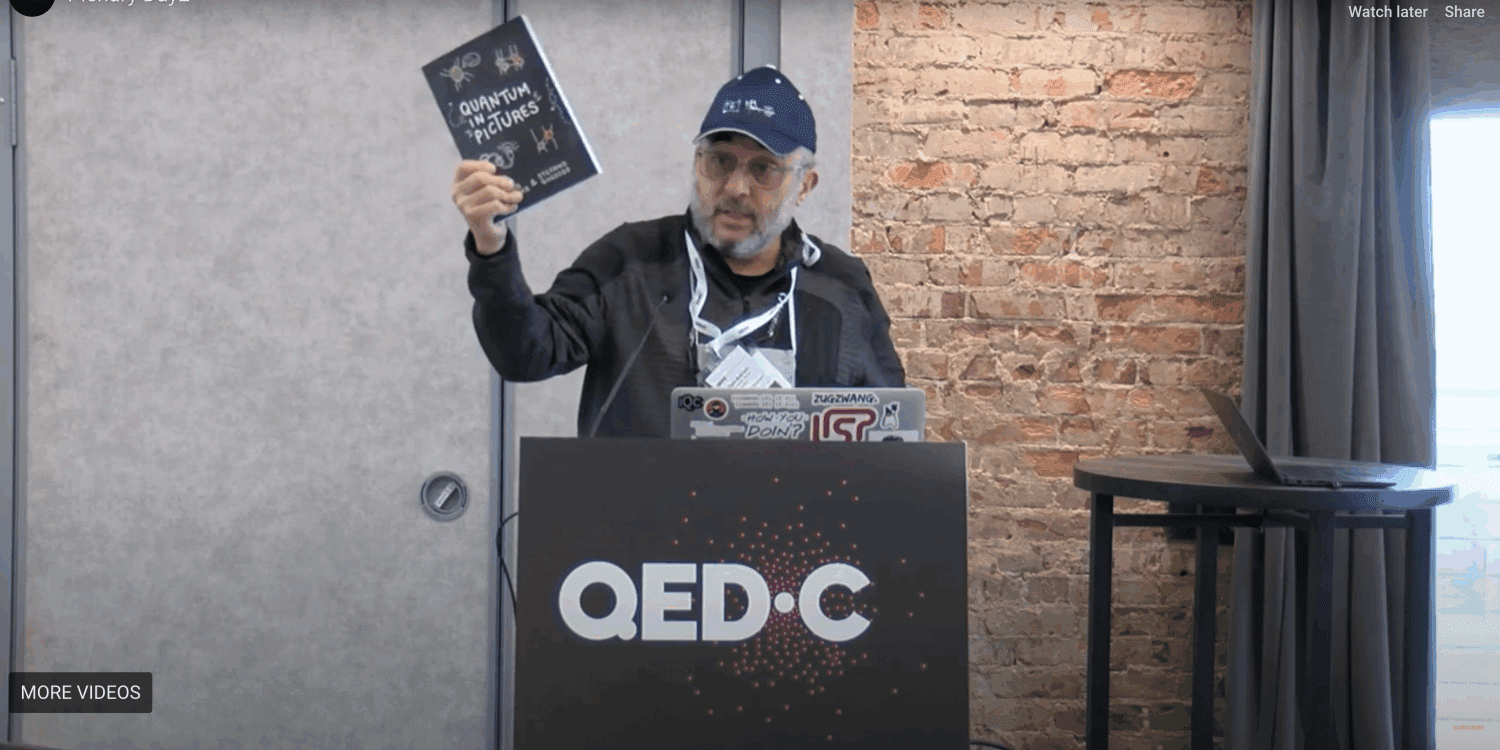
Photo supplied by Adrian German.
Dan-Adrian German, teaching professor of computer science at the Luddy School of Informatics, Computing, and Engineering, and computer science senior John M. Phillips, along with Georgia high school teacher Christina Snyder, co-authored the cover story in the prestigious Association for Computer Machinery Inroads December issue.
The article, “Quantum Computing for First-Time Learners,” showcases the fast-growing field of quantum computing by explaining why it matters, how it’s different from classical computing and how educators can make it accessible to students who have no previous quantum computing background.
ACM is the world’s largest educational and scientific computing society.
German is at the forefront of quantum computing education and establishing international curricular guidelines for undergraduate programs. As such, he was part of the architecture and organization group in the CS2023 Curriculum Guidelines program tasked with submitting an article to ACM Inroads.
German said that a knowledge unit on quantum computing was added for the first time with the CS2023 guidelines program. It was featured as an architecture-and-organization topic because quantum computing requires a new way to build and organize computers.
German said their CS2023 proposal included three curriculum options – an eight-week class, a full-semester class and a two-semester class.
“We sent this to Inroads,” German said, “they chose it to be the cover story.”
German added that they have established a faculty learning community in quantum information science organization for high school and middle school teachers in the United States. He said they have more than 25 teachers from Indiana, Hawaii, California, Tennessee and North Carolina, with the prospects of adding more from Arizona, New Mexico and other states.
German is a key figure for Quantum Economic Development Consortium, an international group of experts from industry, academia, national labs and professional organizations that aims to enable and grow the quantum industry and its associated supply chain. It was established with support from the National Institute of Standards and Technology as part of the federal strategy for advancing Quantum Information Science and Technology through the National Quantum Initiative Act in 2018.
German said a lot of notable advances in quantum information science have happened at IU since 2019, including the National Science Foundation-backed Center for Quantum Technologies, which seeks to develop novel quantum technologies to target major industry challenges. He said the Luddy School has had a significant role in that, and more.
“I have witnessed the passion and dedication Adrian has brought to teaching quantum computing over the past several years,” said Yuzhen Ye, professor of informatics and computer science, and computer science chair. “I am pleased to see how his hard work has transformed the way quantum computing can be taught to undergraduate, and even pre-college students.
“Adrian, together with several computer science colleagues who also conduct research in quantum computing, has developed a rich and engaging quantum computing curriculum for our students.”