This post was originally published on here
SPONSORED ARTICLES
The National Museum of the Philippines is starting 2026 with a buzz—literally.
Scientists from the National Museum of Natural History have described six new species of ants, and recorded one species in the country for the first time.
“We have just ushered in 2026, and the National Museum of the Philippines is into another scientific breakthrough!” the National Museum said in a Facebook post.
“We are happy to inform everyone of the release of a landmark publication by researchers from the National Museum of Natural History with not one, not two, not even three, but six new species of ants discovered and named, plus one ant species recorded in the Philippines for the very first time,” it added.
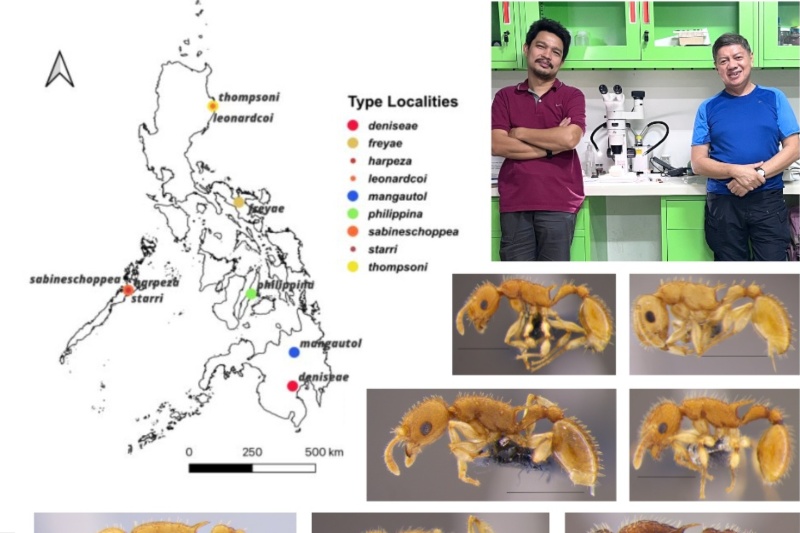
The ants were collected from Palanan, Isabela; Dumarao, Palawan; and Kidapawan and Bukidnon in Mindanao. Some were found outside their usual ranges, a discovery scientists call “extralimital.”
Most Vombisidris ants are rare in museum collections and are often described from single specimens, making this a landmark study.
“The study, published in the journal Halteres, was led by NMP Research Associate Fellow Dr. David M. General, together with his long-time mentee and collaborator, Perry Buenavente of the Zoology Division. They described six new ant species in the genus Vombisidris Bolton, 1991. Vombisidris ants are rare in museum collections, and most species have been described from singletons or specimens collected only once,” the National Museum said.
In its post, the museum said ant diversity is still vastly underdocumented in the Philippines, citing challenges of systematic surveys.
“Systematic surveys are difficult because many places are hard to reach, funding is limited, and fieldwork can be challenging. Yet every well-executed survey continues to reveal new species or new records, and Vombisidris is no exception,” it explained.
To find the ants, researchers conducted night-time surveys and used specialized methods like beating low plants, revealing nocturnal, tree-dwelling ants rarely seen by the public.
—With John Marwin Elao