This post was originally published on here
Two ancient wolf pups found entombed in Siberian permafrost more than a decade ago are revealing new stories, thanks to rich DNA clues preserved inside their bodies.
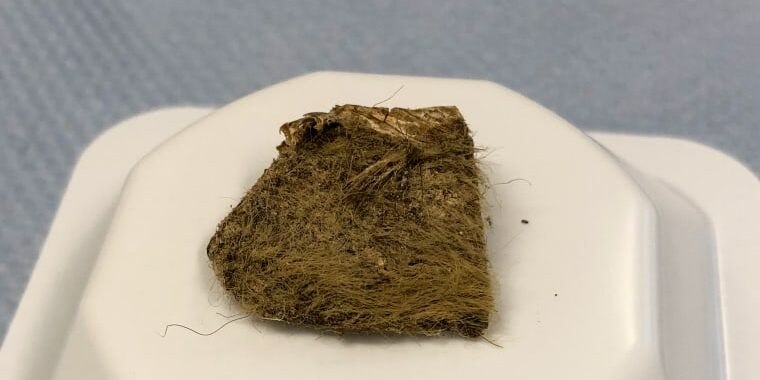
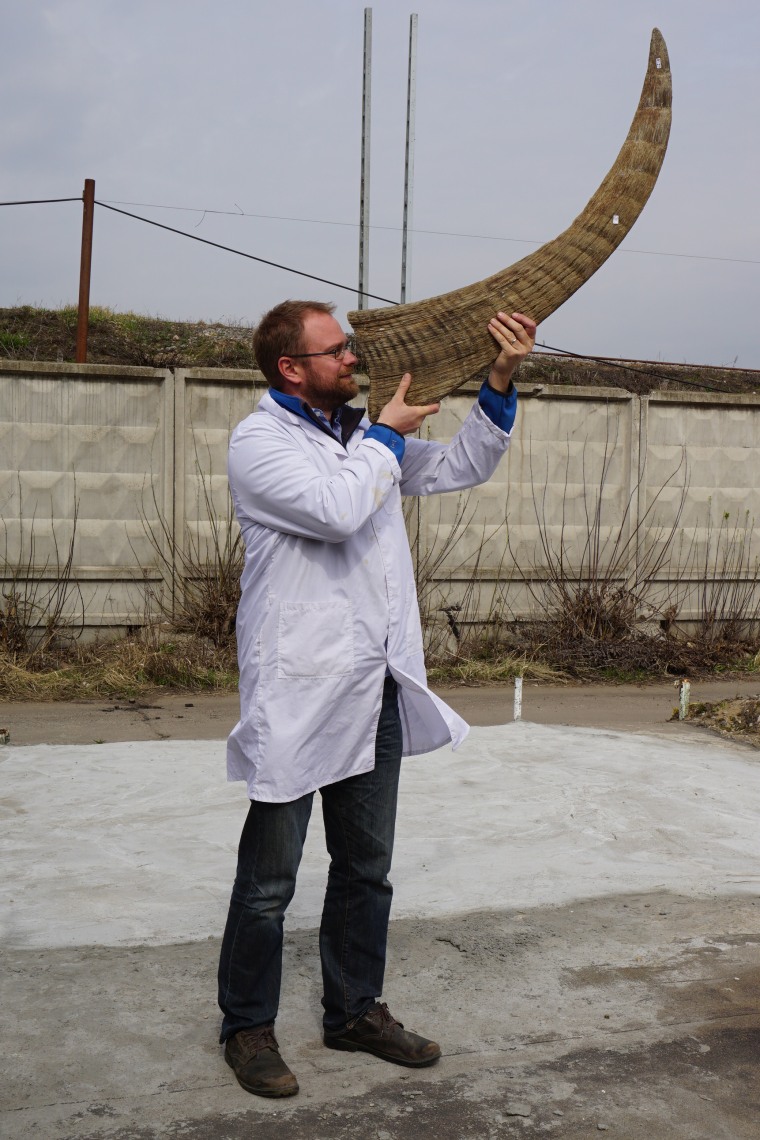
In a first, researchers found a chunk of meat from a woolly rhinoceros — a creature similar in size to modern white rhinoceros, but with a shaggy coat of hair — preserved inside the stomach of one of the pups. DNA from that flesh and fur survived beneath the Siberian ice for more than 14,000 years, enabling scientists to sequence the entire genome. They shared their findings in a study published in the journal Genome Biology and Evolution on Wednesday.
“This is the first time an entire genome has been reconstructed from an Ice Age animal that was inside another Ice Age animal,” said Camilo Chacón-Duque, an author of the study and an evolutionary biologist at Uppsala University in Sweden. “It’s a high quality, high resolution genome.”
The woolly rhinoceros in question died some 14,400 years ago, just a few hundred years before the species disappeared from the fossil record. That means researchers now have a snapshot of the species genome right before it was snuffed out.
“This sample is by far the youngest woolly rhinoceros that has been sequenced — with youngest, I mean the closest to the extinction of the species,” Chacón-Duque said.
Evolutionary biologists have long debated whether hunters or climate change ultimately doomed the woolly rhinoceros. The new genomic data suggests the population may have been healthy right up until the end — before something caused it to crash.
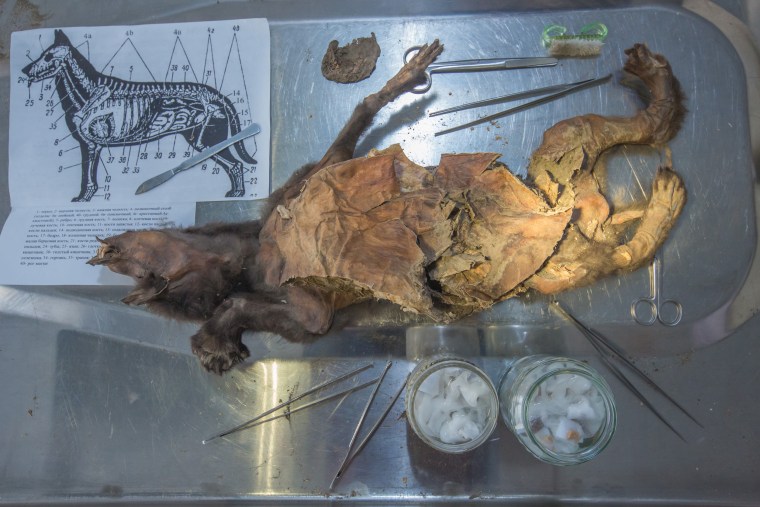
A group of ivory hunters looking for mammoth tusks found the first of the two small puppies in Siberia about 15 years ago. Four years later, they discovered the other.
The hunters couldn’t have known that these mummified animals — known now as the “Tumat puppies” — would helping scientists unravel the fate of a different species.
The puppies, both females, were likely littermates: They were found within about 6 feet of each another and shared some DNA characteristics, according to research published last year in Quaternary Research.
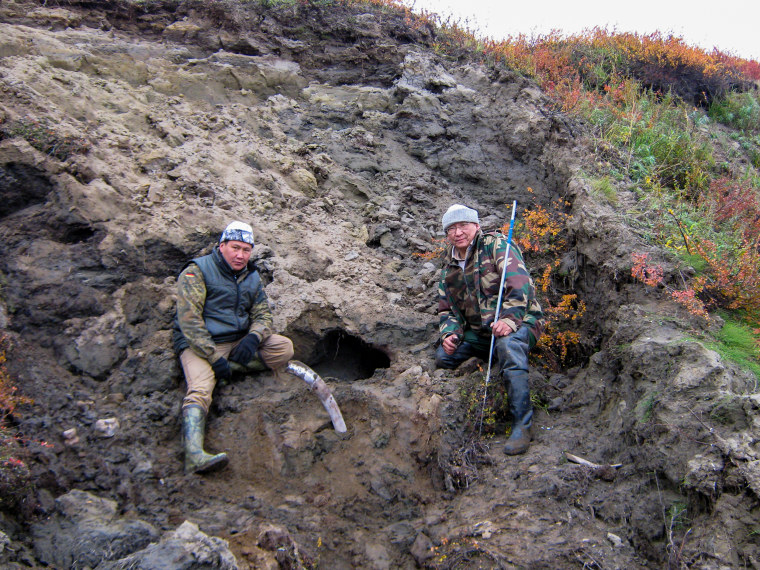
“They died at a fairly young age — at about nine weeks,” said Anne Kathrine Wiborg Runge, a co-author of the Quaternary Research paper. “They still had their milk teeth.”
That earlier study suggested that melting permafrost could have triggered a landslide that buried the wolves in ice or snow. It’s also possible that the puppies died after their den collapsed, it said.
“They’re getting immediately buried and frozen in a freezer — a deep freeze — for 14,000 years,” said Nathan Wales, Runge’s co-author and a senior lecturer in the department of archaeology at the University of York in the United Kingdom.
Because the puppies were found near a site where ancient humans had butchered woolly mammoths, researchers had wondered whether they might be domesticated dogs, as opposed to wolves. But no mammoth DNA was found in their stomachs, which would have been a clue linking the puppies to humans. Instead, researchers think one puppy’s last meal was the woolly rhinoceros. The other had recently eaten a bird, which left some feathers in permafrost, as well as rhinoceros meat.
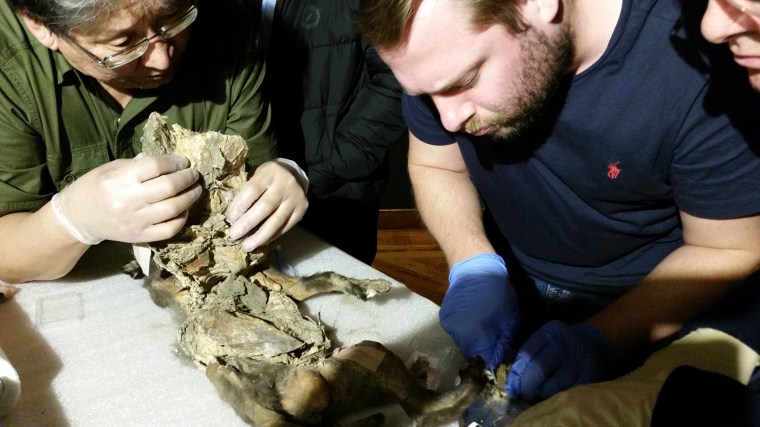
In the study published Wednesday, Chacón-Duque sequenced a tough, thick hunk of flesh from that final meal.
“This piece has been lying around essentially in the stomach for many, many years,” Runge said. “It’s just incredible.”
Complete genomes of woolly rhinoceros are rare, but the researchers were able to compare the genome to two other high-quality ones that died about 18,000 and 49,000 years ago, respectively.
Chacón-Duque and his colleagues found no evidence of inbreeding or harmful mutations that would have doomed the population — it seemed to be healthy.
“They’re not finding signs that the population is just collapsing and that’s odd, given that the species goes extinct,” said Wales, who specializes in ancient DNA but was not involved in the new research.
A few hundred years after this particular rhinoceros walked the earth, the Northern Hemisphere began an abrupt warming period that would ultimately end the Ice Age. The study authors think the newly sequenced DNA provides evidence that climate change was the driving factor behind the extinction of the woolly rhinoceros.

Chacón-Duque said that warming likely stressed the cold-adapted population. It might also have allowed humans to expand into the geographic range of the woolly rhinoceros and spread disease.
“All these things will act in synergy to probably make the final demise of the species,” Chacón-Duque said. “But we definitely think that climate change is the key factor.”
Mick Westbury, an associate professor and evolutionary biologist at the Technical University of Denmark who did not contribute to the research but has studied ancient rhinos, said the theory was plausible.
But Westbury added that rare and ancient DNA can be hard to interpret and that it can take generations to see the impacts of population decline on the genetics of a species. The woolly rhinoceros might have been imperiled even if this creature’s genes didn’t show it, he said.
“Genomics alone sometimes doesn’t sell the whole picture,” Westbury said.
Still, as human-caused climate change intensifies and threatens modern species, Westbury said this research could offer conservationists an important lesson.
“The woolly rhino, according to this result, didn’t look terribly vulnerable to extinction,” Westbury said. “Just because a living species on the surface looks OK genetically doesn’t mean it’s not vulnerable.”