This post was originally published on here
In a groundbreaking quantum optics experiment, researchers have produced a particle of light that simultaneously exists across 37 distinct dimensions. The study takes one of quantum theory’s most famous paradoxes, the Greenberger–Horne–Zeilinger (GHZ) paradox, to unprecedented levels, exposing new layers of nonclassical behavior in the quantum realm.
Led by an international team, the experiment reveals just how deeply quantum physics defies the limits of classical understanding, creating what one of the authors called the most nonclassical quantum effect ever recorded.
Quantum physics often clashes with the rules of classical mechanics, particularly when it comes to phenomena like quantum entanglement, which allows particles to influence one another instantly across great distances. This behavior, called quantum nonlocality, contrasts sharply with local realism, the idea in classical physics that objects are only influenced by their immediate surroundings. The GHZ paradox, proposed in 1989, was developed to show exactly how incompatible these two worldviews are.
Now, researchers have pushed this paradox into higher-dimensional territory, testing just how strange the quantum world can become and how far it can stretch our understanding of physical reality.
Photons Manipulated to Exist in 37 Dimensions
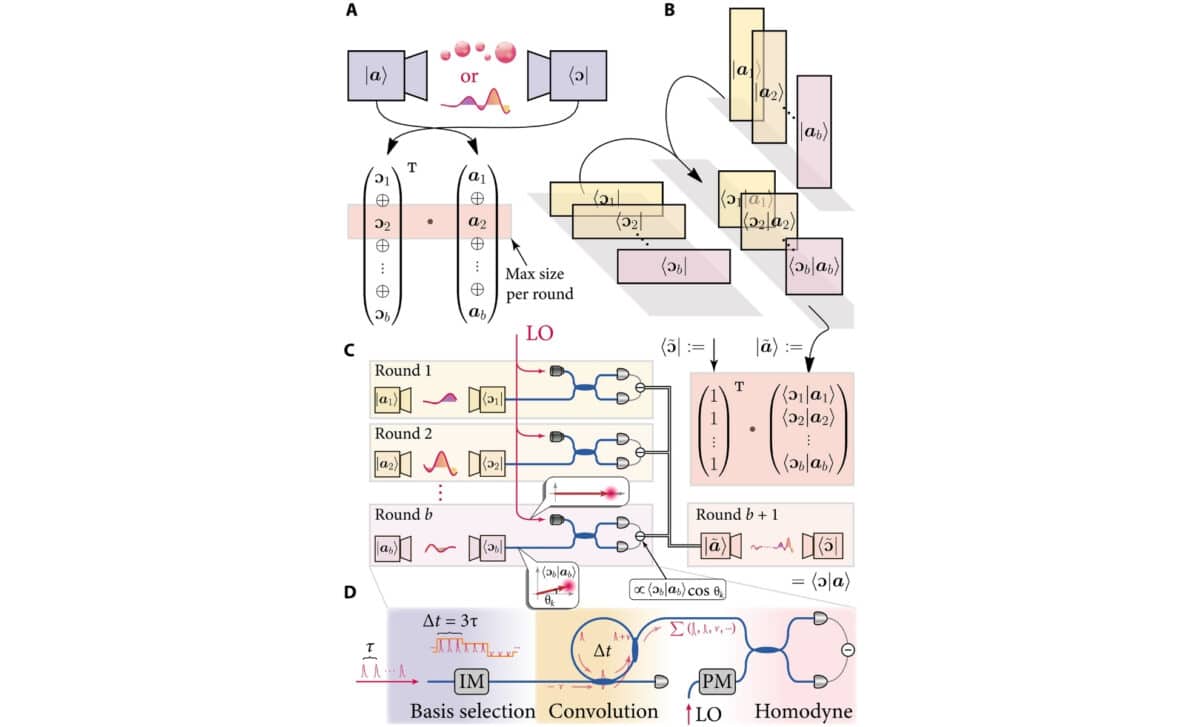
The scientists designed an experiment in which photons, individual particles of light, were manipulated to occupy 37 dimensions simultaneously. In classical terms, humans live in three spatial dimensions plus one of time. By contrast, the photons in this experiment required 37 unique reference points to describe their states.
According to Popular Mechanics, this was achieved by encoding a version of the GHZ paradox into coherent light, light that is uniform in color and wavelength. This allowed researchers to precisely control and measure how the photons behaved in this expanded dimensional setup.
“This experiment shows that quantum physics is more nonclassical than many of us thought,” said Zhenghao Liu of the Technical University of Denmark, one of the co-authors, speaking to New Scientist. He added, “It could be [that] 100 years after its discovery, we are still only seeing the tip of the iceberg.”
Exploring the Limits of Quantum Nonlocality
At the core of the experiment is the GHZ paradox, which plays a central role in debates about the foundation of quantum mechanics. GHZ-type paradoxes demonstrate that if particles can only be influenced by their surroundings, as classical theory would assume, they produce outcomes that are mathematically impossible. In extreme formulations, the paradox can lead to absurdities like equations in which 1 equals -1.
This paradox is useful because it starkly highlights how quantum systems cannot be explained by traditional physics. By recreating this paradox in a system with 37 dimensions, the team confirmed that nonlocality and other strange effects hold true at even greater levels of complexity.
The result is not just a theoretical curiosity. As New Scientist reported, the experiment represents a step toward understanding how entangled quantum systems behave when scaled into high-dimensional spaces, something rarely tested in laboratory conditions.
Pushing Boundaries for Future Research
The authors of the study see their work as a gateway to exploring more complex quantum systems. “We believe that this work has opened several avenues for future research,” they wrote. The experiment could serve as a foundation for investigating stronger quantum advantages in high-dimensional platforms, an area with implications for quantum computing, cryptography, and fundamental physics.
Liu and his colleagues claim the setup created the most nonclassical effects yet observed, suggesting that the rules governing subatomic behavior may be even more flexible, and more alien, than previously understood.