This post was originally published on here
Local News
There are only about 380 North Atlantic right whales left on the planet.
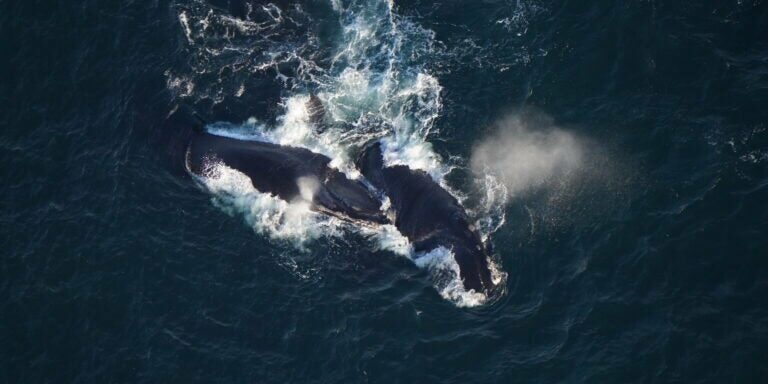
Researchers recently spotted dozens of critically endangered North Atlantic right whales near the Cape and Islands, triggering a slow zone for some mariners.
Scientists from the New England Aquarium found a group of eight whales 37 miles south of Nantucket on Jan. 5 while conducting an aerial survey. During another survey on Jan. 8, more than 20 right whales were spotted, according to the aquarium. Most of the whales identified were adult males, but researchers also identified two females that gave birth to calves last year and a third that is believed to be nearing calving age.
A team from the Provincetown-based Center for Coastal Studies observed 33 whales in Cape Cod Bay while conducting an aerial survey on Jan. 10, according to the organization. This is potentially the highest number of whales documented in Cape Cod Bay in a single day in January.
One of the male right whales seen in the bay, an animal known as EgNo 1050, is believed to be at least 45 years old and has only been documented one other time in the past 15 years, according to the center.
There are only about 380 North Atlantic right whales left on Earth, including approximately 70 reproductively active females. As the species struggles to recover from the heights of the whaling industry, it is still under immense threat from fishing gear entanglements and vessel strikes.
Sightings along the East Coast trigger voluntary slow zones, which have been found to decrease the risk of vessel strikes. The Jan. 5 sighting initiated a voluntary slow zone south of Nantucket, where mariners are encouraged to reduce their speeds to 10 knots. A mandatory slow zone is in effect in Cape Cod Bay until May 15.
“These recent sightings are an important reminder that right whales can be found throughout New England waters during the winter and spring. Reducing vessel speed in mandatory and voluntary right whale management areas is one of the most effective actions mariners can take to reduce the risk of vessel strikes and help protect this critically endangered species,” Katherine McKenna, a scientist at the aquarium’s Anderson Cabot Center for Ocean Life, said in a statement.
Sign up for the Today newsletter
Get everything you need to know to start your day, delivered right to your inbox every morning.