This post was originally published on here
Bacteria-infecting viruses being studied aboard the International Space Station (ISS) appeared to behave differently compared to their terrestrial counterparts, scientists found in a new study.
These viruses, called phages, and their bacterial hosts play an integral role in microbial ecosystems, researchers say.
While virus-bacteria interactions have been studied extensively on Earth, how bacteria evolve defences against phages in microgravity conditions remains unclear.
Advertisement
Advertisement
“Space fundamentally changes how phages and bacteria interact,” researchers wrote in the study published in the journal PLOS Biology.
“Infection is slowed, and both organisms evolve along a different trajectory than they do on Earth,” they explained.
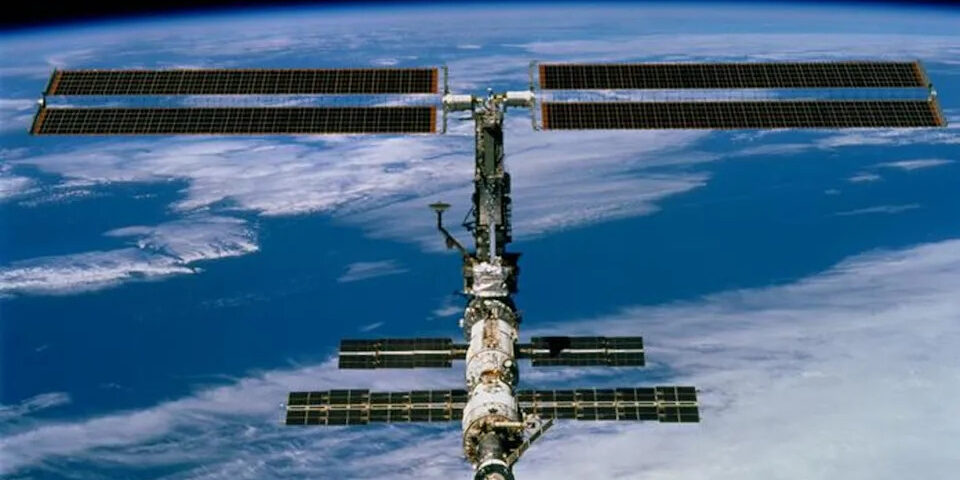
International Space Station (Nasa)
In the new study, scientists assessed bacterial physiology and the physics of virus-bacteria interactions aboard the microgravity conditions of the ISS. Researchers compared two sets of bacterial E coli samples infected with a phage known as T7 – one set incubated on Earth, while the other aboard the ISS.
The space station samples showed that after an initial delay, the T7 phage successfully infected the E coli, a common bacteria that causes urinary infections.
Advertisement
Advertisement
“By studying those space-driven adaptations, we identified new biological insights that allowed us to engineer phages with far superior activity against drug-resistant pathogens back on Earth,” they wrote.
Genome sequencing of both samples revealed marked differences in genetic mutations of both the bacteria and viruses between the terrestrial and microgravity samples.
Scientists found that the space station phages gradually accumulated specific mutations that boosted their infectivity, or their ability to bind receptors on bacterial cells.
Researchers then used these mutations to create altered viruses that could kill bacteria previously found to be resistant to phage attacks.
Advertisement
Advertisement
“What we found in the study was that phage mutants that were enriched in microgravity could treat uropathic bacteria and kill them,” Srivatsan Raman, lead author of the study from University of Wisconsin-Madison, told Space.com
E coli aboard the space-station were also found to accumulate mutations that could protect against phages and enhance survival success in near-weightless conditions.
Researchers then analysed the samples more closely using advanced techniques.
They found that the T7 protein, which plays a key role in viral infection of E coli, underwent significant differences under microgravity compared to those growing in Earth conditions.
Advertisement
Advertisement
These microgravity-associated changes in this T7 protein is linked to increased phage infection of E coli strains that cause urinary tract infections in humans, scientists observed.
“We’re just beginning to scratch the surface. We just have to do more experiments with more complex conditions,” Dr Raman said.
The latest findings, according to researchers, highlight the potential for phage research aboard the ISS to reveal new insights into microbial adaption.
Such studies have potential relevance to both space exploration and human health, scientists say.