This post was originally published on here
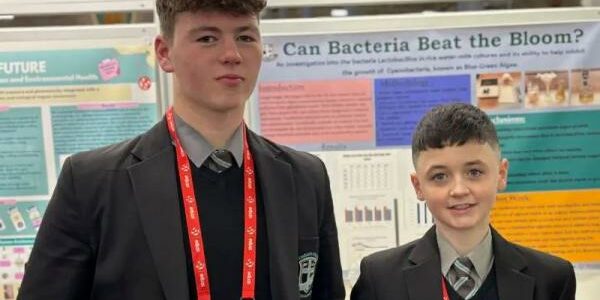
TWO young students from Ballygawley are being hailed for taking on one of Northern Ireland’s most pressing environmental challenges and offering fresh hope for the future of Lough Neagh.
Sixteen-year-olds Bróghán and Padraic, Year 12 pupils at St Ciaran’s College, have developed an innovative science project aimed at tackling the toxic algae blooms that have plagued the UK’s largest lake in recent years.
Lough Neagh has repeatedly turned green due to excessive levels of blue-green algae, a problem linked to long-term pollution and nutrient runoff, with serious consequences for wildlife, livestock and water users. But the Ballygawley students believe nature itself may hold the solution.
Their project, aptly titled ‘Can bacteria beat the bloom?’, explores whether naturally occurring bacteria – created through the fermentation of rice – can reduce algae growth and improve water quality.
Using rice starch fermented in water, the students introduced the bacteria into dairy products such as milk, Greek yoghurt and buttermilk. After allowing the mixtures to separate under heat, they added the resulting solution to stagnant water containing floating algae blooms.
The results were striking.
They observed a drop in pH levels, alongside a visible reduction in algae and a marked improvement in water clarity – a key indicator of healthier aquatic conditions.
The pair showcased their work at the Stripe Young Scientist and Technology Exhibition at the RDS in Dublin last week, where their project is drawing attention for its simplicity, sustainability and real-world application. The exhibition ran until Saturday and featured more than 550 projects from over 1,000 students.
Speaking about their motivation, the students said widespread concern about the condition of Lough Neagh pushed them to act rather than wait for solutions from elsewhere.
With environmental and climate-related projects accounting for more than a fifth of exhibits at this year’s showcase, their work reflects a growing determination among young people to confront environmental challenges head-on.
The top prize at the exhibition is €7,500, with the winning project set to represent Ireland at the EU Contest for Young Scientists. Whatever the outcome, the Ballygawley students have already made a powerful statement – showing how curiosity, creativity and commitment can spark hope for even the most troubled of natural landmarks.